
Журнал «Медицина неотложных состояний» Том 22, №3, 2026
Вернуться к номеру
Алгоритм xABCDE в медицині невідкладних станів: міжнародний досвід, адаптація для України та симуляційне навчання
Авторы: Єгоренко О.С., Рогачевський О.П., Первак М.П., Лунько С.Г., Вальда О.В.
Одеський національний медичний університет, м. Одеса, Україна
Рубрики: Медицина неотложных состояний
Разделы: Клинические исследования
Версия для печати
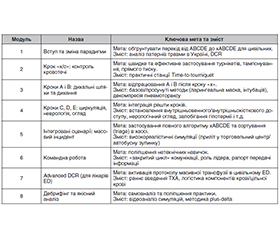
Актуальність. Глобальний стандарт первинної оцінки пацієнтів із травмою зазнав фундаментальних змін під впливом доказової військової медицини. Алгоритм xABCDE («спочатку кровотеча»), заснований на протоколах MARCH та TCCC, офіційно інтегровано в 11-ту редакцію настанов ATLS (2025). В Україні повномасштабна війна фактично стерла межі між військовою та цивільною травмою, оскільки мирне населення регулярно зазнає мінно-вибухових та осколкових поранень. Проте значна частина чинних цивільних протоколів України залишається заснованою на застарілому алгоритмі ABCDE, у якому дихальні шляхи є першим пріоритетом, що створює ризик превентивної смертності від кровотеч. Мета: провести порівняльний аналіз цивільного підходу ABCDE та сучасного стандарту xABCDE, враховуючи міжнародний досвід та реалії війни в Україні, для розробки рекомендацій щодо уніфікації протоколів та їх впровадження в систему симуляційного навчання. Матеріали та методи. Робота базується на систематичному аналізі літератури. Пошук джерел здійснювали у наукометричних базах Scopus, Web of Science, MedLine (PubMed), The Cochrane Library та Google Scholar за період до 2025 року включно. Окремо опрацьовано офіційні настанови American College of Surgeons, AHA, Resuscitation Council UK та накази МОЗ України. Критеріями включення були систематичні огляди, метааналізи та оригінальні дослідження щодо модифікації алгоритмів життєзабезпечення при травмі. Результати. Проведений аналіз підтвердив глобальний перехід до парадигми xABCDE (eXsanguinating hemorrhage first). У результаті дослідження встановлено, що в умовах сучасних конфліктів понад 50 % превентивних смертей, спричинені саме масивною зовнішньою кровотечею, яка призводить до летальних наслідків швидше, ніж обструкція дихальних шляхів. Більш того, вивчення структури травматизму в Україні продемонструвало, що цивільні пацієнти внаслідок ракетних ударів отримують поранення, ідентичні бойовим, серед яких домінують ураження кінцівок. Відповідно, застаріла пріоритезація A-B-C призводить до затримки критичних маніпуляцій, як-от накладання турнікета. Аналіз нормативної бази виявив методологічний розрив: військові протоколи та правила домедичної допомоги в Україні вже орієнтовані на зупинку кровотечі, тоді як ключовий цивільний протокол «Політравма» (наказ № 34) все ще зберігає стару послідовність. У результаті роботи обґрунтовано, що симуляційне навчання є найбільш ефективною методикою для деконструкції застарілих навичок медичного персоналу. Зокрема, розроблена структура модульного курсу дозволяє медикам відпрацювати крок «x» до автоматизму, що може значно скорочувати час до зупинки кровотечі. Таким чином, перехід на xABCDE є не лише медичним, а й стратегічним кроком для зниження рівня летальності при травмах в Україні. Висновки. Дослідження довело необхідність негайної стандартизації алгоритму xABCDE як єдиного протоколу первинного огляду в Україні для всіх категорій пацієнтів. Симуляційне навчання визначено як ключовий інструмент для швидкої імплементації цих змін.
Background. The global standard for primary assessment of trauma patients has undergone fundamental changes under the influence of evidence-based military medicine. The xABCDE approach (“hemorrhage first”) based on the MARCH and TCCC protocols, has been officially integrated into the 11th edition of the ATLS guidelines (2025). In Ukraine, the full-scale war has effectively blurred the distinction between military and civilian trauma, as civilians frequently sustain blast and shrapnel injuries. Despite this, many Ukrainian civilian protocols still adhere to the outdated ABCDE model in which the airway is the first priority, creating a risk of preventable mortality from bleeding. This study aims to conduct a comparative analysis of civilian ABCDE and the modern xABCDE schemes, taking into account international experience and the realities of the war in Ukraine, to develop recommendations for the unification of protocols and their implementation in the simulation-based training system. Materials and methods. This study employed a systematic literature review methodology. The search encompassed databases such as Scopus, Web of Science, MEDLINE (PubMed), The Cochrane Library, and Google Scholar for publications up to 2025. Additionally, the analysis included official guidelines from the American College of Surgeons, American Heart Association, Resuscitation Council UK, and the Ministry of Health of Ukraine. Inclusion criteria focused on systematic reviews, meta-analyses, and original clinical trials regarding trauma algorithm modifications. Results. The analysis confirmed a global paradigm shift toward the xABCDE (eXsanguinating hemorrhage first) sequence. Consequently, the study identified that under modern conflicts, over 50 % of preventable trauma deaths result from massive external bleeding, which kills faster than airway obstruction. Moreover, data from Ukraine demonstrated that civilian injury patterns following missile strikes mirror combat trauma, characterized by a predominance of extremity injuries. As a result, the traditional A-B-C prioritization leads to fatal delays in life-saving maneuvers like tourniquet application. The critical appraisal of the Ukrainian regulatory framework revealed a significant gap: while military and first-aid rules prioritize hemorrhage control, the primary civilian “Polytrauma” protocol (Order No. 34) remains airway-oriented. Furthermore, the study established that simulation-based training provides the most effective methodology for deconstructing ingrained medical habits. For example, the proposed modular simulation curriculum allows healthcare providers to automate the “x” step under high-stress conditions, which can significantly reduce the time to stop bleeding. In summary, the transition to xABCDE is not only a medical, but also a strategic step to reduce the mortality rate in trauma in Ukraine. Conclusions. The study demonstrated the urgent need to standardize the xABCDE algorithm as the single primary assessment protocol in Ukraine for all trauma categories. Moreover, simulation training serves as the crucial tool for the rapid implementation of these changes.
медицина невідкладних станів; медична симуляція; xABCDE; контроль кровотечі; огляд; ATLS 11
emergency medicine; medical simulation; xABCDE; hemorrhage control; review; ATLS 11
Для ознакомления с полным содержанием статьи необходимо оформить подписку на журнал.
- Panchal AR, Bartos JA, Cabaсas JG, Donnino MW, Drennan IR, Hirsch KG, et al.; Adult Basic and Advanced Life Support Writing Group. Part 3: Adult Basic and Advanced Life Support: 2020 American Heart Association Guidelines for Cardiopulmonary Resuscitation and Emergency Cardiovascular Care. Circulation. 2020 Oct 20;142(16_suppl_2):S366-S468. doi: 10.1161/CIR.0000000000000916. Epub 2020 Oct 21. PMID: 33081529.
- Smyth MA, van Goor S, Hansen CM, Fijačko N, Nakagawa NK, Raffay V, et al.; ERC Adult Basic Life Support Collaborators. European Resuscitation Council Guidelines 2025 Adult Basic Life Support. Resuscitation. 2025 Oct;215 Suppl 1:110771. doi: 10.1016/j.resuscitation.2025.110771. PMID: 41117574.
- American College of Surgeons. ATLS student course manual. 10th ed. Chicago: American College of Surgeons; 2018.
- Resuscitation Council UK. The ABCDE Approach. London: Resuscitation Council UK; 2024.
- Olgers TJ, Dijkstra RS, Drost-de Klerck AM, Ter Maaten JC. The ABCDE primary assessment in the emergency department in medically ill patients: an observational pilot study. Neth J Med. 2017 Apr;75(3):106-111. PMID: 28469050.
- Bruinink LJ, Linders M, de Boode WP, Fluit CRMG, Hogeveen M. The ABCDE approach in critically ill patients: A scoping review of assessment tools, adherence and reported outcomes. Resusc Plus. 2024 Sep 19;20:100763. doi: 10.1016/j.resplu.2024.100763. PMID: 39345661; PMCID: PMC11437753.
- American College of Surgeons, Committee on Trauma. Advanced Trauma Life Support (ATLS) Student Course Manual. 11th ed. Chicago: American College of Surgeons; 2025.
- Committee on Tactical Combat Casualty Care (CoTCCC). Tactical Combat Casualty Care (TCCC) Guidelines for All Combatants (2024 Edition) [Internet]. 2024 [cited 2026 Jan 20]. Available from: https://tccc.org.ua/en/collection/recommendations.
- Latif RK, Clifford SP, Baker JA, Lenhardt R, Haq MZ, Huang J, et al. Traumatic hemorrhage and chain of survival. Scand J Trauma Resusc Emerg Med. 2023 May 24;31(1):25. doi: 10.1186/s13049-023-01088-8. PMID: 37226264; PMCID: PMC10207757.
- Samuels JM, Moore HB, Moore EE. Damage Control Resuscitation. Chirurgia (Bucur). 2017 Sept-Oct;112(5):514-523. doi: 10.21614/chirurgia.112.5.514. PMID: 29088551; PMCID: PMC6231718.
- Lawry LL, Mani V, Hamm TE, Janvrin M, Juman L, Korona-Bailey J, et al. Qualitative assessment of combat-related injury patterns and injury prevention in Ukraine since the Russian invasion. BMJ Mil Health. 2025 Feb 4:military-2024-002863. doi: 10.1136/military-2024-002863. Epub ahead of print. PMID: 39904535.
- Quinn J, Panasenko SI, Leshchenko Y, Gumeniuk K, Onderková A, Stewart D, et al. Prehospital Lessons from the War in Ukraine: Damage Control Resuscitation and Surgery Experiences from Point of Injury to Role 2. Mil Med. 2024 Jan 23;189(1-2):17-29. doi: 10.1093/milmed/usad253. PMID: 37647607.
- Teixeira PGR, Brown CVR, Emigh B, Long M, Foreman M, Eastridge B, et al.; Texas Tourniquet Study Group. Civilian Prehospital Tourniquet Use Is Associated with Improved Survival in Patients with Peripheral Vascular Injury. J Am Coll Surg. 2018 May;226(5):769-776.e1. doi: 10.1016/j.jamcollsurg.2018.01.047. Epub 2018 Mar 29. PMID: 29605726.
- Марічереда В.Г., Орабіна Т.М., Рогачевський О.П. та ін. Сценарій-орієнтоване симуляційне навчання як інструмент проблемно-орієнтованого підходу до покращення якості екстреної медичної допомоги в Україні. Одеський медичний журнал. 2024;(1):75-82. doi: 10.32782/2226-2008-2024-1-12.
- Рогачевський О.П., Первак М.П., Караконстантин Д.Ф. та ін. Аналіз ефективності сценарій-орієнтованого навчання під час медичної підготовки українських військовослужбовців. Сучасна медицина, фармація та психологічне здоров’я. 2023;2(11):60-65. doi: 10.32689/2663-0672-2023-2-10.
- Safar P, Escarraga LA, Elam JO. A comparison of the mouth-to-mouth and mouth-to-airway methods of artificial respiration with the chest-pressure arm-lift methods. N Engl J Med. 1958 Apr 3;258(14):671-7. doi: 10.1056/NEJM195804032581401. PMID: 13526920.
- Carmont MR. The Advanced Trauma Life Support course: a history of its development and review of related literature. Postgrad Med J. 2005 Feb;81(952):87-91. doi: 10.1136/pgmj.2004.021543. PMID: 15701739; PMCID: PMC1743195.
- Butler FK. Leadership lessons learned in Tactical Combat Casualty Care. J Trauma Acute Care Surg. 2017 Jun;82(6S Suppl 1):S16-S25. doi: 10.1097/TA.0000000000001424. PMID: 28333837.
- Kragh JF Jr, Walters TJ, Baer DG, Fox CJ, Wade CE, Salinas J, et al. Survival with emergency tourniquet use to stop bleeding in major limb trauma. Ann Surg. 2009 Jan;249(1):1-7. doi: 10.1097/SLA.0b013e31818842ba. PMID: 19106667.
- Kragh JF Jr, Littrel ML, Jones JA, Walters TJ, Baer DG, Wade CE, Holcomb JB. Battle casualty survival with emergency tourniquet use to stop limb bleeding. J Emerg Med. 2011 Dec;41(6):590-7. doi: 10.1016/j.jemermed.2009.07.022. Epub 2009 Aug 31. PMID: 19717268.
- Shakur H, Roberts I, Bautista R, Caballero J, Coats T, Dewan Y, et al.; CRASH-2 trial collaborators. Effects of tranexamic acid on death, vascular occlusive events, and blood transfusion in trauma patients with significant haemorrhage (CRASH-2): a randomised, placebo-controlled trial. Lancet. 2010 Jul 3;376(9734):23-32. doi: 10.1016/S0140-6736(10)60835-5. Epub 2010 Jun 14. PMID: 20554319.
- Bulger EM, Snyder D, Schoelles K, Gotschall C, Dawson D, Lang E, et al. An evidence-based prehospital guideline for external hemorrhage control: American College of Surgeons Committee on Trauma. Prehosp Emerg Care. 2014 Apr-Jun;18(2):163-73. doi: 10.3109/10903127.2014.896962. PMID: 24641269.
- Zhu CS, Pokorny DM, Eastridge BJ, Nicholson SE, Epley E, Forcum J, et al. Give the trauma patient what they bleed, when and where they need it: establishing a comprehensive regional system of resuscitation based on patient need utilizing cold-stored, low-titer O+ whole blood. Transfusion. 2019 Apr;59(S2):1429-1438. doi: 10.1111/trf.15264. PMID: 30980748.
- Meyer DE, Vincent LE, Fox EE, O’Keeffe T, Inaba K, Bul–ger E, et al. Every minute counts: Time to delivery of initial massive transfusion cooler and its impact on mortality. J Trauma Acute Care Surg. 2017 Jul;83(1):19-24. doi: 10.1097/TA.0000000000001531. PMID: 28452870; PMCID: PMC5526458.
- Singh S, Krishna VS, Peter DK. An Insight into Da–mage Control Resuscitation and its Application in the Modern Battlefield: A Military Perspective. J Emerg Trauma Shock. 2025 Jul-Sep;18(3):131-137. doi: 10.4103/jets.jets_154_24. Epub 2025 Sep 18. PMID: 41000368; PMCID: PMC12459934.
- Meneses E, Boneva D, McKenney M, Elkbuli A. Massive transfusion protocol in adult trauma population. Am J Emerg Med. 2020 Dec;38(12):2661-2666. doi: 10.1016/j.ajem.2020.07.041. Epub 2020 Jul 22. PMID: 33071074.
- Parks J, Vasileiou G, Parreco J, Pust GD, Rattan R, Zakrison T, et al. Validating the ATLS Shock Classification for Predic–ting Death, Transfusion, or Urgent Intervention. J Surg Res. 2020 Jan;245:163-167. doi: 10.1016/j.jss.2019.07.041. Epub 2019 Aug 13. PMID: 31419641.
- Stephens CT, Gumbert S, Holcomb JB. Trauma-associated bleeding: management of massive transfusion. Curr Opin Anaesthesiol. 2016 Apr;29(2):250-5. doi: 10.1097/ACO.0000000000000306. PMID: 26836808.
- Bulger EM. A Growing Body of Evidence Supports the American College of Surgeons Stop the Bleed Program. J Am Coll Surg. 2021 Aug;233(2):239-240. doi: 10.1016/j.jamcollsurg.2021.04.003. PMID: 34304820.
- Ciraulo LA, Ciraulo NA, Ciraulo RS, Robaczewski GD, Andreasen KP, Falank CR, et al. American College of Surgeons Committee on Trauma "Stop the Bleed Program": Quantifying the Impact of Training Upon Public School Educators Readiness. Am Surg. 2020 Nov;86(11):1520-1524. doi: 10.1177/0003134820933550. Epub 2020 Jun 29. PMID: 32683925.
- Lawry LL, Janvrin M, Korona-Bailey J, Betancourt C, Maddox J, Apilado KP, et al. Health System Organization and Logistics of Trauma Care Since the Russian Invasion of Ukraine: A Qualitative Assessment. Inquiry. 2025 Jan-Dec;62:469580251333327. doi: 10.1177/00469580251333327. Epub 2025 May 7. PMID: 40336273; PMCID: PMC12062648.
- Lawry LL, Korona-Bailey J, Kanagaratnam A, Maddox J, Hamm TE, Janvrin M, et al. Qualitative assessment of point of injury to Role 2+ combat casualty care in Ukraine. Trauma Surg Acute Care Open. 2025 Jun 25;10(2):e001674. doi: 10.1136/tsaco-2024-001674. PMID: 40575542; PMCID: PMC12198803.
- Міністерство охорони здоров’я України. Наказ від 15 січня 2014 року № 34 «Про затвердження та впровадження медико-технологічних документів зі стандартизації екстреної медичної допомоги». Київ; 2014.
- Міністерство охорони здоров’я України. Наказ від 15 березня 2022 року № 488 «Про затвердження Методичних рекомендацій щодо надання екстреної медичної допомоги постраждалим на догоспітальному етапі в умовах бойових дій/воєнного стану». Київ; 2022.
- Міністерство охорони здоров’я України. Наказ від 09 березня 2022 року № 441 «Про затвердження порядків надання домедичної допомоги особам при невідкладних станах». Київ; 2022.
- Gurney JM, Staudt AM, Del Junco DJ, Shackelford SA, Mann-Salinas EA, Cap AP, et al. Whole blood at the tip of the spear: A retrospective cohort analysis of warm fresh whole blood resuscitation versus component therapy in severely injured combat casualties. Surgery. 2022 Feb;171(2):518-525. doi: 10.1016/j.surg.2021.05.051. Epub 2021 Jul 10. PMID: 34253322.
- Gurney JM, Staudt AM, Del Junco DJ, Holcomb J, Martin M, Spinella P, et al. Determining resuscitation outcomes in combat casualties: Design of the Deployed Hemostatic Emergency Resuscitation of Traumatic Exsanguinating Shock (Deployed HEROES) study. J Trauma Acute Care Surg. 2022 Aug 1;93(2S Suppl 1):S22-S29. doi: 10.1097/TA.0000000000003681. Epub 2022 May 12. PMID: 35545800.
- Dhillon NK, Kwon J, Coimbra R. Fluid resuscitation in trauma: What you need to know. J Trauma Acute Care Surg. 2025 Jan 1;98(1):20-29. doi: 10.1097/TA.0000000000004456. Epub 2024 Aug 30. PMID: 39213260.
- Ngatuvai M, Zagales I, Sauder M, Andrade R, Santos RG, Bilski T, et al. Outcomes of Transfusion with Whole Blood, Component Therapy, or Both in Adult Civilian Trauma Patients: A Systematic Review and Meta-Analysis. J Surg Res. 2023 Jul;287:193-201. doi: 10.1016/j.jss.2023.02.010. Epub 2023 Mar 20. PMID: 36947979.
- Braverman MA, Smith A, Pokorny D, Axtman B, Shahan CP, Barry L, et al. Prehospital whole blood reduces early mortality in patients with hemorrhagic shock. Transfusion. 2021 Jul;61 Suppl 1:S15-S21. doi: 10.1111/trf.16528. PMID: 34269467.
- Shackelford SA, Gurney JM, Taylor AL, Keenan S, Corley JB, Cunningham CW, et al.; Joint Trauma System Defense Committee on Trauma; Armed Services Blood Program. Joint Trauma System, Defense Committee on Trauma, and Armed Services Blood Program consensus statement on whole blood. Transfusion. 2021 Jul;61 Suppl 1:S333-S335. doi: 10.1111/trf.16454. PMID: 34269445.
- Cap AP, Beckett A, Benov A, Borgman M, Chen J, Corley JB, et al. Whole Blood Transfusion. Mil Med. 2018 Sep 1;183(suppl_2):44-51. doi: 10.1093/milmed/usy120. PMID: 30189061.
- Fisher AD, Washbum G, Powell D, Callaway DW, Miles EA, Brown J, et al. Damage Control Resuscitation in Prolonged Field CareDamage Control Resuscitation in Prolonged Field Care. J Spec Oper Med. 2018 Fall;18(3):109-119. doi: 10.55460/A9KJ-NAIG. PMID: 30222848.
- Rossaint R, Afshari A, Bouillon B, Cerny V, Cimpoesu D, Curry N, et al. The European guideline on management of major bleeding and coagulopathy following trauma: sixth edition. Crit Care. 2023 Mar 1;27(1):80. doi: 10.1186/s13054-023-04327-7. PMID: 36859355; PMCID: PMC9977110.
- Meléndez-Lugo JJ, Caicedo Y, Guzmán-Rodríguez M, Serna JJ, Ordoñez J, Angamarca E, et al. Prehospital Damage Control: The Management of Volume, Temperature… and Bleeding! Colomb Med (Cali). 2020 Dec 30;51(4):e4024486. doi: 10.25100/cm.v51i4.4486. PMID: 33795898; PMCID: PMC7968431.
- Spinella PC. Warm fresh whole blood transfusion for severe hemorrhage: U.S. military and potential civilian applications. Crit Care Med. 2008 Jul;36(7 Suppl):S340-5. doi: 10.1097/CCM.0b013e31817e2ef9. PMID: 18594261.
- Schoeber NHC, Linders M, Binkhorst M, De Boode WP, Draaisma JMT, Morsink M, et al. Healthcare professionals' know–ledge of the systematic ABCDE approach: a cross-sectional study. BMC Emerg Med. 2022 Dec 12;22(1):202. doi: 10.1186/s12873-022-00753-y. PMID: 36510149; PMCID: PMC9743501.
- Butler FK. Two Decades of Saving Lives on the Battlefield: Tactical Combat Casualty Care Turns 20. Mil Med. 2017 Mar;182(3):e1563-e1568. doi: 10.7205/MILMED-D-16-00214. PMID: 28290925.
- Rajendran G, Mahalingam S, K A, G E, B N, Ayyan SM, Nathan B. The ABCDE (Avoid Shaming/Personal Opinions, Build a Rapport, Choose a Communication Approach, Develop a Debriefing Content, Ensure the Ergonomics of Debriefing) Approach: A Simplified Model for Debriefing During Simulation in Emergency Medicine. Cureus. 2023 Feb 2;15(2):e34569. doi: 10.7759/cureus.34569. PMID: 36883075; PMCID: PMC9985545.
- Dopelt K, Shevach I, Vardimon OE, Czabanowska K, De Nooijer J, Otok R, et al. Simulation as a key training me–thod for inculcating public health leadership skills: a mixed me–thods study. Front Public Health. 2023 Jul 6;11:1202598. doi: 10.3389/fpubh.2023.1202598. PMID: 37483956; PMCID: PMC10359821.
- Jogerst KM, Cassidy DJ, Coe TM, Monette D, Sell N, Eurboonyanum C, et al. Interprofessional Trauma Team Training: Leveraging Each Specialties’ Expertise to Teach Procedural-Based Skills. J Surg Educ. 2022 Nov-Dec;79(6):e273-e284. doi: 10.1016/j.jsurg.2022.09.010. Epub 2022 Oct 23. PMID: 36283921.
- Green RS. Trauma team leadership in Canada: present and future. CJEM. 2023 Dec;25(12):929-930. doi: 10.1007/s43678-023-00618-8. PMID: 38060162.
- Fernandez R, Rosenman ED, Olenick J, Misisco A, Brolliar SM, Chipman AK, et al. Simulation-Based Team Leadership Training Improves Team Leadership During Actual Trauma Resuscitations: A Randomized Controlled Trial. Crit Care Med. 2020 Jan;48(1):73-82. doi: 10.1097/CCM.0000000000004077. PMID: 31725441.
- Walker M, d’Arville A, Lacey J, Lancman B, Moloney J, Hendel S. Mass casualty, intentional vehicular trauma and anaesthesia. Br J Anaesth. 2022 Feb;128(2):e190-e199. doi: 10.1016/j.bja.2021.08.030. Epub 2021 Oct 13. PMID: 34654520.
- Khajehaminian MR, Ardalan A, Keshtkar A, Hosseini Boroujeni SM, Nejati A, Ebadati E OME, et al. A systematic literature review of criteria and models for casualty distribution in trauma related mass casualty incidents. Injury. 2018 Nov;49(11):1959-1968. doi: 10.1016/j.injury.2018.09.005. Epub 2018 Sep 6. PMID: 30220633.
- Rush SC, Lauria MJ, DeSoucy ES, Koch EJ, Kamler JJ, Remley MA, et al. Rethinking Prehospital Response to Mass Casualty Events: Move, Treat, and Transport. J Spec Oper Med. 2024 Oct 2;24(3):24-29. doi: 10.55460/X38F-P3RH. PMID: 39271298.