
Журнал «Здоровье ребенка» Том 21, №3, 2026
Вернуться к номеру
Материнські фактори ризику, пов’язані із вродженими вадами розвитку в новонароджених: дослідження типу «випадок — контроль» у Львівській області (Україна) у 2002–2025 роках
Авторы: S. Henyk-Berezovska (1), N. Kitsera (2, 3), N. Lukyanenko (1), N. Kech (1), M. Teneta (1), N. Helner (1), M. Drobchak (1), Kh. Bakum (1), V. Hlohus (1)
(1) - State Institution “Amosov National Scientific Center of Cardiovascular Surgery and Hereditary Pathology of the National Academy of Medical Sciences of Ukraine”, Kyiv, Ukraine
(2) - Ivano-Frankivsk National Medical University, Ivano-Frankivsk, Ukraine
(3) - Communal Nonprofit Enterprise of the Lviv Regional Council “Lviv Oncology Regional Medical Diagnostic Centre”, Lviv, Ukraine
Рубрики: Педиатрия/Неонатология
Разделы: Клинические исследования
Версия для печати
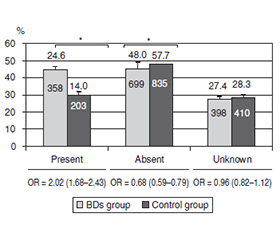
Актуальність. Вроджені вади розвитку (ВВР) є основною причиною неонатальної захворюваності та смертності в усьому світі. Соціально-економічні, поведінкові і медичні фактори матері можуть призводити до аномального розвитку плода. Мета: оцінити зв’язок між освітою матері, поведінковими факторами й окремими патологіями та ВВР у новонароджених у Львівській області (Україна). Матеріали та методи. У дослідженні типу «випадок — контроль» використовувалися медичні записи з пологових будинків Львівської області (2002–2025). Загалом проаналізовано дані 1455 новонароджених із ВВР та 1448 здорових новонароджених (контрольна група). Було оцінено освіту матері, репродуктивний анамнез, спосіб життя, ендокринні розлади, екстрагенітальні захворювання й гінекологічні інфекції. Результати. Рівень освіти матерів вірогідно відрізнявся між групами (p < 0,01). Матерів із незакінченою середньою освітою в групі новонароджених із ВВР було більше (10,2 проти 1,6 %; відношення шансів (ВШ) = 7,069; 95% довірчий інтервал (ДІ): 4,528–11,036; p < 0,01), а з вищою освітою — менше (24,5 проти 30,2 %; ВШ = 0,811; 95% ДІ: 0,719–0,914; p < 0,01). Куріння (13,5 проти 5,5 %; ВШ = 2,69; 95% ДІ: 2,06–3,52; p < 0,001) та вживання алкоголю (2,0 проти 0,14 %; ВШ = 14,6; 95% ДІ: 3,5–61,2; p < 0,001) частіше відзначалися серед матерів дітей із ВВР. Ендокринні захворювання також були більш поширеними в групі ВВР (24,6 проти 14,0 %; ВШ = 2,02; 95% ДІ: 1,68–2,43; p < 0,001), переважно за рахунок патології щитоподібної залози. Хронічні екстрагенітальні захворювання (33,1 проти 22,0 %; ВШ = 1,501; 95% ДІ: 1,329–1,694; p < 0,01) та гінекологічні інфекції (24,1 проти 19,3 %; ВШ = 1,248; 95% ДІ: 1,086–1,435; p < 0,01) також мали вірогідний зв’язок із ВВР. Водночас не виявлено статистично значущих відмінностей щодо віку менархе, характеристик менструального циклу і застосування гормональних контрацептивів (p > 0,05). Висновки. Соціально-економічні, поведінкові та пов’язані зі здоров’ям фактори матері можуть спільно впливати на ризик виникнення ВВР, підтверджуючи їх багатофакторну етіологію і роль модифікованих детермінант. Для уточнення причинно-наслідкових механізмів необхідні подальші масштабні проспективні дослідження.
Background. Birth defects (BDs) are a major cause of neonatal morbidity and mortality worldwide. Maternal socioeconomic, behavioral, and health factors may contribute to abnormal fetal development. Objective: to assess the association between maternal education, behavioral factors, and selected health conditions with BDs among newborns in the Lviv Region (Ukraine). Materials and methods. A case-control study was conducted using medical records from maternity hospitals in the Lviv Region (2002–2025). A total of 1,455 newborns with BDs and 1,448 healthy newborns (controls) were analyzed. Maternal education, reproductive history, lifestyle habits, endocrine disorders, extragenital diseases, and gynecological infections were evaluated. Results. Maternal educational level varied significantly between groups (p < 0.01). Mothers with incomplete secondary education were more frequent in the BDs group (10.2 vs. 1.6 %; odds ratio (OR) = 7.069; 95% confidence interval (CI): 4.528–11.036, p < 0.01), while there were less women with higher education in this group (24.5 vs. 30.2 %; OR = 0.811; 95% CI: 0.719–0.914; p < 0.01). Smoking (13.5 vs. 5.5 %; OR = 2.69; 95% CI: 2.06–3.52; p < 0.001) and alcohol consumption (2.0 vs. 0.14 %; OR = 14.6; 95% CI: 3.5–61.2; p < 0.001) were more prevalent among mothers of affected newborns. Endocrine disorders were more frequent in the BDs group (24.6 vs. 14.0 %; OR = 2.02; 95% CI: 1.68–2.43; p < 0.001), in most cases, it was thyroid diseases. Chronic extragenital disorders (33.1 vs. 22.0 %; OR = 1.501; 95% CI: 1.329–1.694; p < 0.01) and gynecological infections (24.1 vs. 19.3 %; OR = 1.248; 95% CI: 1.086–1.435; p < 0.01) were also significantly associated with BDs. No significant differences were observed between age at menarche, menstrual cycle characteristics, or hormonal contraceptive use (p > 0.05). Conclusions. Maternal socioeconomic, behavioral, and health-related factors may in common influence the risk of BDs, supporting their multifactorial etiology and the role of modifiable determinants. Further large-scale population studies are needed to clarify causal mechanisms.
вроджені вади розвитку; новонароджені; дослідження типу «випадок — контроль»; поведінкові фактори; Україна
birth defects; newborns; case-control study; behavioral factors; Ukraine
Для ознакомления с полным содержанием статьи необходимо оформить подписку на журнал.
- Li Y, He C, Yu H, Wu D, Liu L, Zhang X. Global, regional, and national epidemiology of congenital birth defects in children from 1990 to 2021: a cross-sectional study. BMC Pregnancy Childbirth. 2025;25(1):484. doi: 10.1186/s12884-025-07612-1.
- Deng C, Pu J, Deng Y, et al. Association between maternal smoke exposure and congenital heart defects from a case-control study in China. Sci Rep. 2022;12(1):14973. doi: 10.1038/s41598-022-18909-y.
- Finn J, Suhl J, Kancherla V, Conway KM, Oleson J, et al. Maternal cigarette smoking and alcohol consumption and congenital diaphragmatic hernia. Birth Defects Res. 2022;114(13):746-758. doi: 10.1002/bdr2.2059.
- Dingemann C, Sonne M, Ure B, Bohnhorst B, von Kaisenberg C, Pirr S. Impact of maternal education on the outcome of newborns requiring surgery for congenital malformations. PLoS One. 2019;14(4):e0214967. doi: 10.1371/journal.pone.0214967.
- Dyląg KA, Anunziata F, Bandoli G, Chambers C. Birth Defects Associated with Prenatal Alcohol Exposure — A Review. Children (Basel). 2023;10(5):811. doi: 10.3390/children10050811.
- Volosovets OP, Kryuchko TO, Veselskyi VL, et al. Congenital Anomalies In Children Of Ukraine: 25-Year Monitoring Of Morbi–dity And Prevalence. Wiad Lek. 2020;73(10):2193-2197. doi: 10.36740/WLek202010116.
- Vulcănescu A, Siminel MA, Dinescu SN, Dijmărescu AL, Manolea MM, Săndulescu SM. Neonatal Mortality Due to Early-Onset Sepsis in Eastern Europe: A Review of Current Monitoring Protocols Du–ring Pregnancy and Maternal Demographics in Eastern Europe, with an Emphasis on Romania — Comparison with Data Extracted from a Se–condary Center in Southern Romania. Children (Basel). 2025;12(3):354. doi: 10.3390/children12030354.
- Wogayehu B, Demissie T, Alemayehu M, Wolka E, Daka K. Magnitude and risk factors of khat, alcohol and cigarettes use among pregnant women in Africa: a systematic review and meta-analysis. BMC Pregnancy Childbirth. 2024;24(1):795. doi: 10.1186/s12884-024-06999-7.
- De Sanctis V, Bernasconi S, Bianchin L, Bona G, Bozzola M, et al. Onset of menstrual cycle and menses features among secondary school girls in Italy: A questionnaire study on 3,783 students. Indian J Endocrinol Metab. 2014;18(Suppl 1):S84-92. doi: 10.4103/2230-8210.140251.
- Nakanishi K, Saijo Y, Yoshioka E, et al. Association between maternal multimorbidity and preterm birth, low birth weight and small for gestational age: a prospective birth cohort study from the Japan Environment and Children’s Study. BMJ Open. 2023;13:e069281. doi: 10.1136/bmjopen-2022-069281.
- Narapureddy BR, Zahrani Y, Alqahtani HEM, et al. Examining the Prevalence of Congenital Anomalies in Newborns: A Cross-Sectional Study at a Tertiary Care Maternity Hospital in Saudi Arabia. Children (Basel). 2024;11(2):188. doi: 10.3390/children11020188.
- Adeoye IA. Alcohol consumption and tobacco exposure among pregnant women in Ibadan, Nigeria. BMC Psychiatry. 2022;22(1):570. doi: 10.1186/s12888-022-04210-9.
- Khalilipalandi S, Lemieux A, Lauzon-Schnittka J, et al. Systematic Review and Meta-analysis of Prenatal Risk Factors for Congenital Heart Disease: Part 1. Maternal Chronic Diseases and Parental Exposures. Can J Cardiol. 2024;40(12):2476-2495. doi: 10.1016/j.cjca.2024.07.004.
- Eng A, Mannetje A, Ellison-Loschmann L, et al. Case-Control Study of Congenital Anomalies: Study Methods and Nonresponse Bias Assessment. Birth Defects Res. 2025;117(2):e2457. doi: 10.1002/bdr2.2457.
- Miao S, Liu L, Tang Y, Ge H. Season, household registry and isolated birth defects: a population-based case-control study in Danyang, China. Int Health. 2024;16(5):562-567. doi: 10.1093/inthealth/ihae034.
- Hnateiko O, Kitsera N, Henyk-Berezovska S, Lukyanenko N, Hruzyntseva N. Assessment of risk factors for development of birth defects among newborns in Lviv region in 2002–2020 (part 1). Proceedings of the Shevchenko Scientific Society. Medical Sciences. 2022;2(69):1-9. doi: 10.25040/ntsh2022.02.15.
- Hnateiko O, Kitsera N, Henyk-Berezovska S, Lukyanenko N, Lototska-Savchak O, Hruzyntseva N. The influence of risk factors on the development of birth defects among newborns in Lviv region (Ukraine) in 2002–2022 (part 2). Proceedings of the Shevchenko Scientific Society. Medical Sciences. 2024;1(73):1-9. doi: 10.25040/ntsh2024.01.15.
- Walters SJ, Campbell MJ, Machin D. Medical Statistics: A Textbook for the Health Sciences, 5th ed. Wiley-Blackwell; 2022. 448 p.
- Bello-Álvarez LM, Fernández-Félix BM, Allotey J, Thangaratinam S, Zamora J. Effects of maternal education on maternal and perinatal outcomes: An individual participant data meta-analysis of 2,356,402 pregnancies. Int J Gynaecol Obstet. 2026;172(2):886-895. doi: 10.1002/ijgo.70401.
- Martínez JI, Figueroa MI, Alfaro Gómez EL, Dipierri JE. Newborn anthropometry, maternal capital, and altitude in the highland population from the province of Jujuy, Argentina. Am J Phys Anthropol. 2021;175(1):25-35. doi: 10.1002/ajpa.24215.
- Abebe S, Gebru G, Amenu D, Mekonnen Z, Dube L. Risk factors associated with congenital anomalies among newborns in southwestern Ethiopia: A case-control study. PLoS One. 2021;16(1):e0245915. doi: 10.1371/journal.pone.0245915.
- Doke PP, Gothankar JS, Chutke AP, et al. Prevalence of preconception risk factors for adverse pregnancy outcome among women from tribal and non-tribal blocks in Nashik district, India: a cross-sectional study. Reprod Health. 2022;19(1):166. doi: 10.1186/s12978-022-01473-z.
- Greydanus DE, Omar HA, Tsitsika AK, Patel DR. Menstrual Disorders in Adolescent Females: Current Concepts. Dis Mon. 2009;55:45-113. doi: 10.1016/j.disamonth.2008.10.004.
- Spira A, Spira N, Papiernik-Berkauer E, Schwartz D. Pattern of menstrual cycles and incidence of congenital malformations. Early Hum Dev. 1985;11(3–4):317-324. doi: 10.1016/0378-3782(85)90085-4.
- Troya M, Bomsel-Helmreich O, Bertrand P, Papiernik E, Spira A. Relationship between the characteristics of the menstrual cycle and congenital malformations in the human. Early Hum Dev. 1985;11(3–4):307-315. doi: 10.1016/0378-3782(85)90084-2.
- Perera AS, Jayasinghe RM, Rajapakse A, Ratnayake RMHE, Jayasinghe RD. Second hand smoking and tobacco use among pregnant women in Yatinuwara Medical Officer of Health (MOH) area in Sri Lanka. J Oral Biol Craniofac Res. 2021;11(3):442-446. doi: 10.1016/j.jobcr.2021.05.001.
- Quinton AE, Cook CM, Peek MJ. The relationship between cigarette smoking, endothelial function and intrauterine growth restriction in human pregnancy. BJOG. 2008;115(6):780-784. doi: 10.1111/j.1471-0528.2008.01691.x.
- Zhang Q, Zhang ZC, He XY, Liu ZM, Wei GH, Liu X. Maternal smoking during pregnancy and the risk of congenital urogenital malformations: A systematic review and meta-analysis. Front Pediatr. 2022;10:973016. doi: 10.3389/fped.2022.973016.
- Cevik J, Salehi O, Gaston J, Rozen WM. Maternal Cigarette Smoking and Congenital Upper and Lower Limb Differences: A Systematic Review and Meta-Analysis. J Clin Med. 2023;12(13):4181. doi: 10.3390/jcm12134181.
- Kjersgaard CL, Arendt LH, Ernst A, et al. Lifestyle in Pregnancy and Hypospadias in Sons: A Study of 85,923 Mother-Son Pairs from Two Danish Pregnancy Cohorts. Clin Epidemiol. 2022;14:149-157. doi: 10.2147/CLEP.S335877.
- Yang L, Wang H, Yang L, Zhao M, Guo Y, Bovet P, Xi B. Maternal cigarette smoking before or during pregnancy increases the risk of birth congenital anomalies: a population-based retrospective cohort study of 12 million mother-infant pairs. BMC Med. 2022;20(1):4. doi: 10.1186/s12916-021-02196-x.
- Woods SE, Raju U. Maternal smoking and the risk of congenital birth defects: a cohort study. JABFP. 2001;14(5):330-334.
- Hackshaw A, Rodeck C, Boniface S. Maternal smoking in pregnancy and birth defects: a systematic review based on 173,687 malformed cases and 11.7 million controls. Hum Reprod Update. 2011;17(5):589-604. doi: 10.1093/humupd/dmr022.
- Zhao L, Chen L, Yang T, et al. Parental smoking and the risk of congenital heart defects in offspring: An updated meta-analysis of observational studies. Eur J Prev Cardiol. 2020;27(12):1284-1293. doi: 10.1177/2047487319831367.
- Tomashevskyy Y, Makar R, Safonova O, et al. Iodine Deficiency Hypothyroidism in Residents of the Prykarpattia Region: Results of the First Phase of the Clinical Examination Using Pyruvate Dehydrogenase and α-ketonuria Tests. Lviv Clinical Bulletin. 2014;1–2(5–6):18-22. doi: 10.25040/lkv2014.01.018.
- Pasyechko NV, Chukur OO, Krytskyy TI, Bob AO. Iodine status of children and women of reproductive age in the Western region of Ukraine. International Journal of Endocrinology (Ukraine). 2019;15(7):541-547. doi: 10.22141/2224-0721.15.7.2019.186057.
- Paienok OS, Hrytsyshyn BR, Ihnatovych SV. Features of gestation course in women with nodular goiter under conditions of iodine deficiency. Clinical Endocrinology and Endocrine Surgery. 2024;1(85):28-33. doi: 10.30978/CEES-2024-1-28.
- Chernikova D. Iodine deficiency in Ukraine: current state of the problem and effective strategies for overcoming it. Health-ua. Pediatrics. 2024;2(73). Available from: https://health-ua.com/multimedia/userfiles/files/2024/Pediatria_2_2024/Pediatria_2_2024_str_17.pdf.
- Kiran Z, Sheikh A, Humayun KN, Islam N. Neonatal outcomes and congenital anomalies in pregnancies affected by hypothyroidism. Ann Med. 2021;53(1):1560-1568. doi: 10.1080/07853890. 2021.1970798.
- Vargová V, Pytliak M, Mechírová V, Felšöci M. Maternal autoimmune thyroiditis and congenital malformations of newborns in a cohort of Slovak women. Wien Med Wochenschr. 2010;160(17–18):470-474. doi: 10.1007/s10354-010-0824-z.
- Elhassan YH, Alahmadi F, Albadawi EA, et al. The Relationship Between Maternal Exposure to Endocrine-Disrupting Chemicals and the Incidence of Congenital Heart Diseases: A Systematic Review and Meta-Analysis. Metabolites. 2024;14(12):709. doi: 10.3390/metabo14120709.
- Alkhodier AA, Alsaif AS, Alqntash NH, et al. Pregnancy and Inflammatory Rheumatological Diseases: A Single-Center Retrospective Cohort Study. Cureus. 2023;15(10):e47277. doi: 10.7759/cureus.47277.
- Kinnunen J, Nikkinen H, Keikkala E, et al. Gestational diabetes is associated with the risk of offspring’s congenital anomalies: a register-based cohort study. BMC Pregnancy Childbirth. 2023;23(1):708. doi: 10.1186/s12884-023-05996-6.
- Liu W, Ren L, Fang F, Chen R. Maternal pre-pregnancy overweight or obesity and risk of birth defects in offspring: Population-based cohort study. Acta Obstet Gynecol Scand. 2024;103(5):862-872. doi: 10.1111/aogs.14786.
- Han SH, Kim Z, Jeong S, et al. Risk of congenital malformation in newborns from mothers with kidney diseases in a nationwide cohort study. Commun Med (Lond). doi: 10.1038/s43856-026-01397-w.
- Kemppainen M, Kirjavainen T, Helle E, Gissler M. Association of maternal asthma with congenital heart defects in offspring. Acta Obstet Gynecol Scand. 2025;104(10):1849-1858. doi: 10.1111/aogs.70032.