
Международный эндокринологический журнал Том 22, №4, 2026
Вернуться к номеру
Зв’язок маркерів окиснювального стресу та дисбалансу мікроелементів із глікемічним контролем при цукровому діабеті 2-го типу
Авторы: Ali Adil Ajeel
General Directorate of Education Al-Muthanna, Al-Muthanna, Iraq
Рубрики: Эндокринология
Разделы: Клинические исследования
Версия для печати
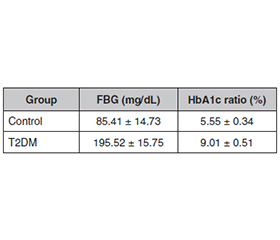
Актуальність. Дисбаланс оксидантів й антиоксидантів, що порушує окисно-відновну сигналізацію та спричиняє молекулярні пошкодження в клітинах, відомий як окиснювальний стрес. Оксиданти, активні форми кисню й активні форми азоту, є високореактивними молекулами, що утворюються як ендогенно (наприклад, в мітохондріях), так і із зовнішніх джерел (забруднення, радіація) і пошкоджують ДНК та інші клітинні компоненти. Мета: оцінити й порівняти рівень глюкози в крові натще, глікованого гемоглобіну, малонового діальдегіду, відновленого глутатіону, цинку (Zn), міді (Cu), селену (Se), заліза, загального холестерину, ліпопротеїнів низької, високої щільності (ЛПВЩ) і тригліцеридів у пацієнтів із цукровим діабетом 2-го типу (ЦД2) та здорових людей контрольної групи. Матеріали та методи. Загалом під спостереженням перебувало 200 осіб, яких розподілили на дві групи: 100 пацієнтів із діагнозом ЦД2 та 100 практично здорових людей (контрольна група). Тривалість терапії ЦД2 за допомогою метформіну перебувала в межах від одного до трьох років. Усі пацієнти із цукровим діабетом отримували препарат у стандартизованій дозі 500 мг двічі на день. Особи з курінням в анамнезі були виключені, щоб уникнути потенційного впливу на окиснювальний стрес та біохімічні параметри. Результати. Аналіз показав, що в пацієнтів із ЦД2 спостерігалися вірогідно вищі рівні глюкози в крові натще, глікованого гемоглобіну, малонового діальдегіду, Cu, загального холестерину, ліпопротеїнів низької щільності та тригліцеридів порівняно зі здоровими людьми контрольної групи (P ≤ 0,05). Натомість параметри відновленого глутатіону, Zn, Se і ЛПВЩ були вірогідно нижчими в групі ЦД2. Статистично значущої різниці в сироваткових рівнях заліза між пацієнтами та контрольною групою не спостерігалося. Про дисбаланс мікроелементів, що регулюють окиснювальний стрес, свідчить підвищення вмісту Cu і зниження — Zn та Se; Cu має тенденцію посилювати окиснювальні процеси, тоді як Zn і Se функціонують як антиоксиданти, тому зниження їх рівня може посилити окиснювальні пошкодження. Висновки. Результати показують, що вірогідні зміни глікемічних індексів, ліпідного профілю, маркерів окиснювального стресу й статусу мікроелементів пов’язані з ЦД2. Зниження рівня антиоксидантів та підвищення параметрів окиснювального стресу вказують на можливу роль окиснювального дисбалансу в патогенезі ЦД2. Крім того, пов’язані зі статтю варіації вмісту заліза та ЛПВЩ можуть бути відображенням основних біологічних відмінностей, які потребують додаткових досліджень.
Background. An imbalance in favor of oxidants (prooxidants) over antioxidants, which disrupts redox signaling and causes molecular damage in cells, is known as oxidative stress. Oxidants, often reactive oxygen species and reactive nitrogen species, are highly reactive molecules produced both endogenously (e.g., mitochondria) and from external sources (e.g., pollution, radiation), which can damage lipids, proteins, DNA, and other cellular components. The purpose of the study was to assess and compare fasting blood glucose, glycated hemoglobin, malondialdehyde, reduced glutathione, zinc (Zn), copper (Cu), selenium (Se), iron, total cholesterol, low-density lipoprotein, high-density lipoprotein (HDL), and triglycerides in patients with type 2 diabetes mallitus (T2DM) and healthy controls. Materials and methods. A total of 200 participants were recruited and allocated into two groups: 100 patients diagnosed with T2DM and 100 apparently healthy control subjects. The duration of T2DM and metformin therapy ranged from 1 to 3 years. All diabetic patients were receiving metformin at a standardized dose of 500 mg twice daily. Individuals with a history of smoking were excluded to avoid potential confounding effects on oxidative stress and biochemical parameters. Results. The analysis demonstrated that patients with T2DM exhibited significantly higher levels of fasting blood glucose, glycated hemoglobin, malondialdehyde, Cu, total cholesterol, low-density lipoprotein and triglycerides compared to healthy controls (P ≤ 0.05). In contrast, levels of reduced glutathione, Zn, Se, and HDL were significantly lower in the T2DM group. No statistically significant difference was observed in serum iron levels between patients and controls. An imbalance in trace elements that regulate oxidative stress is suggested by the rise in Cu and decrease in Zn and Se; Cu tends to enhance oxidative processes while Zn and Se function as antioxidants; thus, their loss may worsen oxidative damage. Conclusions. The results show that considerable changes in glycemic indices, lipid profiles, oxidative stress markers, and trace element status are linked to T2DM. Reduced antioxidant levels and an increase in oxidative stress indicators point to a possible role for oxidative imbalance in the pathogenesis of T2DM. Furthermore, sex-related variations in iron and HDL levels might be a reflection of underlying biological differences that need more research.
цукровий діабет 2-го типу; окиснювальний стрес; малоновий діальдегід; глутатіон; мікроелементи; цинк; мідь; селен; ліпідний профіль
type 2 diabetes mellitus; oxidative stress; malondialdehyde; glutathione; trace elements; zinc; copper; selenium; lipid profile
Для ознакомления с полным содержанием статьи необходимо оформить подписку на журнал.
- Chen K, Zhang H, Wu N, Li B, Li S, Mu Y. Global risk factors, epidemiology, and disease burden of type 2 diabetes. Sci China Life Sci. 2026 Feb;69(2):384-395. doi: 10.1007/s11427-024-3036-4.
- Lu X, Xie Q, Pan X, Zhang R, Zhang X, et al. Type 2 diabetes mellitus in adults: pathogenesis, prevention and therapy. Signal Transduct Target Ther. 2024 Oct 2;9(1):262. doi: 10.1038/s41392-024-01951-9.
- Galicia-Garcia U, Benito-Vicente A, Jebari S, Larrea-Sebal A, Siddiqi H, et al. Pathophysiology of Type 2 Diabetes Mellitus. Int J Mol Sci. 2020 Aug 30;21(17):6275. doi: 10.3390/ijms21176275.
- American Diabetes Association Professional Practice Committee for Diabetes. 2. Diagnosis and Classification of Diabetes: Standards of Care in Diabetes-2026. Diabetes Care. 2026 Jan 1;49(Suppl 1):S27-S49. doi: 10.2337/dc26-S002.
- Taylor R. Understanding the cause of type 2 diabetes. Lancet Diabetes Endocrinol. 2024 Sep;12(9):664-673. doi: 10.1016/S2213-8587(24)00157-8.
- Pearson ER. Type 2 diabetes: a multifaceted disease. Diabetologia. 2019 Jul;62(7):1107-1112. doi: 10.1007/s00125-019-4909-y.
- Ismail L, Materwala H, Al Kaabi J. Association of risk factors with type 2 diabetes: A systematic review. Comput Struct Biotechnol J. 2021 Mar 10;19:1759-1785. doi: 10.1016/j.csbj.2021.03.003.
- Tsaryk I, Pashkovska N, Pankiv V, Pashkovskyy V, Stankova N. Features of Anxiety and Depression Indicators in Patients with Autoimmune Diabetes Mellitus on the Background of Different Vitamin D Status. Romanian Journal of Diabetes Nutrition and Metabolic Diseases. 2025;32(2):203-209. doi: 10.46389/rjd-2025-1873.
- Zeru MA, Tesfa E, Mitiku AA, Seyoum A, Bokoro TA. Prevalence and risk factors of type 2 diabetes mellitus in Ethiopia: systematic review and meta-analysis. Sci Rep. 2021 Nov 5;11(1):21733. doi: 10.1038/s41598-021-01256-9.
- Yuan S, Larsson SC. An atlas on risk factors for type 2 diabetes: a wide-angled Mendelian randomisation study. Diabetologia. 2020 Nov;63(11):2359-2371. doi: 10.1007/s00125-020-05253-x.
- Unnikrishnan R, Pradeepa R, Joshi SR, Mohan V. Type 2 Diabetes: Demystifying the Global Epidemic. Diabetes. 2017 Jun;66(6):1432-1442. doi: 10.2337/db16-0766.
- Ji LL, Yeo D. Oxidative stress: an evolving definition. Fac Rev. 2021 Feb 9;10:13. doi: 10.12703/r/10-13.
- Sies H. Oxidative Stress: Concept and Some Practical Aspects. Antioxidants (Basel). 2020 Sep 10;9(9):852. doi: 10.3390/antiox9090852.
- Didushko OM, Herych PR, Cherniavska IV, Yatsyshyn RI, Pankiv VI. Influence of the complex treatment of hypothyroidism on the leptin level in patients with primary hypothyroidism. World of Medicine and Biology. 2018;3(65):59-63. doi: 10.26724/2079-8334-2018-3-65-59-63.
- Pisoschi AM, Pop A, Iordache F, Stanca L, Predoi G, Serban AI. Oxidative stress mitigation by antioxidants — An overview on their chemistry and influences on health status. Eur J Med Chem. 2021 Jan 1;209:112891. doi: 10.1016/j.ejmech.2020.112891.
- Chaudhary P, Janmeda P, Docea AO, Yeskaliyeva B, Abdull Razis AF, et al. Oxidative stress, free radicals and antioxidants: potential crosstalk in the pathophysiology of human diseases. Front Chem. 2023 May 10;11:1158198. doi: 10.3389/fchem.2023.1158198.
- Gulcin İ. Antioxidants: a comprehensive review. Arch Toxicol. 2025 May;99(5):1893-1997. doi: 10.1007/s00204-025-03997-2.
- Liu Y, Liu Q, Feng B, Gan W. Falsely decreased triglyce–ride concentration in a patient with acute pancreatitis due to insufficient configuration of alarm rules. Biochem Med (Zagreb). 2026 Feb 15;36(1):011002. doi: 10.11613/BM.2026.011002.
- Pohanka M. Glycated Hemoglobin and Methods for Its Point of Care Testing. Biosensors (Basel). 2021 Mar 4;11(3):70. doi: 10.3390/bios11030070.
- Ellis HR. On “Tissue sulfhydryl groups” by George L. Ellman. Arch Biochem Biophys. 2022 Sep 15;726:109174. doi: 10.1016/j.abb.2022.109174.
- Fossati P, Prencipe L. Serum triglycerides determined colorimetrically with an enzyme that produces hydrogen peroxide. Clin Chem. 1982 Oct;28(10):2077-80.
- Jung E, Kong SY, Ro YS, Ryu HH, Shin SD. Serum Cholesterol Levels and Risk of Cardiovascular Death: A Systematic Review and a Dose-Response Meta-Analysis of Prospective Cohort Studies. Int J Environ Res Public Health. 2022 Jul 6;19(14):8272. doi: 10.3390/ijerph19148272.
- Cao H, Oghenemaro EF, Latypova A, Abosaoda MK, Zaman GS, Devi A. Advancing clinical biochemistry: addressing gaps and driving future innovations. Front Med (Lausanne). 2025 Apr 8;12:1521126. doi: 10.3389/fmed.2025.1521126.
- Hu B, Ouyang Y, Zhao T, Wang Z, Yan Q, et al. Antioxidant Hydrogels: Antioxidant Mechanisms, Design Strategies, and Applications in the Treatment of Oxidative Stress-Related Diseases. Adv Healthc Mater. 2024 Apr;13(11):e2303817. doi: 10.1002/adhm.202303817.
- Zhu Y, Wang K, Jia X, Fu C, Yu H, Wang Y. Antioxidant peptides, the guardian of life from oxidative stress. Med Res Rev. 2024 Jan;44(1):275-364. doi: 10.1002/med.21986.
- Kishi S, Nagasu H, Kidokoro K, Kashihara N. Oxidative stress and the role of redox signalling in chronic kidney disease. Nat Rev Nephrol. 2024 Feb;20(2):101-119. doi: 10.1038/s41581-023-00775-0.
- Fritz KS, Petersen DR. Exploring the biology of lipid peroxi–dation-derived protein carbonylation. Chem Res Toxicol. 2011 Sep 19;24(9):1411-9. doi: 10.1021/tx200169n.
- Wang B, Wang Y, Zhang J, Hu C, Jiang J, Li Y, Peng Z. ROS-induced lipid peroxidation modulates cell death outcome: mechanisms behind apoptosis, autophagy, and ferroptosis. Arch Toxicol. 2023 Jun;97(6):1439-1451. doi: 10.1007/s00204-023-03476-6.
- Singh J, Kaur S, Verma MK. Correlation of Glycated Hemoglobin with Oxidative Stress in Type 2 Diabetes Mellitus. J Adv Zool. 2023;44.
- Kafle D. Effect of Persistent Hyperglycemia and Lipid Profile and its role in Glycation and Oxidative stress in Chronic Type 2 Diabetes Mellitus subjects. Nepal Medical Journal. 2022;5(1): 20-24. doi: 10.37080/nmj.125.
- Mishra S, Mishra BB. Study of Lipid Peroxidation, Nitric Oxide End Product, and Trace Element Status in Type 2 Diabetes Mellitus with and without Complications. Int J Appl Basic Med Res. 2017 Apr-Jun;7(2):88-93. doi: 10.4103/2229-516X.205813.
- Mansoori A, Nosrati M, Dorchin M, Mohammadyari F, De–rakhshan-Nezhad E, et al. A novel index for diagnosis of type 2 diabetes mellitus: Cholesterol, High density lipoprotein, and Glucose (CHG) index. J Diabetes Investig. 2025 Feb;16(2):309-314. doi: 10.1111/jdi.14343.
- Steinbrenner H, Duntas LH, Rayman MP. The role of sele–nium in type-2 diabetes mellitus and its metabolic comorbidities. Redox Biol. 2022 Apr;50:102236. doi: 10.1016/j.redox.2022.102236.