
Інформація призначена тільки для фахівців сфери охорони здоров'я, осіб,
які мають вищу або середню спеціальну медичну освіту.

Підтвердіть, що Ви є фахівцем у сфері охорони здоров'я.

Oral and General Health Том 7, №2, 2026

Вернуться к номеру

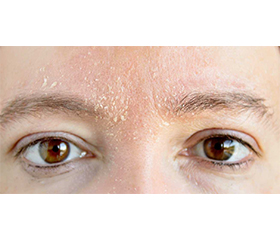
Себорейний дерматит та вісь «кишечник — шкіра»: сучасні уявлення про роль мікробіому та гепатобіліарних порушень
Авторы: Соломаха М.А. (1), Бардова К.О. (2), Возіанова С.В. (2)
(1) - Outre clinic, м. Київ, Україна
(2) - Національний університет охорони здоров’я України імені П.Л. Шупика, м. Київ, Україна

Рубрики: Стоматология

Разделы: Справочник специалиста

Версия для печати


Резюме

Актуальність. Себорейний дерматит (СД) є одним із найпоширеніших хронічних запальних дерматозів, патогенез якого залишається остаточно не з’ясованим. Останніми роками значна увага приділяється вивченню осі «кишечник — шкіра», ролі кишкового мікробіому та функціонального стану гепатобіліарної системи у розвитку й перебігу захворювання. Мета: провести аналіз сучасних наукових даних щодо ролі осі «кишечник — шкіра», мікробіому кишечника та функціонального стану гепатобіліарної системи у патогенезі себорейного дерматиту, а також оцінити частоту супутньої патології шлунково-кишкового тракту у пацієнтів з СД. Матеріали та методи. Проведено аналітичний огляд наукової літератури, опублікованої переважно протягом останніх 10 років. Пошук джерел здійснювали в базах даних PubMed, Scopus, Web of Science та Google Scholar. Також обстежено 40 пацієнтів із клінічно встановленим діагнозом себорейного дерматиту віком від 25 до 63 років із аналізом гастроентерологічного анамнезу та супутньої патології шлунково-кишкового тракту. Результати. Аналіз літературних даних свідчить про можливу участь осі «кишечник — шкіра», порушень кишкового мікробіому та функціонального стану гепатобіліарної системи у патогенезі себорейного дерматиту. За результатами власного дослідження, ознаки дисбіозу кишечника виявлено у 60 % пацієнтів, інфікування H. pylori — у 45 %, хронічний гастрит — у 52,5 %, жовчнокам’яну хворобу — у 22,5 % обстежених. У пацієнтів із гастроентерологічною патологією частіше спостерігався рецидивуючий перебіг захворювання. Висновки. Отримані дані підтверджують перспективність подальшого вивчення осі «кишечник — шкіра» та ролі гастроінтестинальних порушень у розвитку себорейного дерматиту. Висока частота супутньої патології шлунково-кишкового тракту у пацієнтів із СД обґрунтовує доцільність комплексного підходу до їх обстеження та лікування.

Background. Seborrheic dermatitis is one of the most common chronic inflammatory dermatoses, and its pathogenesis remains incompletely understood. Increasing attention has recently been focused on the gut-skin axis, intestinal microbiome and hepatobiliary function as potential contributors to disease development and progression. Objective: to analyze current evidence regarding the role of the gut-skin axis, intestinal microbiome and hepatobiliary function in the pathogenesis of seborrheic dermatitis and to evaluate the prevalence of concomitant gastrointestinal disorders in patients with seborrheic dermatitis. Materials and methods. An analytical literature review of studies published predominantly ­during the last decade was performed using PubMed, Scopus, Web of Science, and Google Scholar databases. Additionally, 40 patients with clinically diagnosed seborrheic dermatitis aged 25–63 years were examined, with assessment of gastrointestinal history and associated gastrointestinal diseases. Results. Current evidence suggests a possible involvement of the gut-skin axis, intestinal dysbiosis and hepatobiliary dysfunction in the pathogenesis of seborrheic dermatitis. In our cohort, intestinal dysbiosis was identified in 60 % of patients, H.pylori infection in 45 %, chronic gastritis in 52.5 %, and cholelithiasis in 22.5 % of cases. Patients with gastrointestinal disorders demonstra­ted a more recurrent disease course. Conclusions. The findings confirm the prospects of further study of the gut-skin axis and the role of gastrointestinal disorders in the development of seborrheic dermatitis. The high frequency of gastrointestinal comorbidities in patients with seborrheic dermatitis justifies the feasibility of a comprehensive approach to their examination and treatment.


Ключевые слова

себорейний дерматит; вісь «кишечник — шкіра»; мікробіом кишечника; мікобіом; Malassezia; гепатобіліарна система; дисбіоз; патогенез

seborrheic dermatitis; gut-skin axis; gut microbiome; mycobiome; Malassezia; hepatobiliary system; dysbiosis; pathogenesis


Для ознакомления с полным содержанием статьи необходимо оформить подписку на журнал.


Список литературы

1. Gupta, A.K., & Bluhm, R. (2004). Seborrheic dermatitis. Journal of the European Academy of Dermatology and Venereology, 18(1), 13-26.
2. Sanders, M.G.H., Pardo, L.M., Franco, O.H., Ginger, R.S., & Nijsten, T. (2018). Prevalence and determinants of seborrhoeic dermatitis in a middle-aged and elderly population: the Rotterdam Study. British Journal of Dermatology, 178(1), 148-153.
3. Dall’Oglio, F., Nasca, M.R., Gerbino, C., & Micali, G. (2022). An overview of the diagnosis and management of seborrheic dermatitis. Clinical, Cosmetic аnd Investigational Dermatology, 1537-1548.
4. Yu, Y., Dunaway, S., Champer, J., Kim, J., & Alikhan, A. (2020). Changing our microbiome: probiotics in dermatology. British Journal of Dermatology, 182(1), 39-46.
5. Sparber, F., & LeibundGut-Landmann, S. (2017). Host responses to Malassezia spp. in the mammalian skin. Frontiers in Іmmunology, 8, 1614.
6. Park, T., Kim, H.J., Myeong, N.R., Lee, H.G., Kwack, I., Lee, J., ... & An, S. (2017). Collapse of human scalp microbiome network in dandruff and seborrhoeic dermatitis. Experimental Dermato–logy, 26(9), 835-838.
7. Akba, A., Kln, F., ener, S., & Hayran, Y. (2022). Investigation of the relationship between seborrheic dermatitis and metabolic syndrome parameters. Journal of Cosmetic Dermatology, 21(11), 6079-6085.
8. Nole, K.L.B., Yim, E., & Keri, J.E. (2014). Probiotics and prebiotics in dermatology. Journal of the American Academy of Dermato–logy, 71(4), 814-821.
9. Reygagne, P., Bastien, P., Couavoux, M.P., Philippe, D., Renouf, M., Castiel-Higounenc, I., & Gueniche, A. (2017). The positive benefit of Lactobacillus paracasei NCC2461 ST11 in healthy volunteers with moderate to severe dandruff. Beneficial Microbes, 8(5), 671-680.
10. Chandrasekaran, P., Weiskirchen, S., & Weiskirchen, R. (2024). Effects of probiotics on gut microbiota: an overview. International Journal оf Molecular Sciences, 25(11), 6022.
11. Saxena, R., Mittal, P., Clavaud, C., Dhakan, D.B., Hegde, P., Veeranagaiah, M.M., ... & Sharma, V.K. (2018). Comparison of healthy and dandruff scalp microbiome reveals the role of commensals in scalp health. Frontiers in Cellular аnd Infection Microbiology, 8, 406709.
12. de Jesus, G.F.A., Rossetto, M.P., Voytena, A., Feder, B., Borges, H., da Costa Borges, G., ... & Michels, M. (2023). Clinical evaluation of paraprobiotic-associated Bifidobacterium lactis CCT 7858 anti-dandruff shampoo efficacy: A randomized placebo-controlled clinical trial. International Journal of Cosmetic Science, 45(5), 572-580.
13. Arck, P., Handjiski, B., Hagen, E., Pincus, M., Bruenahl, C., Bienenstock, J., & Paus, R. (2010). Is there a ‘gut–brain–skin axis’? Experimental Dermatology, 19(5), 401-405.
14. Shah, K.R., Boland, C.R., Patel, M., Thrash, B., & Menter, A. (2013). Cutaneous manifestations of gastrointestinal disease: part I. Journal of the American Academy of Dermatology, 68(2), 189-e1.
15. Kamamoto, C.S.L., Nishikaku, A.S., Gompertz, O.F., Melo, A.S., Hassun, K.M., & Bagatin, E. (2017). Cutaneous fungal microbiome: Malassezia yeasts in seborrheic dermatitis scalp in a randomized, comparative and therapeutic trial. Dermato-endocrinology, 9(1), e1361573.
16. Barros, C.P., Guimares, J.T., Esmerino, E.A., Duarte, M.C.K., Silva, M.C., Silva, R., ... & Cruz, A.G. (2020). Paraprobiotics and postbiotics: concepts and potential applications in dairy products. Current Opinion іn Food Science, 32, 1-8.
17. Dawson Jr, T.L. (2007, December). Malassezia globosa and restricta: breakthrough understanding of the etiology and treatment of dandruff and seborrheic dermatitis through whole-genome analysis. In: Journal of Investigative Dermatology. Symposium Proceedings (Vol. 12, No. 2, pp. 15-19). Elsevier.
18. Muizzuddin, N., Maher, W., Sullivan, M., Schnittger, S., & Mammone, T. (2012). Physiological effect of a probiotic on skin. Journal of Cosmetic Science, 63(6), 385-395.
19. Min, M., Nadora, D., Chakkalakal, M., Afzal, N., Subramanyam, C., Gahoonia, N., ... & Sivamani, R.K. (2024). An oral botanical supplement improves small intestinal bacterial overgrowth (SIBO) and facial redness: results of an open-label clinical study. Nutrients, 16(18), 3149.
20. Yin, C.S., Nguyen, T.T.M., Yi, E.J., Zheng, S., Bellere, A.D., Zheng, Q., ... & Yi, T.H. (2024). Efficacy of probiotics in hair growth and dandruff control: A systematic review and meta-analysis. Heliyon, 10(9).
21. Naik, B., Sasikumar, J., & Das, S.P. (2025). From skin and gut to the brain: the infectious journey of the human commensal fungus malassezia and its neurological consequences. Molecular Neurobiology, 62(1), 533-556.

Вернуться к номеру