
Архив офтальмологии Украины Том 14, №2, 2026
Вернуться к номеру
Інтегрована концепція гетерогенності хронічного запалення та персоналізованих запальних фенотипів при діабетичній ретинопатії
Авторы: Головкин В.В. (1), Мальцев Д.В. (2), Натрус Л.В. (2)
(1) - Офтальмологічний центр ТОВ «Ексімер-Київ», м. Київ, Україна
(2) - Національний медичний університет імені О.О. Богомольця, м. Київ, Україна
Рубрики: Офтальмология
Разделы: Клинические исследования
Версия для печати
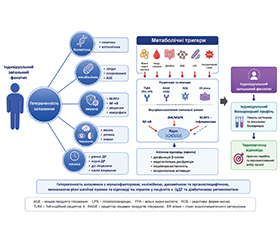
Актуальність. Незважаючи на значну кількість досліджень, присвячених запальним механізмам діабетичної ретинопатії (ДР), універсального біомаркера, здатного прогнозувати розвиток захворювання, його прогресування або відповідь на лікування, досі не знайдено. У цій концептуальній статті запропоновано новий погляд на причини цієї невдачі, що базується на переосмисленні природи хронічного запалення при цукровому діабеті 2-го типу. На відміну від традиційного оглядового підходу представлена робота формує інтегровану концептуальну модель, створену шляхом критичного синтезу сучасних літературних даних, результатів власних експериментальних і клінічних досліджень авторів та сучасних принципів системної біології та прецизійної медицини. Мета: сформувати інтегровану концепцію гетерогенності хронічного запалення при діабетичній ретинопатії та визначити її значення для персоналізованої оцінки ризику, стратифікації пацієнтів і вибору терапевтичних стратегій. Результати. Запропоновано концепцію багатовимірної гетерогенності хронічного запалення, відповідно до якої запальна відповідь при ДР формується внаслідок взаємодії кількох взаємопов’язаних рівнів варіабельності: біологічного, метаболічного, імунного, тканинного (органоспецифічного) та часового. Особливу увагу приділено двом ключовим аспектам гетерогенності — органоспецифічності запальних механізмів і міжіндивідуальній варіабельності, що разом визначають формування індивідуального запального фенотипу пацієнта. У межах запропонованої концепції обґрунтовується, що відсутність універсального біомаркера є закономірним наслідком нелінійної та багаторівневої організації запального процесу, а не недостатності окремих досліджень. Висновки. Концепція індивідуального запального фенотипу відкриває нові можливості для переходу від пошуку окремих біомаркерів до інтегрованих мультиомних біомаркерних панелей, стратифікації пацієнтів за домінуючими патогенетичними механізмами та розвитку персоналізованих терапевтичних стратегій при ДР.
Background. Despite the significant amount of research on the inflammatory mechanisms of diabetic retinopathy (DR), a universal biomarker capable of predicting the development of the disease, its progression or response to treatment has not yet been found. This conceptual article proposes a new perspective on the reasons for this failure, based on a rethinking of the nature of chronic inflammation in type 2 diabetes mellitus. In contrast to the traditional review approach, the presented work forms an integrated conceptual model created through a critical synthesis of modern literature data, the results of the authors’ own experimental and clinical studies and modern principles of systemic biology and precision medicine. Objective: to formulate an integrated concept of the heterogeneity of chronic inflammation in DR and to determine its significance for personalized risk assessment, patient stratification, and the selection of therapeutic strategies. Results. The concept of multidimensional heterogeneity of chronic inflammation is proposed, according to which the inflammatory response in DR is formed as a result of the interaction of several interrelated levels of variability: biological, metabolic, immune, tissue (organ-specific) and temporal. Particular attention is paid to two key aspects of heterogeneity — organ specificity of inflammatory mechanisms and interindividual variability, which together determine the formation of the individual inflammatory phenotype of a patient. Within the framework of the proposed concept, it is justified that the absence of a universal biomarker is a natural consequence of the nonlinear and multilevel organization of the inflammatory process, and not the insufficiency of some studies. Conclusions. The concept of an individual inflammatory phenotype opens up new opportunities for the transition from the search for specific biomarkers to integrated multiomic biomarker panels, stratification of patients according to dominant pathogenetic mechanisms and the development of personalized therapeutic strategies in DR.
цукровий діабет 2-го типу; діабетична ретинопатія; концептуальна стаття; хронічне запалення; гетерогенність запалення; органоспецифічність; індивідуальний запальний фенотип; біомаркери; мультиоміка; прецизійна медицина
type 2 diabetes; diabetic retinopathy; conceptual article; chronic inflammation; inflammation heterogeneity; organ specificity; individual inflammatory phenotype; biomarkers; multiomics; precision medicine
Для ознакомления с полным содержанием статьи необходимо оформить подписку на журнал.
- Liu Q, He X, Liu Y. Burden of type 2 diabetes in working-age adults (20–54 years): a GBD 2021 analysis projecting trends to 2035 and exploring the potential benefits of physical activity. Front Public Health. 2026 Jan 5;13:1706523.
- Pawlukianiec C, Karpienko K, Żendzian-Piotrowska M, Zalewska A, Maciejczyk M. Neuroprotective effects of calcitriol in a rat model of type 2 diabetes: Targeting neuroinflammation, glycation, oxidative stress and metabolic dysfunction. Biomed Pharmacother. 2026 Jan 17;195:119008.
- Wevers A, San Roman-Mata S, Navarro-Ledesma S, Pruimboom L. Effects of Photobiomodulation on Metabolic, Inflammatory, and Neurological Outcomes in Type 2 Diabetes: A Systematic Review and Meta-Analysis. Int J Mol Sci. 2025 Dec 31;27(1):440.
- Li Z, Zhou F, Sun X, Zhao H, Jin Y, He P, Jia Y. Jiangzhi Quban Recipe improves type 2 diabetes mellitus complicated with hyperlipidemia by multi-target regulation of the inflammation-metabolism network: network pharmacology analysis and clinical validation. Nan Fang Yi Ke Da Xue Xue Bao. 2026 Jan 20;46(1):83-93.
- Khungala A, Patel V, Babaria M, Vaghasiya RB, Gupta S. Evaluation of Hematological Changes in Type 2 Diabetes Mellitus and Their Correlation with Glycemic Control. J Pharm Bioallied Sci. 2025 Dec;17(Suppl 4):S3102-S3104.
- Ali N. Serum Uric Acid as a Mediator of Insulin Resistance: Molecular Mechanisms and Metabolic Pathways. Endocrinol Diabetes Metab. 2026 Jan;9(1):e70163.
- Zhang Z, Wang S, Sun G, Pan D. Intermittent Fasting and Probiotics for Gut Microbiota Modulation in Type 2 Diabetes Mellitus: A Narrative Review. Nutrients. 2025 Dec 30;18(1):119.
- Dobre MZ, Virgolici B, Dunca-Stefan DCA, Doicin IC, Stanescu-Spinu II. Inflammation-Insulin Resistance Crosstalk and the Central Role of Myokines. Int J Mol Sci. 2025 Dec 20;27(1):60.
- Rykov SO, Prokopenko YuV, Natrus LV, Panchenko YuO. Role of polymorphisms of folate-cycle enzymes in diabetic retinopathy progression in patients with type 2 diabetes mellitus. J Ophthalmol (Ukraine). 2022;(5):3-11. doi: 10.31288/oftalmolzh20225311.
- Panchenko IuO, Tsybulskyi VS, Natrus LV, Zakharevych HIe. Level of neuroinflammatory markers in patients with diabetic retinopathy on the background of type 2 diabetes mellitus and gene–tically determined hyperhomocysteinemia. J Ophthalmol (Ukraine). 2024;(4):28-37. doi: 10.31288/oftalmolzh202442837.
- Panchenko IO, Natrus LV, Tsybulskyi VS, Maltsev DV, Hanyuk VM. Study of plasma vitamin D3 concentration as a mo–dulator of lipid profile, inflammation and neurodegeneration in diabetic retinopathy in type 2 diabetes mellitus. Arch Ukr Ophthalmol. 2025;13(3):172-178. doi: 10.22141/2309-8147.13.3.2025.421.
- Hanyuk VM, Petrenko OV, Natrus LV. Study of factors affec–ting fatty acid metabolism in patients with proliferative diabetic retino–pathy and different duration of diabetes mellitus. Arch Ukr Ophthalmol. 2020;8(1):25-32. doi: 10.22141/2309-8147.8.1.2020.200733.
- Natrus LV, Tsybulskyi VS, Hanyuk VM, Panchenko IO. Ferritin in the blood of patients with type 2 diabetes and diabetic retinopathy: a marker of inflammation or anemia? Fiziol Zh. 2024;70(6):9-16. doi: 10.15407/fz70.06.009.
- Natrus LV, Gayova LV, Byhovets MYu, Osadchuk YuS, Konovalov SE. The value of regulatory effects on lipid metabolism during complicated diabetes mellitus. Fiziol Zh. 2020;66(1):25-34. doi: 10.15407/fz66.01.025.
- Berbudi A, Rahmadika N, Tjahjadi AI, Ruslami R. Type 2 Diabetes and its Impact on the Immune System. Curr Diabetes Rev. 2020;16(5):442-449.
- Dharmarajan S, Carrillo C, Qi Z, Wilson JM, Baucum AJ 2nd,
- Sorenson CM, et al. Retinal inflammation in murine models of type 1 and type 2 diabetes with diabetic retinopathy. Diabetologia. 2023 Nov;66(11):2170-2185.
- Antar SA, Ashour NA, Sharaky M, Khattab M, Ashour NA, Zaid RT, et al. Diabetes mellitus: Classification, mediators, and complications; A gate to identify potential targets for the development of new effective treatments. Biomed Pharmacother. 2023 Dec;168:115734.
- Pellegrini V, La Grotta R, Carreras F, Giuliani A, Sabbatinelli J, Olivieri F, et al. Inflammatory Trajectory of Type 2 Diabetes: Novel Opportunities for Early and Late Treatment. Cells. 2024 Oct 8;13(19):1662.
- Floyd JL, Prasad R, Dupont MD, Adu-Rutledge Y, Anshumali S, Paul S, et al. Intestinal neutrophil extracellular traps promote gut barrier damage exacerbating endotoxaemia, systemic inflammation and progression of diabetic retinopathy in type 2 diabetes. Diabetologia. 2025 Apr;68(4):866-889.
- Elsayed MS, Elshal M, Helal MG, Ibrahim T. Targeting the underlying immune mechanism of diabetes-induced myocardial dysfunction via modulation of SIRT-3/p53/TIGAR/PFKFB-3 and SIRT-3/NF-κB signaling pathways as a potential controlling strategy. Biomed Pharmacother. 2026 Jan;194:118901.
- Mitrea A, Ștefan AG, Vladu IM, Clenciu D, Stan SI, Efrem IC, et al. A Composite Score of Insulin Resistance and Inflammation Biomarkers for Predicting Lower Limb Complications in Type 2 Diabetes Mellitus. Int J Mol Sci. 2025 Dec 9;26(24):11859.
- De Lourdes Ochoa-González F, González-Curiel IE, Cervantes-Villagrana AR, Fernández-Ruiz JC, Castañeda-Delgado JE. Innate Immunity Alterations in Type 2 Diabetes Mellitus: Understanding Infection Susceptibility. Curr Mol Med. 2021;21(4):318-331.
- Kim Y, Hyun C, Lee M. Discovering potential pathways between type 2 diabetes mellitus and diabetic retinopathy: A big data analysis of the South Korean National Sample Cohort. Medicine (Baltimore). 2023 Aug 4;102(31):e34576.
- Brandimonte-Hernández M, Hernández-Ruiz A, Ruiz-Ojeda FJ, Gil Á. Effects of Food Bioactive Compounds on Oxidative Stress and the Antioxidant Defense System in Type 2 Diabetes: A Systematic Review and Meta-Analysis of Randomized Controlled Trials. Nutr Rev. 2026 Jan 14:nuaf292.
- Saadh MJ, Allela OQB, Kareem RA, Kyada A, Malathi H, Nathiya D, et al. Immune cell dysfunction: A critical player in deve–lopment of diabetes complications. Curr Res Transl Med. 2025 Jul-Sep;73(3):103510.
- Liu C, Feng X, Li Q, Wang Y, Li Q, Hua M. Adiponectin, TNF-α and inflammatory cytokines and risk of type 2 diabetes: A systematic review and meta-analysis. Cytokine. 2016 Oct;86:100-109.
- Ssekamatte P, Sitenda D, Nabatanzi R, Nakibuule M, Kibirige D, Kyazze AP, et al. A quadral biosignature of IFN-γ, IL-2, IL-12 and IP-10 increases the diagnostic potential for latent tuberculosis among diabetic patients in Uganda. BMC Immunol. 2025 Nov 7;26(1):88. doi: 10.1186/s12865-025-00771-y.
- Qiao L, Tang X, Peng J, Xie Q, Wu M, Chen X, Tang Z. Blood and imaging biomarkers of blood-brain barrier disruption in diabetic individuals with cognitive impairment. Aging Clin Exp Res. 2026 Jan 20. doi: 10.1007/s40520-025-03316-w. Epub ahead of print.
- Xu YX, Zhang XY, Wang L, Ma HC, Xue SQ, Gu JH, et al. Therapeutic potential of oral edaravone in diabetic endothelial dysfunction through NF-κB and p38 pathway inhibition. Eur J Pharmacol. 2026 Jan 20;1012:178500.
- Mousavi M, Jeddi S, Norouzirad R, Ghasemi A. The Effect of Hyperoxia on Nitric Oxide Metabolism in the Skeletal Muscle of Male Type 2 Diabetic Rats. Endocrinol Diabetes Metab. 2025 Sep;8(5):e70090.
- Darwish R, Alcibahy Y, Bucheeri S, Albishtawi A, Tama M, Shetty J, Butler AE. The Role of Hypothalamic Microglia in the Onset of Insulin Resistance and Type 2 Diabetes: A Neuro-Immune Perspective. Int J Mol Sci. 2024 Dec 7;25(23):13169.
- Chen C, Zhang WJ, Ding Q, Shen SM, Ye Y, Huang Z, et al. Choroidal Structural Alterations in Patients with Type 2 Diabetes Mellitus Without Clinical Diabetic Retinopathy Using Ultra-Widefield Swept-Source OCTA: A Cross-Sectional Study. Photodiagnosis Photodyn Ther. 2026 Jan 14:105349.
- Natrus L, Osadchuk Y, Lisakovska OO, Labudzinskyi DO, Yulia GK, Chaikovsky YB. Effect of propionic acid on diabetes-induced impairment of unfolded protein response signaling and astrocyte/microglia crosstalk in rat ventromedial nucleus of the hypothalamus. Neural Plast. 2022;2022:6404964. doi: 10.1155/2022/6404964.
- Klys Y, Kerimov T, Savosko S, Osadchuk Y, Smirnov S, Natrus L. Unfolded protein response in gastric glandulocytes of rats with the pharmacological correction of type 2 diabetes. Gastro. 2023 Oct. 15;57(3):127-34. doi: https://doi.org/10.22141/2308-2097.57.3.2023.550.
- Reinecke K, Kleynhans L, Ronacher K, Loots DT. Characterizing the tuberculosis and type 2 diabetes mellitus comorbidity in a South African cohort using untargeted GCxGC-TOFMS metabolomics. Metabolomics. 2026 Jan 19;22(1):19.
- Cui X, Liang Z. Association between metabolic dysfunction-associated steatotic liver disease, vitamin D3, and diabetic gastric motility disorders in type 2 diabetes mellitus. World J Hepatol. 2025 Nov 27;17(11):112060.
- Milewicz A, Kos-Kudła B, Ruchała M, Hubalewska-Dydejczyk A, Kajdaniuk D, Marek B. Is vitamin D deficiency a risk factor for obesity-related morbidity, prediabetes, and type 2 diabetes — a literature review and proposals from the experts of the Polish Society of Endocrinology. Endokrynol Pol. 2025;76(6):579-585.
- Le TN, Bright R, Truong VK, Li J, Juneja R, Vasilev K. Key biomarkers in type 2 diabetes patients: A systematic review. Diabetes Obes Metab. 2025 Jan;27(1):7-22. doi: 10.1111/dom.15991. Epub 2024 Oct 2. PMID: 39355932; PMCID: PMC11618249.
- Harm T, Autenrieth SE, Mezger K, Rohlfing AK, Dittman H, la Fougère C, et al. The inflammatory fingerprint reveals immune cell populations associated with disease activity in cardiac sarcoidosis. Clin Res Cardiol. 2026 May 18. doi: 10.1007/s00392-026-02939-x. Epub ahead of print. PMID: 42149235.
- Hu X, Chen S, Ye S, Chen W, Zhou Y. New insights into the role of immunity and inflammation in diabetic kidney disease in the omics era. Front. Immunol. 2024;15:1342837. doi: 10.3389/fimmu.2024.1342837.