
Международный эндокринологический журнал Том 22, №6, 2026
Вернуться к номеру
Вплив автоімунного тиреоїдиту на агресивність папілярної карциноми щитоподібної залози та нові можливості цитологічної діагностики
Авторы: Зелінська Г.В. (1), Міщенко М.О. (2), Кефелі-Яновська О.І. (3)
(1) - ДУ «Інститут ендокринології та обміну речовин імені В.П. Комісаренка НАМН України», м. Київ, Україна
(2) - ННЦ «Інститут біології та медицини», Київський національний університет імені Тараса Шевченка,
м. Київ, Україна
(3) - Інститут післядипломної освіти, Національний медичний університет імені О.О. Богомольця, м. Київ, Україна
Рубрики: Эндокринология
Разделы: Клинические исследования
Версия для печати
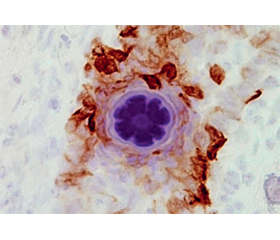
Актуальність. Папілярна карцинома (ПК) щитоподібної залози (ЩЗ) на тлі автоімунного тиреоїдиту (АІТ) залишається дискусійним питанням тиреоїдології. Необхідність пошуку нових цитоморфологічних критеріїв малігнізації в умовах хронічного запалення є критичною для запобігання хибнопозитивним діагнозам. Мета: дослідити вплив автоімунного тиреоїдиту на ступінь агресії папілярної карциноми ЩЗ та виявити цитоморфологічні маркери, що поліпшують передопераційну діагностику ПК на тлі АІТ. Матеріали та методи. У ретроспективному та проспективному дослідженні проаналізовано пунктати утворень ЩЗ у 500 пацієнтів із подальшою гістологічною верифікацією. Проведено цитоморфологічні дослідження та імуноцитохімічне визначення експресії цитокератинів 7 і 17 та тиреоглобуліну. Для порівняння якісних показників (агресія пухлин за класифікацією TNM, розмір пухлин та метастазів, наявність судинної інвазії, частота АІТ у групах з метастазуванням та без нього) використовували непараметричний критерій χ2. Статистичне порівняння розмірів метастазів визначали за допомогою U-критерію. Різницю вважали статистично значущою при p < 0,05. Результати. У 12 % випадків папілярної карциноми ЩЗ на тлі АІТ виявлено специфічні цитологічні комплекси, які складаються з кальцинатів, оточених епітеліальними клітинами, які були відсутні при доброякісних утвореннях. Імуноцитохімічний аналіз підтвердив епітеліальну та тиреоїдну природу даних клітин. Статистично доведено, що пацієнти з папілярною карциномою на тлі АІТ мають меншу частоту метастазування та менший розмір метастазів (p < 0,05) порівняно з групою папілярних карцином без АІТ. Виявлено вірогідно вищу частоту АІТ серед пацієнтів без ознак метастазування (p = 0,0056). Висновки. У пацієнтів з автоімунним тиреоїдитом метастазування при папілярній карциномі перебігає менш агресивно, ніж у пацієнтів без автоімунного тиреоїдиту, з меншим розміром і частотою метастазів. У пунктатах папілярної карциноми на тлі автоімунного тиреоїдиту виявлено специфічні цитологічні комплекси з псамомних тілець та тиреоїдних клітин, які можуть бути цитологічними маркерами злоякісності зі специфічністю 100 %.
Background. Papillary thyroid carcinoma (PTC) coexisting with autoimmune thyroiditis (AIT) remains a controversial issue in thyroidology. The need to identify new cytomorphological criteria for malignancy in the context of chronic inflammation is critical to avoid false-positive diagnoses. The purpose was to investigate the influence of AIT on the aggressiveness of PTC and to identify cytomorphological markers that improve preoperative diagnostic accuracy. Materials and methods. A retrospective and prospective study was conducted on fine-needle aspiration biopsy specimens from 500 patients with thyroid nodules verified histologically. Cytomorphological and immunocytochemical analyses were performed to evaluate the expression of cytokeratins 7, 17, and thyroglobulin. To compare qualitative indicators (tumor aggression according to TNM classification, tumor and metastasis size, presence of vascular invasion, frequency of AIT in groups with and without metastasis), non-parametric χ2 test was used. Statistical comparison of metastasis sizes was determined using U-criterion. The difference was considered statistically significant at p < 0.05. Results. In 12 % of PTC cases with AIT, specific cytological complexes were identified, consisting of calcifications surrounded by epithelial cells; these were absent in benign thyroid nodules. Immunocytochemical analysis confirmed the epithelial and thyroid origin of these cells. It was statistically proven that patients with PTC and AIT had a lower incidence and a smaller size of metastasis (p < 0.05) compared to the PTC group without AIT. A significantly higher frequency of AIT was observed among patients without metastatic disease (p = 0.0056). Conclusions. In patients with autoimmune thyroiditis, metastasis from papillary carcinoma is less aggressive than in those without autoimmune thyroiditis, with a smaller size and frequency of metastases. Specific cytological complexes of psammoma bodies and thyroid cells have been found in papillary carcinoma biopsy specimens against the background of autoimmune thyroiditis, which can be markers for the cytological diagnosis of thyroid cancer with a specificity of 100 %.
щитоподібна залоза; папілярна карцинома; автоімунний тиреоїдит; цитологічна діагностика; пункційна біопсія
thyroid gland; papillary carcinoma; autoimmune thyroiditis; cytological diagnosis; fine-needle aspiration biopsy
Для ознакомления с полным содержанием статьи необходимо оформить подписку на журнал.
- Zachariah S, Kumar K, Lee SWH, Choon WY, Naeem S, Leong C. Interpretation of Laboratory Data and General Physical Examination by Pharmacists: Thyroid Function. Clinical Pharmacy Education, Practice and Research. 2019:91-108. doi: 10.1016/B978-0-12-814276-9.00007-6.
- Fedoniuk LYa, Bilyk YO, Porokhovska NV, Matolinets OM, Kulitska MI. Dynamics of the prevalence of thyroid gland diseases among the adult population. Wiadomości Lekarskie Medical Advances. 2026;79(2):425-432. doi: 10.36740/WLek/218722.
- Song M, Sun W, Liu Q, Wang Z, Zhang H. Global scientific trends on thyroid disease in early 21st century: a bibliometric and visualized analysis. Front Endocrinol. 2024;14:1306232. doi: 10.3389/fendo.2023.1306232.
- Forma A, Kłodnicka K, Pająk W, Flieger J, Teresińska B, Januszewski J, et al. Thyroid Cancer: Epidemiology, Classification, Risk Factors, Diagnostic and Prognostic Markers, and Current Treatment Strategies. Int J Mol Sci. 2025;26(11):5173. doi: 10.3390/ijms26115173.
- Zhang J, Xu S. High aggressiveness of papillary thyroid cancer: from clinical evidence to regulatory cellular networks. Cell Death Discov. 2024;10:378. doi: 10.1038/s41420-024-02157-2.
- Miličić B, Prstačić R, Prgomet D. Skip Metastases in Papillary Thyroid Carcinoma — Prevalence, Predictive and Clinicopathological Factors. Acta Clin Croat. 2020;59(Suppl 1):122-128. doi: 10.20471/acc.2020.59.s1.16.
- Lai X, Xia Y, Zhang B, Li J, Jiang Y. A meta-analysis of Hashimoto’s thyroiditis and papillary thyroid carcinoma risk. Oncotarget. 2017;8(37):62414-62424. doi: 10.18632/oncotarget.18620.
- Cinar I, Sengul I. Coexistence of Hashimoto’s thyroiditis and papillary thyroid carcinoma revisited in thyroidology, an experience from an endemic region: fad or future? Rev Assoc Med Bras. 2024;70(4):e20231380. doi: 10.1590/1806-9282.20231380.
- Vargas-Uricoechea H, Meza-Cabrera I, Castellanos-Pinedo A, Urrego-Noguera K, Pinzón-Fernández MV. Differential diagnosis of Hashimoto’s thyroiditis: The importance of pathological anatomy. J Biol Methods. 2025;12(3):e99010064. doi: 10.14440/jbm.2024.0139.
- Delgadillo F, Agrawal DK. Immunopathogenesis, Diagnosis, and Treatment of Hashimoto’s Thyroiditis. Arch Intern Med Res. 2026;9(1):1-13. doi: 10.26502/aimr.0232.
- Tan HL, Qin ZE, Duan S-L, Jiang Y-L, Tang N, Chang S. Association of thyroid autoantibodies with aggressive characteristics of papillary thyroid cancer: a case-control study. World J Surg Oncol. 2024;22:224. doi: 10.1186/s12957-024-03501-7.
- Yao S, Zhang H. Papillary thyroid carcinoma with Hashimoto’s thyroiditis: impact and correlation. Front Endocrinol. 2025;16:1512417. doi: 10.3389/fendo.2025.1512417.
- Li X, Gao S, Shan C, Zhang Q, Tan Y, Yu X, et al. Advances in PD-1/PD-L1 pathway inhibitors in the treatment of thyroid cancer: mechanisms and clinical therapeutic perspectives. Front Immunol. 2025;16:1643421. doi: 10.3389/fimmu.2025.1643421.
- Gejoe G, Yadev IP, Kumaran A, Swasthik KS, Chisthi MM. Coexistence of Histologically Proven Chronic Lymphocytic Thyroi–ditis with Other Thyroid Disorders: A Retrospective Study. Surg J. 2022;8(2):e131-e135. doi: 10.1055/s-0041-1740626.
- Avramidou E, Gkantaras A, Dermitzakis I, Sapalidis K, Manthou M, Theotokis P. Histological Alterations in Hashimoto’s Disease: A Case-Series Ultrastructural Study. Medicines (Basel). 2023;10(9):51. doi: 10.3390/medicines10090051.
- Boi F, Pani F, Mariotti S. Thyroid Autoimmunity and Thyroid Cancer: Review Focused on Cytological Studies. Eur Thyroid J. 2017;6(4):178-186. doi: 10.1159/000468928.
- Misiakos EP, Margari N, Meristoudis C, Machairas N, Schizas D, Petropoulos K, et al. Cytopathologic diagnosis of fine needle aspiration biopsies of thyroid nodules. World J Clin Cases. 2016;4(2):38-48. doi: 10.12998/wjcc.v4.i2.38.
- Harahap AS, Jung CK. Cytologic hallmarks and differential diagnosis of papillary thyroid carcinoma subtypes. J Pathol Transl Med. 2024;58(6):265-282. doi: 10.4132/jptm.2024.10.11.
- Devi J, Das MC, Aziz N. Hashimoto’s Thyroiditis Mimicking Pa–pillary Thyroid Carcinoma — False Positive Cytology with Histopathological Correlation: A Rare Case Report. Int J Sci Res. 2023. doi: 10.36106/ijsr.
- Rossi ED, Agarwal S, Erkilic S, Hang JF, Jalaly JB, Khanafshar E, et al. Psammoma bodies in thyroid: are they always indicative of malignancy? A multi-institutional study. Virchows Arch. 2024 Nov;485(5):853-858. doi: 10.1007/s00428-024-03934-1.
- Cardisciani L, Policardo F, Tralongo P, Fiorentino V, Rossi ED. What psammoma bodies can represent in the thyroid. What we recently learnt from a story of lack of evidence. Pathologica. 2022 Oct;114(5):373-375. doi: 10.32074/1591-951X-815.
- Zelinska HV. Cytokeratin № 17 and thyroid peroxidase as immunocytochemical markers of preoperative prediction of radioiodine resistance and efficacy of radioiodine therapy for papillary thyroid cancer. Onkology. 2019;21(1):31-5. doi: 10.32471/oncology.2663-7928.t-21-3-2019-g.7376.
- Zelinska HV. Cytological prediction of thyroid cancer aggression as a new promising direction in clinical thyroidology. Endokrynologia. 2024;29(4):363-371. doi: 10.31793/1680-1466.2024.29-4.363.
- Wang L, Li W, Ye H, Niu L. Impact of Hashimoto’s thyroiditis on clinicopathologic features of papillary thyroid carcinoma associa–ted with infiltration of tumor-infiltrating lymphocytes. Int J Clin Exp Pathol. 2018;11(5):2768-2775.
- Deng J, Yu L, Luo S, Yang Z, Liu J, Liao L. The BRAF V600E Mutation and Clinicopathological Changes Among Patients With Hashimoto Thyroiditis, Papillary Thyroid Carcinoma With Hashimoto Thyroiditis, and Nodular Goiter. Appl Immunohistochem Mol Morphol. 2024;32(7):345-349. doi: 10.1097/PAI.0000000000001204.
- Szwarkowska M, Kaleta K, Jurek A, Kujdowicz M, Taczanowska-Niemczuk A, Kiszka-Wiłkojć A, et al. Occult Thyroid Cancer in Autoimmune Thyroiditis: Lymph Node Ultrasound as the Sole Diagnostic Indicator of Malignancy in a Pediatric Case of Papil–lary Thyroid Carcinoma. Children (Basel). 2025;12(2):194. doi: 10.3390/children12020194.