
Международный эндокринологический журнал Том 22, №6, 2026
Вернуться к номеру
Роль гормональних і демографічних факторів у розвитку дисменореї в молодих жінок
Авторы: A. Ayazbekov1, S. Kurbaniyazova2, S. Khudaibergenova2, R. Nurkhasimova2, A. Terlikbaeva3
(1) - JSC Scientific Center of Obstetrics, Gynecology and Perinatology, Almaty, Republic of Kazakhstan
(2) - Khoja Akhmet Yassawi International Kazakh-Turkish University, Turkistan, Republic of Kazakhstan
(3) - Board for Science and Strategic Development, JSC Scientific Center of Obstetrics, Gynecology and Perinatology, Almaty, Republic of Kazakhstan
Рубрики: Эндокринология
Разделы: Клинические исследования
Версия для печати
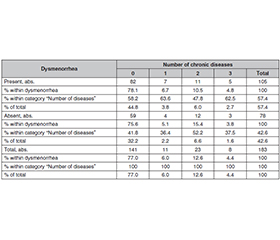
Актуальність. Первинна дисменорея має багатофакторну етіологію, що включає запальні, харчові, гормональні, соматичні, психоемоційні та генетичні складові. Мета: визначити гормональні, антропометричні й клінічні характеристики первинної дисменореї серед дівчат-підлітків Туркестанської області (Казахстан). Матеріали та методи. У період із січня до травня 2025 року було обстежено 183 дівчини-підлітка: у 105 спостерігалися клінічні прояви дисменореї, тоді як 78 увійшли до контрольної групи без скарг на менструальний біль. Результати. Порівняльний аналіз показав, що між двома групами не було статистично значущих відмінностей за віком, стадіями пубертатного розвитку, індексом маси тіла, рівнями фолікулостимулюючого та лютеїнізуючого гормонів, пролактину й тиреотропного гормону, а також за поширеністю хронічних соматичних захворювань і частотою гірсутизму. Водночас єдиним показником, за яким виявлено статистично вірогідні відмінності, був рівень вітаміну D: у групі дисменореї він становив 15,68 ± 3,31 нг/мл, у здорових ровесниць — 22,25 ± 2,74 нг/мл (p < 0,001). Сукупність отриманих даних свідчить про виражений і статистично підтверджений зв’язок між зниженням концентрації вітаміну D та розвитком первинної дисменореї в підлітковому віці, що дає змогу розглядати гіповітаміноз D як потенційний біомаркер ризику менструального болю й основу для розроблення профілактичних і терапевтичних стратегій. Висновки. Таким чином, більшість класичних соматичних та гормональних факторів не мали статистично вірогідного впливу на наявність менструального болю, тоді як знижений рівень вітаміну D виявився потенційно значущим біомаркером первинної дисменореї. Практична цінність отриманих результатів полягає у використанні рівня вітаміну D як доступного й інформативного підходу до раннього виявлення та профілактики дисменореї в дівчат-підлітків.
Background. Primary dysmenorrhea has a multifactorial aetiology involving inflammatory, nutritional, hormonal, somatic, psychoemotional, and genetic factors. The purpose of the study was to determine the hormonal, anthropometric, and clinical characteristics of primary dysmenorrhea among adolescent girls of the Turkistan region (Kazakhstan). Materials and methods. Between January and May 2025, 183 adolescent girls were examined, of whom 105 presented with clinical manifestations of dysmenorrhea, while 78 formed the control group without complaints of menstrual pain. Results. Comparative analysis demonstrated that the two groups exhibited no statistically significant differences in age, stages of pubertal development, body mass index, levels of follicle-stimulating and luteinising hormones, prolactin, and thyroid-stimulating hormone, as well as in the prevalence of chronic somatic diseases and the frequency of hirsutism. At the same time, the only indicator showing statistically reliable differences was the vitamin D level, which in the dysmenorrhea group was 15.68 ± 3.31 ng/mL, whereas in healthy peers this parameter reached 22.25 ± 2.74 ng/mL (p < 0.001). The synthesis of the findings indicates a pronounced and statistically confirmed association between reduced vitamin D concentration and the development of primary dysmenorrhea in adolescence, allowing hypovitaminosis D to be considered a potential biomarker of the risk of menstrual pain and a basis for preventive and therapeutic strategies. Conclusions. Most classical somatic and hormonal factors exerted no significant influence on the presence of menstrual pain, while decreased vitamin D levels emerged as a potentially meaningful biomarker of primary dysmenorrhea. The practical relevance of these results lies in the possibility of using vitamin D assessment as an accessible and informative approach to the early identification and prevention of dysmenorrhea in adolescent girls.
первинна дисменорея; ендокринна регуляція; менструальний цикл; підлітковий вік; дефіцит вітаміну D; больовий синдром; репродуктивне здоров’я
primary dysmenorrhea; endocrine regulation; menstrual cycle; adolescence; vitamin D deficiency; pain syndrome; reproductive health
Для ознакомления с полным содержанием статьи необходимо оформить подписку на журнал.
- Cameron L, Mikocka-Walus A, Stanley K, Payne LA, Druitt M, Grover S, Evans S. The relationship between menstrual pain in adolescence and mental health in adolescence and early adulthood. J Psychosom Res. 2025 May;192:112122. doi: 10.1016/j.jpsychores.2025.112122.
- Sanjeevi RR, Balasubramanian K, Alfaifi BH, Temehy BF, Alshehri MM, et al. Primary Dysmenorrhea and Its Impact on Mental Health and Quality of Life Among Female Medical Students in Saudi Arabia: A Cross-Sectional Study. Acta Psychol (Amst). 2026 Jun;266:106817. doi: 10.1016/j.actpsy.2026.1068.
- Abreu-Sánchez A, Parra-Fernández ML, Onieva-Zafra MD, Ramos-Pichardo JD, Fernández-Martínez E. Type of dysmenorrhea, menstrual characteristics and symptoms in nursing students in Southern Spain. Healthcare (Basel). 2020 Aug;8(3):302. doi: 10.3390/healthcare8030302.
- Itani R, Soubra L, Karout S, Rahme D, Karout L, Khojah HMJ. Primary dysmenorrhea: pathophysiology, diagnosis, and treatment updates. Korean J Fam Med. 2022 Mar;43(2):101-108. doi: 10.4082/kjfm.21.0103.
- Farhangnia P, Noormohammadi M, Delbandi AA. Vitamin D and reproductive disorders: a comprehensive review with a focus on endometriosis. Reprod Health. 2024 May;21(1):61. doi: 10.1186/s12978-024-01797-y.
- Karibayeva I, Bilibayeva G, Iglikova A, et al. Vitamin D deficiency in Kazakhstani children: insights from a systematic review and meta-analysis. Medicina (Kaunas). 2025 Feb;61(3):428. doi: 10.3390/medicina61030428.
- Kabodmehri R, Sharami SH, Sorouri ZZ, et al. The relationship between thyroid function and ovarian reserve: a prospective cross-sectional study. Thyroid Res. 2021;14(1):22. doi: 10.1186/s13044-021-00112-2.
- Li K, Urteaga I, Wiggins CH, et al. Characterizing physiologi–cal and symptomatic variation in menstrual cycles using self-tracked mobile-health data. NPJ Digit Med. 2020 May;3:79. doi: 10.1038/s41746-020-0269-8.
- Rahnemaei FA, Gholamrezaei A, Afrakhteh M, et al. Vitamin D supplementation for primary dysmenorrhea: a double-blind, randomi–zed, placebo-controlled trial. Obstet Gynecol Sci. 2021 Jul;64(4):353-363. doi: 10.5468/ogs.20316.
- Koyyada A, Orsu P. Role of hypothyroidism and associated pathways in pregnancy and infertility: clinical insights. Tzu Chi Med J. 2020 Apr;32(4):312-317. doi: 10.4103/tcmj.tcmj_255_19.
- Pouraliroudbaneh S, Marino J, Riggs E, Saber A, Jayasinghe Y, Peate M. Heavy menstrual bleeding and dysmenorrhea in adolescents: a systematic review of self-management strategies, quality of life, and unmet needs. Int J Gynaecol Obstet. 2024 Oct;167(1):16-41. doi: 10.1002/ijgo.15554.
- Dixon S, Hirst J, Taghinejadi N, Duddy C, Vincent K, Ziebland S. What is known about adolescent dysmenorrhea in (and for) community health settings? Front Reprod Health. 2024 Jul;6:1394978. doi: 10.3389/frph.2024.1394978.
- Martire FG, Piccione E, Exacoustos C, Zupi E. Endometrio–sis and adolescence: the impact of dysmenorrhea. J Clin Med. 2023 Sep;12(17):5624. doi: 10.3390/jcm12175624.
- Jiang J, Zhuang Y, Si S, et al. The association of reproductive hormones during the menstrual period with primary dysmenorrhea. Int J Womens Health. 2023;15:1501-1514. doi: 10.2147/IJWH.S421950.
- Chen CX, Carpenter JS, Ofner S, LaPradd M, Fortenberry JD. Dysmenorrhea symptom-based phenotypes: a replication and extension study. Nurs Res. 2021 Jan;70(1):24-33. doi: 10.1097/NNR.0000000000000477.
- De Arruda GT, Driusso P, Rodrigues JC, et al. Are menstrual symptoms associated with central sensitization inventory? A cross-sectional study. Eur J Pain. 2022 Sep;26(8):1759-1767. doi: 10.1002/ejp.1999.
- Islami IMR. Dysmenorrhea in adolescent girls: does body mass index play a role? Sci Midwifery. 2024 Dec;12(5):691-698.
- Donayeva A, Amanzholkyzy A, Nurgaliyeva R, Gubasheva G, Abdelazim IA, Samaha II. The relation between primary dysme–norrhea in adolescents and body mass index. Menopause Rev. 2023 Sep;22(3):126-129. doi: 10.5114/pm.2023.131314.
- Lund CI, Engdahl B, Rosseland LA, et al. The association between age at menarche and chronic pain outcomes in women: the Tromsø Study, 2007 to 2016. Pain. 2022 Sep;163(9):1790-1799. doi: 10.1097/j.pain.0000000000002579.
- Naraoka Y, Hosokawa M, Minato-Inokawa S, Sato Y. Severity of menstrual pain is associated with nutritional intake and lifestyle habits. Healthcare (Basel). 2023 Apr;11(9):1289. doi: 10.3390/healthcare11091289.
- Yi SJ, Kim M, Park I. Investigating influencing factors on premenstrual syndrome (PMS) among female college students. BMC Womens Health. 2023 Nov;23(1):592. doi: 10.1186/s12905-023-02752-y.
- Slouha E, Segal J, White C, et al. Ovarian reserve and hormone alteration following laparoscopic ovarian drilling for polycystic ovarian syndrome: a systematic review. Cureus. 2024 Jun;16(6):e62092. doi: 10.7759/cureus.62092.
- Pathan NF, Khuhro BN, Nasir S, Khakwani F. Association between vitamin D deficiency and primary dysmenorrhea. Pak J Med Health Sci. 2023 Dec;17(12):268-270. doi: 10.53350/pjmhs020231712268.
- Moini A, Ebrahimi T, Shirzad N, et al. The effect of vitamin D on primary dysmenorrhea with vitamin D deficiency: a rando–mized double-blind controlled clinical trial. Gynecol Endocrinol. 2016 Jun;32(6):502-505. doi: 10.3109/09513590.2015.1136617.
- Amzajerdi A, Keshavarz M, Ghorbali E, Pezaro S, Sarvi F. The effect of vitamin D on the severity of dysmenorrhea and menstrual blood loss: a randomized clinical trial. BMC Womens Health. 2023 Mar;23(1):138. doi: 10.1186/s12905-023-02284-5.
- Zareef TA, Jackson RT. Knowledge and attitudes about vitamin D and sunlight exposure in premenopausal women living in Jeddah, and their relationship with serum vitamin D levels. J Health Popul Nutr. 2021 Dec;40(1):38. doi: 10.1186/s41043-021-00263-w.
- Whitbread AL, Mittelmeier L, Rao RP, Mittelmeier W, Osmanski-Zenk K. Menstrual blood as a non-invasive alternative for monitoring vitamin levels. J Clin Med. 2024 Dec;13(23):7212. doi: 10.3390/jcm13237212.
- Tuffaha M, El Bcheraoui C, Daoud F, et al. Deficiencies under plenty of sun: vitamin D status among adults in the Kingdom of Saudi Arabia, 2013. N Am J Med Sci. 2015 Oct;7(10):467-475.
- Gambadauro P, Hadlaczky G, Wasserman D, Carli V. Dysmenorrhea and adolescent mental health: a school-based cross-sectional study. BJOG. 2025 Sep;132(9):1278-1284. doi: 10.1111/1471-0528.18187.
- Spritzer PM, Marchesan LB, Santos BR, Fighera TM. Hirsutism, normal androgens and diagnosis of PCOS. Diagnostics (Basel). 2022 Aug;12(8):1922. doi: 10.3390/diagnostics12081922.
- Yakovleva O, Nikolova O, Doroshkevych I, Shcherbeniuk N. Genetic polymorphism of vitamin D receptor determines its metabolism and efficiency. Pain. Joints. Spine. 2021;7(2):73-78. doi: 10.22141/2224-1507.7.2.2017.108699.
- Grygorieva N, Tronko M, Kovalenko V, Komisarenko S, Tatarchuk T, et al. Ukrainian Consensus on Diagnosis and Mana–gement of Vitamin D Deficiency in Adults. Nutrients. 2024 Jan 16;16(2):270. doi: 10.3390/nu16020270.
- Kulzhanova DS, Nurgalieva RE, Donayeva AE, Stankevicius E, Tubulbaeva SA, Amanzholkyzy A. Assessment impact of vitamin D on premenstrual syndrome in adolescent girls with primary dysmenorrhea. Reprod Med Cent Asia. 2024 Mar;1:88-95. doi: 10.37800/RM.1.2024.88-95.
- Jaiprakash M, D’Souza UJA, Heethal J, Siat AF. Obesity and prolactin in various populations. Indian J Public Health Res Dev. 2019 Jun;10(6):1351-1356. doi: 10.5958/0976-5506.2019.01485.2.
- Ermakhanova T, Bazarbekova RB, Svyatova GS, Dossanova AK. Genotype-phenotype association in congenital adrenal hyperplasia due to 21-hydroxylase deficiency in children. Clin Endocrinol (Oxf). 2023 May;98(5):654-661. doi: 10.1111/cen.14859.
- Jaiprakash M, D’Souza UJA, Fong SY, Karkada IR, Jaiprakash H. Association between leptin (G2548A) and leptin receptor (Q223R) polymorphisms with plasma leptin, BMI, stress, sleep and eating patterns among the multiethnic young Malaysian adult population from a healthcare university. Int J Environ Res Public Health. 2022 Jul;19(14):8862. doi: 10.3390/ijerph19148862.
- Khudoyarova D, Tursunov N, Shopulotova Z, Babayeva M, Javanshir P. Acute abdomen in gynaecology: current trends. Ital J Gynaecol Obstet. 2025 Sep;37(3):336-350. doi: 10.36129/jog.2025.213.
- Demirkan FG, Yetim Şahin A, Çakmak F, et al. Investigation of dysmenorrhea in adolescent girls with familial Mediterranean fever: a comparative study with healthy controls. Eur J Pediatr. 2025;184:204. doi: 10.1007/s00431-025-06033-8.
- Alhakeem MM, Baghdadi LR, Alshathri AH, Alshathri AH, Alqahtani AA, Alshathri MH. Risk factors for low quality of life among women using different types of contraceptives in Saudi Arabia: a questionnaire-based study. Behav Sci (Basel). 2024 Sep;14(9):829. doi: 10.3390/bs14090829.
- Moosazadeh M, Bordbari AH, Hashemi SM, Ghasemi Tirtashi M, Kargar-Soleimanabad S. The association between age at menarche and infertility: a systematic review and meta-analysis of observational studies. Contracept Reprod Med. 2025;10(1):15. doi: 10.1186/s40834-025-00346-7.
- Mizgier M, Więckowska B, Sansoni V, et al. Risk factors of primary dysmenorrhea in female adolescent basketball players rela–ted to dietary, hormonal, and immuno-metabolic factors and disordered eating attitudes. Nutrients. 2025 Apr;17(7):1190. doi: 10.3390/nu17071190.
- Wu L, Zhang J, Tang J, Fang H. The relation between body mass index and primary dysmenorrhea: a systematic review and meta-analysis. Acta Obstet Gynecol Scand. 2022 Dec;101(12):1364-1373. doi: 10.1111/aogs.14449.
- Dynnik VO, Novokhatska SV, Verhoshanova OH, Dynnik OO. The state of gonadotropic and prolactin-synthesizing function of the pituitary gland in adolescent girls with oligomenorrhea depen–ding on the disease duration. Reprod Endocrinol. 2024;74:25-30. doi: 10.18370/2309-4117.2024.74.25-30.
- Matsas A, Sachinidis A, Lamprinou M, Stamoula E, Christopoulos P. Vitamin effects in primary dysmenorrhea. Life (Basel). 2023 Jun;13(6):1308. doi: 10.3390/life13061308.
- Abdi F, Amjadi MA, Zaheri F, Rahnemaei FA. Role of vitamin D and calcium in the relief of primary dysmenorrhea: a syste–matic review. Obstet Gynecol Sci. 2021 Jan;64(1):13-26. doi: 10.5468/ogs.20205.
- Lin KC, Huang KJ, Lin MN, Wang CY, Tsai TY. Vitamin D supplementation for patients with dysmenorrhea: a meta-analysis with trial sequential analysis of randomised controlled trials. Nutrients. 2024 Apr;16(7):1089. doi: 10.3390/nu16071089.
- Dyussupova AA, Svyatova GS, Berezina GM, Dyussupov A, Omarkulov B, Dzharmukhametova A, et al. Genetic associations of TCF7L2 (rs7903146) and PPARG (rs1801282) with prediabetes in the ethnic Kazakh population. Diagnostics (Basel). 2024 Dec;14(24):2769. doi: 10.3390/diagnostics14242769.
- Li R, Kreher DA, Jusko TA, Chapman BP, Bonham AD, Seplaki CL. Prospective association between dysmenorrhea and chro–nic pain development in community-dwelling women. J Pain. 2021 Sep;22(9):1084-1096. doi: 10.1016/j.jpain.2021.03.139.
- Shah D, Patil M, National PCOS Working Group. Consensus statement on the use of oral contraceptive pills in polycystic ovarian syndrome women in India. J Hum Reprod Sci. 2018 Jun;11(2):96-118. doi: 10.4103/jhrs.JHRS_72_18.
- Lenz JS, Tintle N, Kerlikowsky F, et al. Assessment of the vitamin D status and its determinants in young healthy students from Palestine. J Nutr Sci. 2023;12:e38. doi: 10.1017/jns.2023.25.
- Ciancio FF, Insalaco G, Millan S, Randazzo C, Grasso F, Trombetta G, et al. Stage II endometrial cancer: the diagnostic power of hysteroscopic excisional biopsy and MRI in the pre-operative cervical stroma assessment. Eur J Obstet Gynecol Reprod Biol. 2024;298:140-145.
- Penumalla S, Kandimalla R. Hypothyroidism and its impact on menstrual irregularities in reproductive-age women: a comprehensive analysis at a tertiary care center. Cureus. 2024 Jun;16(6):e63158. doi: 10.7759/cureus.63158.
- Lokshin VN, Suleimenova MD, Karibaeva SK, Baikoshka–rov SB, Ibragimov AK, Azhetova ZhR, et al. Assisted reproductive technologies in Kazakhstan (2020 National ART Registry data). Reprod Med Cent Asia. 2024 Mar;1:8-16. doi: 10.37800/RM.1.2024.8-16.
- Jusuf EC, Octaviani D, Husain MG, Jumrah. The influence of physical activity, body mass index and urinary levels of prostaglandin (PGF2α) with the incidence of primary dysmenorrhea in adolescents. J Obstet Gynaecol Res. 2024 May;50(5):909-913. doi: 10.1111/jog.15914.
- Zhou IW, Zhang AL, Tsang MS, Xue CC. Vitamin D for primary dysmenorrhea and endometriosis-related pain: a systematic review of registered RCTs. PLoS One. 2025 Apr;20(4):e0321393. doi: 10.1371/journal.pone.0321393.