
Журнал «Медицина неотложных состояний» Том 22, №6, 2026
Вернуться к номеру
Від метаболічної ресусцитації до фенотип-орієнтованої терапії: сучасне місце терапії ГАТ при сепсисі та септичному шоку
Авторы: Чуклін С.М., Чуклін С.С.
Медичний центр Святої Параскеви, м. Львів, Україна
Рубрики: Медицина неотложных состояний
Разделы: Справочник специалиста
Версия для печати
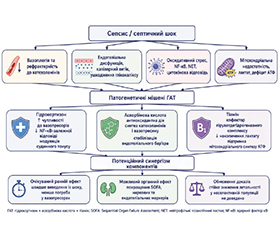
Актуальність. Комбіноване застосування гідрокортизону, аскорбінової кислоти й тіаміну (терапія ГАТ) тривалий час розглядалося як патогенетично обґрунтований допоміжний метод лікування сепсису та септичного шоку. Очікуваний ефект ґрунтувався на здатності цих компонентів зменшувати вазоплегію, ендотеліальну дисфункцію, оксидативний стрес, а також коригувати мікроциркуляторні порушення та мітохондріальну недостатність. Водночас результати клінічних випробувань на сьогодні є суперечливими. Мета: узагальнити сучасні дані щодо біологічного обґрунтування, клінічної ефективності й обмежень терапії ГАТ, а також визначити перспективи її застосування з урахуванням індивідуальних фенотипів пацієнтів із сепсисом. Матеріали та методи. Здійснено аналіз фахової літератури в базах даних PubMed, Scopus і Google Scholar. Джерела класифіковано за дизайном досліджень, складом терапії, характеристиками пацієнтів, термінами початку втручання та ключовими клінічними показниками. Результати. Перші спостережні й механістичні дослідження підтверджували доцільність застосування терапії ГАТ, вказуючи на послаблення оксидативного стресу, стабілізацію ендотеліального бар’єра, поліпшення гемодинаміки та зниження потреби у вазопресорах. Проте подальші рандомізовані контрольовані випробування не продемонстрували стабільного зниження рівня летальності в загальній популяції хворих. Найбільш значущим клінічним результатом є не виживаність, а швидше виведення пацієнтів зі стану шоку, скорочення тривалості вазопресорної підтримки й можливе зменшення вираженості органної дисфункції. Ефективність методу, імовірно, визначається часом початку лікування, складом базової терапії, вихідною тяжкістю стану, наявністю дефіциту вітамінів, а також особливостями запального профілю і ступенем вазоплегії. Отримані дані вказують на те, що такий підхід є перспективним для окремих груп пацієнтів, а не для рутинного застосування. Висновки. Терапія ГАТ не є універсальним стандартом лікування сепсису. Проте вона залишається важливою моделлю переходу від емпіричного метаболічного відновлення до персоналізованої допоміжної терапії, що базується на виокремленні специфічних фенотипів захворювання.
Background. The combined use of hydrocortisone, ascorbic acid, and thiamine (HAT therapy) has long been considered a pathogenetically sound adjunctive treatment for sepsis and septic shock. The expected effect was based on the ability of these components to reduce vasoplegia, endothelial dysfunction, and oxidative stress, as well as to correct microcirculatory disorders and mitochondrial failure. However, clinical trial results currently remain controversial. Objective: to summarize current data on the biological rationale, clinical efficacy, and limitations of HAT therapy, as well as to determine the prospects for its use, taking into account the individual phenotypes of patients with sepsis. Materials and methods. An analysis of professional literature was conducted using the PubMed, Scopus, and Google Scholar databases. Sources were classified by study design, therapy composition, patient characteristics, timing of intervention, and key clinical outcomes. Results. Initial observational and mechanistic studies supported the feasibility of HAT therapy, pointing to reduced oxidative stress, stabilization of the endothelial barrier, improved hemodynamics, and a decreased requirement for vasopressors. However, subsequent randomized controlled trials failed to demonstrate a consistent reduction in mortality rates within the general patient population. The most significant clinical outcome appears to be faster shock reversal and a reduction in the duration of vasopressor support alongside a potential decrease in the severity of organ dysfunction, rather than overall survival. The efficacy of the method is likely determined by the timing of treatment initiation, the composition of baseline therapy, initial severity of illness, the presence of vitamin deficiencies, as well as specific inflammatory profiles and the degree of vasoplegia. The findings suggest that this approach is promising for specific patient subgroups rather than for routine application. Conclusions. HAT therapy is not a universal standard of care for sepsis. However, it remains an important model for the transition from empirical metabolic resuscitation to personalized adjunctive therapy based on the identification of specific disease phenotypes.
сепсис; септичний шок; терапія ГАТ; метаболічна підтримка; персоналізована медицина; огляд
sepsis; septic shock; HAT therapy; metabolic support; personalized medicine; review
Для ознакомления с полным содержанием статьи необходимо оформить подписку на журнал.
- Marik PE, Khangoora V, Rivera R, Hooper MH, Catravas J. Hydrocortisone, Vitamin C, and Thiamine for the Treatment of Severe Sepsis and Septic Shock: A Retrospective Before-After Study. Chest. 2017 Jun;151(6):1229-1238. doi: 10.1016/j.chest.2016.11.036.
- Marik PE. Hydrocortisone, Ascorbic Acid and Thiamine (HAT Therapy) for the Treatment of Sepsis. Focus on Ascorbic Acid. Nutrients. 2018 Nov 14;10(11):1762. doi: 10.3390/nu10111762.
- Marik PE. Patterns of Death in Patients with Sepsis and the Use of Hydrocortisone, Ascorbic Acid, and Thiamine to Prevent These Deaths. Surg Infect (Larchmt). 2018 Nov/Dec;19(8):812-820. doi: 10.1089/sur.2018.111.
- Moskowitz A, Andersen LW, Huang DT, et al. Ascorbic acid, corticosteroids, and thiamine in sepsis: a review of the biologic rationale and the present state of clinical evaluation. Crit Care. 2018 Oct 29;22(1):283. doi: 10.1186/s13054-018-2217-4.
- Sun Y, Yang Y, Ye Z, Sun T. HAT therapy for sepsis: A review of the therapeutic rationale and current clinical evaluation status. J Intensive Med. 2023 Jun 8;3(4):320-325. doi: 10.1016/j.jointm.2023.04.003.
- Wani SJ, Mufti SA, Jan RA, et al. Combination of vitamin C, thiamine and hydrocortisone added to standard treatment in the ma–nagement of sepsis: results from an open label randomised controlled clinical trial and a review of the literature. Infect Dis (Lond). 2020 Apr;52(4):271-278. doi: 10.1080/23744235.2020.1718200.
- Vail EA, Wunsch H, Pinto R, et al. Use of Hydrocortisone, Ascorbic Acid, and Thiamine in Adults with Septic Shock. Am J Respir Crit Care Med. 2020 Dec 1;202(11):1531-1539. doi: 10.1164/rccm.202005-1829OC.
- Idahor CO, Ogunfuwa O, Ogbonna N, Adigwe A, Ogbeide OA. Beyond Fluid Therapy: The Role of Vitamin C, Steroids, and Thiamine in Sepsis Management. Cureus. 2025 May 23;17(5):e84666. doi: 10.7759/cureus.84666.
- Marik PE, Varon J, Surani SR. Hydrocortisone, ascorbic acid and thiamine for sepsis: Is the jury out? World J Diabetes. 2020 Apr 15;11(4):90-94. doi: 10.4239/wjd.v11.i4.90.
- Somagutta MKR, Pormento MKL, et al. The Efficacy of vitamin C, thiamine, and corticosteroid therapy in adult sepsis patients: a systematic review and meta-analysis. Acute Crit Care. 2021 Aug;36(3):185-200. doi: 10.4266/acc.2021.00108.
- Amini K, Sahebnasagh A, Mojtahedzadeh M. Is Vitamin C or HAT Therapy Effective in Treating Sepsis? A Mini Review. Critical Comments in Biomedicine. 2020;1(2):e10018.
- Zayed Y, Alzghoul BN, Banifadel M, et al. Vitamin C, Thiamine, and Hydrocortisone in the Treatment of Sepsis: A Meta-Analysis and Trial Sequential Analysis of Randomized Controlled Trials. J Intensive Care Med. 2022 Mar;37(3):327-336. doi: 10.1177/0885066620987809.
- Kim J, Arnaout L, Remick D. Hydrocortisone, Ascorbic Acid, and Thiamine (HAT) Therapy Decreases Oxidative Stress, Improves Cardiovascular Function, and Improves Survival in Murine Sepsis. Shock. 2020 Apr;53(4):460-467. doi: 10.1097/SHK.0000000000001385.
- Kim J, Stolarski A, Zhang Q, Wee K, Remick D. Hydrocortisone, ascorbic acid, and thiamine therapy decrease renal oxidative stress and acute kidney injury in murine sepsis. Shock. 2022 Nov 1;58(5):426-433. doi: 10.1097/SHK.0000000000001995.
- Barabutis N, Khangoora V, Marik PE, Catravas JD. Hydrocortisone and Ascorbic Acid Synergistically Prevent and Repair Lipopolysaccharide-Induced Pulmonary Endothelial Barrier Dysfunction. Chest. 2017 Nov;152(5):954-962. doi: 10.1016/j.chest.2017.07.014.
- Ammar MA, Ammar AA, Condeni MS, Bell CM. Vitamin C for Sepsis and Septic Shock. Am J Ther. 2021 Jul 5;28(6):e649-e679. doi: 10.1097/MJT.0000000000001423.
- Spoelstra-de Man AME, Oudemans-van Straaten HM, Ber–ger MM. Adjuvant vitamin C for sepsis: mono or triple? Crit Care. 2019 Dec 27;23(1):425. doi: 10.1186/s13054-019-2717-x.
- Langlois PL, Lamontagne F. Vitamin C for the critically ill: Is the evidence strong enough? Nutrition. 2019 Apr;60:185-190. doi: 10.1016/j.nut.2018.10.009.
- Juneja D, Nasa P, Jain R. Current role of high dose vitamin C in sepsis management: A concise review. World J Crit Care Med. 2022 Nov 9;11(6):349-363. doi: 10.5492/wjccm.v11.i6.349.
- Ragoonanan D, Tran N, Modi V, Morgan Nickelsen P. Unanswered questions on the use of hydrocortisone, ascorbic acid, and thiamine therapy in sepsis and septic shock. Am J Health Syst Pharm. 2022 Sep 22;79(19):1626-1633. doi: 10.1093/ajhp/zxac169.
- Na W, Shen H, Li Y, Qu D. Hydrocortisone, ascorbic acid, and thiamine (HAT) for sepsis and septic shock: a meta-analysis with sequential trial analysis. J Intensive Care. 2021 Dec 18;9(1):75. doi: 10.1186/s40560-021-00589-x.
- Wu T, Hu C, Huang W, Xu Q, Hu B, Li J. Effect of Combined Hydrocortisone, Ascorbic Acid and Thiamine for Patients with Sepsis and Septic Shock: A Systematic Review and Meta-Analysis. Shock. 2021 Dec 1;56(6):880-889. doi: 10.1097/SHK.0000000000001781.
- Wang K, Yin L, Song Y, Zhang M, Lu Y, Wang S. The Use of Hydrocortisone, Ascorbic Acid and Thiamine in Patients with Sepsis and Septic Shock — A Systematic Review. J Pharm Pract. 2023 Aug;36(4):933-940. doi: 10.1177/08971900221097193.
- Deng J, Zuo QK, Venugopal K, et al. Efficacy and Safety of Hydrocortisone, Ascorbic Acid, and Thiamine Combination Therapy for the Management of Sepsis and Septic Shock: A Systematic Review and Meta-Analysis of Randomised Controlled Trials. Int Arch Allergy Immunol. 2024;185(10):997-1018. doi: 10.1159/000538959.
- Fong KM, Au SY, Ng GWY. Steroid, ascorbic acid, and thiamine in adults with sepsis and septic shock: a systematic review and component network meta-analysis. Sci Rep. 2021 Aug 4;11(1):15777. doi: 10.1038/s41598-021-95386-9.
- Fujii T, Salanti G, Belletti A, et al. Effect of adjunctive vitamin C, glucocorticoids, and vitamin B1 on longer-term mortality in adults with sepsis or septic shock: a systematic review and a component network meta-analysis. Intensive Care Med. 2022 Jan;48(1):16-24. doi: 10.1007/s00134-021-06558-0.
- Martimbianco ALC, Pacheco RL, Bagattini ÂM, et al. Vitamin C-based regimens for sepsis and septic shock: Systematic review and meta-analysis of randomized clinical trials. J Crit Care. 2022 Oct;71:154099. doi: 10.1016/j.jcrc.2022.154099.
- Fujii T, Luethi N, Young PJ, et al; VITAMINS Trial Investigators. Effect of Vitamin C, Hydrocortisone, and Thiamine vs Hydrocortisone Alone on Time Alive and Free of Vasopressor Support Among Patients With Septic Shock: The VITAMINS Rando–mized Clinical Trial. JAMA. 2020 Feb 4;323(5):423-431. doi: 10.1001/jama.2019.22176.
- Iglesias J, Vassallo AV, Patel VV, Sullivan JB, Cavanaugh J, Elbaga Y. Outcomes of Metabolic Resuscitation Using Ascorbic Acid, Thiamine, and Glucocorticoids in the Early Treatment of Sepsis: The ORANGES Trial. Chest. 2020 Jul;158(1):164-173. doi: 10.1016/j.chest.2020.02.049.
- Sevransky JE, Rothman RE, Hager DN, et al; VICTAS Investigators. Effect of Vitamin C, Thiamine, and Hydrocortisone on Ventilator- and Vasopressor-Free Days in Patients With Sepsis: The VICTAS Randomized Clinical Trial. JAMA. 2021 Feb 23;325(8):742-750. doi: 10.1001/jama.2020.24505.
- Montero VR, Ribes CM, Montell MP, Crespo RZ. [Corticosteroids and metabolic resuscitation (hydrocortisone, ascorbic acid and thiamine) in sepsis and septic shock]. Med Intensiva (Engl Ed). 2022 Apr;46 Suppl 1:49-59. doi: 10.1016/j.medine.2022.03.008. Spanish.
- Fujii T, Deane AM, Nair P. Metabolic support in sepsis: corticosteroids and vitamins: the why, the when, the how. Curr Opin Crit Care. 2020 Aug;26(4):363-368. doi: 10.1097/MCC.0000000000000736.
- Blakeslee PA, Hyrkäs K. Impact of supplemental thiamin on lactate levels in adults with septic shock. Nutr Clin Pract. 2023 Jun;38(3):580-601. doi: 10.1002/ncp.10930. Epub 2023 Jan 12. PMID: 36633131.
- Obi J, Pastores SM, Ramanathan LV, Yang J, Halpern NA. Treating sepsis with vitamin C, thiamine, and hydrocortisone: Exploring the quest for the magic elixir. J Crit Care. 2020 Jun;57:231-239. doi: 10.1016/j.jcrc.2019.12.011.
- Guirguis E, Grace Y, Maarsingh H, Tran TC, Tkachuk E. Vitamin C, Thiamine, and Steroids in the Sepsis Conquest: Replete to Defeat. J Pharm Pract. 2020 Oct;33(5):682-695. doi: 10.1177/0897190019851923.
- Jentzer JC, Vallabhajosyula S, Khanna AK, Chawla LS, Busse LW, Kashani KB. Management of Refractory Vasodilatory Shock. Chest. 2018 Aug;154(2):416-426. doi: 10.1016/j.chest.2017.12.021.
- Datt V, Wadhhwa R, Sharma V, Virmani S, Minhas HS, Malik S. Vasoplegic syndrome after cardiovascular surgery: A review of pathophysiology and outcome-oriented therapeutic ma–nagement. J Card Surg. 2021 Oct;36(10):3749-3760. doi: 10.1111/jocs.15805.
- Legouis D, Monard C, Ourahmoune A, et al. Differential effects of thiamine and ascorbic acid in clusters of septic patients identified by latent variable analysis. Crit Care. 2024 Nov 29;28(1):396. doi: 10.1186/s13054-024-05188-4.
- Lauer A, Burkard M, Niessner H, et al. Ex Vivo Evaluation of the Sepsis Triple Therapy High-Dose Vitamin C in Combination with Vitamin B1 and Hydrocortisone in a Human Peripheral Blood Mononuclear Cells (PBMCs) Model. Nutrients. 2021 Jul 10;13(7):2366. doi: 10.3390/nu13072366.
- Marik PE. Vitamin C for the treatment of sepsis: The scientific rationale. Pharmacol Ther. 2018 Sep;189:63-70. doi: 10.1016/j.pharmthera.2018.04.007.
- Stolarski AE, Kim J, Rop K, Wee K, Zhang Q, Remick DG. Machine learning and murine models explain failures of clinical sepsis trials. J Trauma Acute Care Surg. 2022 Aug 1;93(2):187-194. doi: 10.1097/TA.0000000000003691.
- Baljinnyam T, Fukuda S, Niimi Y, Prough D, Enkhbaatar P. Combined treatment with vitamin C, hydrocortisone and thiamine does not attenuate morbidity and mortality of septic sheep. Lab Anim Res. 2024 Aug 12;40(1):27. doi: 10.1186/s42826-024-00213-7.
- Novoa J, Hardy G, Manzanares W. Thiamine pharmaconutrition in sepsis: Monotherapy, combined therapy, or neither? Current evidence on safety and efficacy. Nutrition. 2023 May;109:112000. doi: 10.1016/j.nut.2023.112000.
- Busse LW, Schaich CL, Chappell MC, et al.; Vitamin C, Thiamine, and Steroids in Sepsis (VICTAS) Investigators. Association of Active Renin Content With Mortality in Critically Ill Patients: A Post hoc Analysis of the Vitamin C, Thiamine, and Steroids in Sepsis –(VICTAS) Trial. Crit Care Med. 2024 Mar 1;52(3):441-451. doi: 10.1097/CCM.0000000000006095.
- Suárez-de-la-Rica A, Croes B, Ciudad L, et al. Vitamin C and thiamine for the treatment of refractory septic shock in surgical critically ill patients: a retrospective before-and-after study. Rev Esp Quimioter. 2023 Apr;36(2):187-192. doi: 10.37201/req/107.2022.
- Marik PE. Procalcitonin is an essential biomarker for hydrocortisone, ascorbic acid, and thiamine (HAT) therapy in patients with sepsis. Crit Care. 2019 May 2;23(1):151. doi: 10.1186/s13054-019-2445-2.
- Nathens AB, Neff MJ, Jurkovich GJ, et al. Randomized, prospective trial of antioxidant supplementation in critically ill surgical patients. Ann Surg. 2002 Dec;236(6):814-22. doi: 10.1097/00000658-200212000-00014.
- Lee MT, Jung SY, Baek MS, Shin J, Kim WY. Early Vitamin C, Hydrocortisone, and Thiamine Treatment for Septic Cardiomyopathy: A Propensity Score Analysis. J Pers Med. 2021 Jun 28;11(7):610. doi: 10.3390/jpm11070610.
- Kim WY, Jung JW, Choi JC, Shin JW, Kim JY. Subphenotypes in Patients with Septic Shock Receiving Vitamin C, Hydrocortisone, and Thiamine: A Retrospective Cohort Analysis. Nutrients. 2019 Dec 5;11(12):2976. doi: 10.3390/nu11122976.
- Jung SY, Lee MT, Baek MS, Kim WY. Vitamin C for ≥ 5 days is associated with decreased hospital mortality in sepsis subgroups: a nationwide cohort study. Crit Care. 2022 Jan 7;26(1):3. doi: 10.1186/s13054-021-03872-3.
- Mitchell AB, Ryan TE, Gillion AR, Wells LD, Muthiah MP. Vitamin C and Thiamine for Sepsis and Septic Shock. Am J Med. 2020 May;133(5):635-638. doi: 10.1016/j.amjmed.2019.07.054.
- Litwak JJ, Cho N, Nguyen HB, Moussavi K, Bushell T. Vitamin C, Hydrocortisone, and Thiamine for the Treatment of Severe Sepsis and Septic Shock: A Retrospective Analysis of Real-World Application. J Clin Med. 2019 Apr 9;8(4):478. doi: 10.3390/jcm8040478.
- Coloretti I, Biagioni E, Venturelli S, et al. Adjunctive therapy with vitamin c and thiamine in patients treated with steroids for refractory septic shock: A propensity matched before-after, case-control study. J Crit Care. 2020 Oct;59:37-41. doi: 10.1016/j.jcrc.2020.04.014.
- Sadaka F, Grady J, Organti N, et al. Ascorbic Acid, Thiamine, and Steroids in Septic Shock: Propensity Matched Analysis. J Intensive Care Med. 2020 Nov;35(11):1302-1306. doi: 10.1177/0885066619864541.
- Sudaryadi S, Harijanto E, Mulyono I. Comparison of Hydrocortisone with Combined Hydrocortisone, Ascorbic Acid, and Thiamine as an Adjuvant Therapy on Septic Shock Patients on Mortality: A Systematic Review and Meta-analysis. Open Access Maced J Med Sci. 2023 Jan 02;11(F):171-179. doi: 10.3889/oamjms.2023.9952.
- Moskowitz A, Huang DT, Hou PC, et al.; ACTS Clinical Trial Investigators. Effect of Ascorbic Acid, Corticosteroids, and Thiamine on Organ Injury in Septic Shock: The ACTS Randomized Clinical Trial. JAMA. 2020 Aug 18;324(7):642-650. doi: 10.1001/jama.2020.11946.
- Hager DN, Hooper MH, Bernard GR, et al. The Vitamin C, Thiamine and Steroids in Sepsis (VICTAS) Protocol: a prospective, multi-center, double-blind, adaptive sample size, randomized, placebo-controlled, clinical trial. Trials. 2019 Apr 5;20(1):197. doi: 10.1186/s13063-019-3254-2.
- Iglesias J, Vassallo AV, Liesenfeld O, et al. A 33-mRNA Classifier Is Able to Produce Inflammopathic, Adaptive, and Coagulopathic Endotypes with Prognostic Significance: The Outcomes of Metabolic Resuscitation Using Ascorbic Acid, Thiamine, and Glucocorticoids in the Early Treatment of Sepsis (ORANGES) Trial. J Pers Med. 2021 Jan 1;11(1):9. doi: 10.3390/jpm11010009.
- Lyu QQ, Zheng RQ, Chen QH, Yu JQ, Shao J, Gu XH. Early administration of hydrocortisone, vitamin C, and thiamine in adult patients with septic shock: a randomized controlled clinical trial. Crit Care. 2022 Sep 28;26(1):295. doi: 10.1186/s13054-022-04175-x.
- Reddy PR, Samavedam S, Aluru N, Yelle S, Rajyalakshmi B. Metabolic Resuscitation Using Hydrocortisone, Ascorbic Acid, and Thiamine: Do Individual Components Influence Reversal of Shock Independently? Indian J Crit Care Med. 2020 Aug;24(8):649-652. doi: 10.5005/jp-journals-10071-23515.
- Mohamed ZU, Prasannan P, Moni M, et al. Vitamin C Therapy for Routine Care in Septic Shock (ViCTOR) Trial: Effect of Intravenous Vitamin C, Thiamine, and Hydrocortisone Administration on Inpatient Mortality among Patients with Septic Shock. Indian J Crit Care Med. 2020 Aug;24(8):653-661. doi: 10.5005/jp-journals-10071-23517.
- Walter KL, Seymour CW. Hydrocortisone, Vitamin C, and Thiamine for Treatment of Sepsis: Making Evidence Matter. JAMA. 2021 Feb 23;325(8):730-731. doi: 10.1001/jama.2020.26029.
- Chang P, Liao Y, Guan J, et al. Combined Treatment With Hydrocortisone, Vitamin C, and Thiamine for Sepsis and Septic Shock: A Randomized Controlled Trial. Chest. 2020 Jul;158(1):174-182. doi: 10.1016/j.chest.2020.02.065.
- Nandhini N, Malviya D, Parashar S, Pandey C, Nath SS, Tripathi M. Comparison of the effects of vitamin C and thiamine on refractory hypotension in patients with sepsis: A randomized controlled trial. Int J Crit Illn Inj Sci. 2022 Jul-Sep;12(3):138-145. doi: 10.4103/ijciis.ijciis_107_21.
- Mohamed A, Abdelaty M, Saad MO, et al. Evaluation of hydrocortisone, vitamin C, and thiamine for the treatment of septic shock: a randomized controlled trial (the HYVITS trial). Shock. 2023 May 1;59(5):697-701. doi: 10.1097/SHK.0000000000002110.
- Londoño JG, Ching CV, Cernuda PS, Pedrosa JMМ, Lo–rencio C, Sirvent JM. Effect of vitamin C, thiamine and hydrocortisone in critically ill septic patients. The Metabolic Resus RCT. Med Intensiva (Engl Ed). 2024 Apr;48(4):238-240. doi: 10.1016/j.medine.2023.11.002.
- Lindsell CJ, McGlothlin A, Nwosu S, et al. Update to the Vitamin C, Thiamine and Steroids in Sepsis (VICTAS) protocol: statistical analysis plan for a prospective, multicenter, double-blind, adaptive sample size, randomized, placebo-controlled, clinical trial. Trials. 2019 Dec 4;20(1):670. doi: 10.1186/s13063-019-3775-8.
- Reinert JP, Becker K, Ohlinger MJ. Thiamine and Ascorbic Acid in Sepsis and Septic Shock: A Review of Evidence for their Role in Practice. J Pharm Technol. 2025 Feb 26;41(4):192-200. doi: 10.1177/87551225251320873.
- Jamshidi MR, Zeraati MR, Forouzanfar B, Tahrekhani M, Motamed N. Effects of triple combination of hydrocortisone, thiamine, and Vitamin C on clinical outcome in patients with septic shock: A single-center randomized controlled trial. J Res Med Sci. 2021 Jul 31;26:47. doi: 10.4103/jrms.JRMS_593_19. eCollection 2021.
- Sharma S, Paneru HR, Shrestha GS, Shrestha PS, Acharya SP. Evaluation of the Effects of a Combination of Vitamin C, Thiamine and Hydrocortisone vs Hydrocortisone Alone on ICU Outcome in Patients with Septic Shock: A Randomized Controlled Trial. Indian J Crit Care Med. 2024 Dec;28(12):1147-1152. doi: 10.5005/jp-journals-10071-24852.
- Balakrishnan M, Gandhi H, Shah K, et al. Hydrocortisone, Vitamin C and thiamine for the treatment of sepsis and septic shock following cardiac surgery. Indian J Anaesth. 2018 Dec;62(12):934-939. doi: 10.4103/ija.IJA_361_18.
- Hwang SY, Ryoo SM, Park JE, et al.; Korean Shock Society (KoSS). Combination therapy of vitamin C and thiamine for septic shock: a multi-centre, double-blinded randomized, controlled study. Intensive Care Med. 2020 Nov;46(11):2015-2025. doi: 10.1007/s00134-020-06191-3.
- Kim YO, Yoo KS, Yoon KW, Park HJ, Park CM. Combined hydrocortisone, ascorbic acid, and thiamine therapy for septic shock with complicated intraabdominal infection: before and after cohort study. Ann Surg Treat Res. 2021 Jun;100(6):356-363. doi: 10.4174/astr.2021.100.6.356.
- You SH, Kweon OJ, Jung SY, Baek MS, Kim WY. Patterns of inflammatory immune responses in patients with septic shock receiving vitamin C, hydrocortisone, and thiamine: clustering analysis in Korea. Acute Crit Care. 2023 Aug;38(3):286-297. doi: 10.4266/acc.2023.00507.
- Wang J, Song Q, Yang S, et al. Effects of hydrocortisone combined with vitamin C and vitamin B1 versus hydrocortisone alone on microcirculation in septic shock patients: A pilot study. Clin Hemorheol Microcirc. 2023;84(2):111-123. doi: 10.3233/CH-221444.
- Williams Roberson S, Nwosu S, Collar EM, et al.; VICTAS Investigators. Association of Vitamin C, Thiamine, and Hydrocortisone Infusion With Long-term Cognitive, Psychological, and Functional Outcomes in Sepsis Survivors: A Secondary Analysis of the Vitamin C, Thiamine, and Steroids in Sepsis Randomized Clinical Trial. JAMA Netw Open. 2023 Feb 1;6(2):e230380. doi: 10.1001/jamanetworkopen.2023.0380.
- Grossestreuer AV, Moskowitz A, Andersen LW, et al. Effect of Ascorbic Acid, Corticosteroids, and Thiamine on Health-Related Quality of Life in Sepsis. Crit Care Explor. 2020 Nov 23;2(12):e0270. doi: 10.1097/CCE.0000000000000270.
- Kato T, Mizuno T, Nakanishi M, et al. Efficacy of Ascorbic Acid, Thiamine, and Hydrocortisone Combination Therapy: Meta-analysis of Randomized Controlled Trials. In Vivo. 2023 May-Jun;37(3):1236-1245. doi: 10.21873/invivo.13200.
- Lee YR, Vo K, Varughese JT. Benefits of combination therapy of hydrocortisone, ascorbic acid and thiamine in sepsis and septic shock: A systematic review. Nutr Health. 2022 Mar;28(1):77-93. doi: 10.1177/02601060211018371.
- Assouline B, Faivre A, Verissimo T, et al. Thiamine, Ascorbic Acid, and Hydrocortisone As a Metabolic Resuscitation Cocktail in Sepsis: A Meta-Analysis of Randomized Controlled Trials With Trial Sequential Analysis. Crit Care Med. 2021 Dec 1;49(12):2112-2120. doi: 10.1097/CCM.0000000000005262.
- Yao R, Zhu Y, Yu Y, et al. Combination therapy of thiamine, vitamin C and hydrocortisone in treating patients with sepsis and septic shock: a meta-analysis and trial sequential analysis. Burns Trauma. 2021 Dec 6;9:tkab040. doi: 10.1093/burnst/tkab040.
- Shi R, Tie H. Benefit of hydrocortisone, thiamine, and vitamin C for patients with sepsis or septic shock? Too early to draw conclusions. Crit Care. 2020 Jul 14;24(1):431. doi: 10.1186/s13054-020-03153-5.
- Liang H, Mu Q, Sun W, et al. Effect of intravenous vitamin C on adult septic patients: a systematic review and meta-analysis. Front Nutr. 2023 Aug 3;10:1211194. doi: 10.3389/fnut.2023.1211194.
- Liang B, Su J, Shao H, Chen H, Xie B. The outcome of IV vitamin C therapy in patients with sepsis or septic shock: a meta-analysis of randomized controlled trials. Crit Care. 2023 Mar 13;27(1):109. doi: 10.1186/s13054-023-04392-y.
- Lu D, Mao W. Hydrocortisone Combined with Vitamin C and Thiamine in the Treatment of Sepsis/Septic Shock: A Systematic Review with Meta-Analysis and Trial Sequential Analysis. Clin Invest Med. 2023 Mar 26;46(1):E36-49. doi: 10.25011/cim.v46i1.40275.
- Li Z, Zhang X, Wu Y, et al. Hydrocortisone, vitamin C, and thiamine may not improve the outcome of patients with sepsis or septic shock: a systematic review and meta-analysis. Emerg Crit Care Med. 2023;3(3):122-129. doi: 10.1097/EC9.0000000000000072.
- Pei H, Qu J, Chen JM, et al. The effects of antioxidant supplementation on short-term mortality in sepsis patients. Heliyon. 2024 Apr 4;10(8):e29156. doi: 10.1016/j.heliyon.2024.e29156.
- Zhao Q, Xiao J, Liu H. No benefit of hydrocortisone, ascorbic acid, and thiamine in reducing mortality in adult sepsis patients: a systematic review and meta-analysis. Emerg Crit Care Med. 2022;2(3):167-174. doi: 10.1097/EC9.0000000000000036.
- Scholz SS, Borgstedt R, Ebeling N, Menzel LC, Jansen G, Rehberg S. Mortality in septic patients treated with vitamin C: a systematic meta-analysis. Crit Care. 2021 Jan 6;25(1):17. doi: 10.1186/s13054-020-03438-9.
- Halim Z, Huang Y, Lee ZY, Lew CCH. New randomized controlled trials on micronutrients in critical care nutrition: A narrative review. Nutr Clin Pract. 2024 Oct;39(5):1119-1149. doi: 10.1002/ncp.11195.
- Krishnan K, Wassermann TB, Tednes P, Bonderski V, Rech MA. Beyond the bundle: Clinical controversies in the management of sepsis in emergency medicine patients. Am J Emerg Med. 2022 Jan;51:296-303. doi: 10.1016/j.ajem.2021.11.003.