
Журнал «Здоровье ребенка» Том 21, №5, 2026
Вернуться к номеру
Вплив освітніх втручань із самоконтролю астми на результати лікування та самоефективність у дітей: наративний огляд
Авторы: Ola Hasouneh (1), Haytham Mohammad Al-Oran (2)
(1) - Royal Medical Services, Al-Hussein Hospital, Amman, Jordan
(2) - Faculty of Nursing, Mutah University, Al-Karak, Jordan
Рубрики: Педиатрия/Неонатология
Разделы: Клинические исследования
Версия для печати
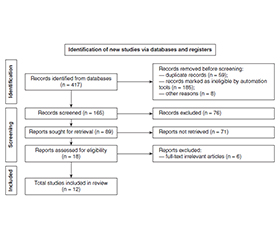
Актуальність. Кількість хронічних захворювань серед дітей, зокрема астми, у світі зростає. Астма є одним із найпоширеніших хронічних станів дитячого віку і являє собою серйозну глобальну проблему охорони здоров’я, що супроводжується значною захворюваністю. Мета: оцінити ефективність освітніх програм щодо підвищення рівня знань, прихильності до медикаментозного лікування, навичок самоконтролю астми й самоефективності в дітей з астмою та їхніх батьків. Матеріали та методи. Пошук літератури здійснювали в базах даних CINAHL, Springer, ScienceDirect, PubMed, MEDLINE, Google Scholar та EBSCOhost. До огляду включали роботи, опубліковані у 2015–2025 роках, з використанням наступних ключових слів: asthma, child, self-management, self-efficacy та adherence interventions. Загалом було виявлено 165 записів. Після видалення дублікатів і нерелевантних досліджень до фінального аналізу увійшло 12 публікацій. Результати. Аналіз включених досліджень продемонстрував значне поліпшення рівня знань про астму, прихильності до медикаментозного лікування, навичок самоконтролю астми й самоефективності серед дітей та осіб, які здійснюють догляд за ними. Висновки. Освітні втручання щодо астми позитивно впливають на результати лікування педіатричних пацієнтів із цим захворюванням. Водночас існує потреба у впровадженні уніфікованого підходу, заснованого на доказах, що включає структуроване навчання, доступні індивідуальні плани дій при астмі та постійне закріплення набутих знань і навичок для оптимізації контролю захворювання в дітей.
Background. Chronic diseases among children, such as asthma, are increasing globally. Asthma is one of the most common chronic illnesses and represents a major global health issue that results in significant morbidity. The purpose of this review is to discuss the effectiveness of education programs on knowledge, medication adherence, asthma management skills, and self-efficacy among children and their parents with asthma. Materials and methods. Database searches were completed in CINAHL, Springer, Science Direct, PubMed, MEDLINE, Google Scholar, and EBSCOhost. Papers published between 2015 and 2025 were included using keywords such as asthma, child, self-management, self-efficacy, and adherence interventions. A total of 165 records were identified. After removing duplicates and irrelevant studies, 12 papers were included in the final review. Results. The included studies demonstrated significant improvements in asthma knowledge, medication adherence, asthma management skills, and self-efficacy among children and caregivers. Conclusions. Asthma education interventions positively impact outcomes for children with asthma; they still need to build up a unified, evidence-based approach including structured education, accessible action plans, and continuous reinforcement for optimizing asthma control in children.
астма; втручання, спрямовані на підвищення прихильності до лікування; діти; самоконтроль; самоефективність
asthma; adherence interventions; child; self-management; self-efficacy
Для ознакомления с полным содержанием статьи необходимо оформить подписку на журнал.
- Joo H, Moon JY, An TJ, Choi H, Park SY, et al. Revised Korean cough guidelines, 2020: recommendations and summary statements. Tuberculosis and Respiratory Diseases. 2021;84(4):263. doi: 10.4046/trd.2021.0038.
- Johnson LH, Chambers P, Dexheimer JW. Asthma-related emergency department use: current perspectives. Open Access Emergency Me–dicine. 2016;8:47-55. doi: 10.2147/oaem.s69973.
- Centers for Disease Control and Prevention. Most recent national asthma data. Atlanta, GA: US Department of Health and Human Services; 2019.
- Khdour M, Abu Ghayyadeh M, Al-Hamed DA, Alzeerelhouseini H, Awadallah H. Assessment of quality of life in asthmatic children and adolescents: A cross sectional study in West Bank, Palestine. PLoS One. 2022;17(6):e0270680. doi: 10.1371/journal.pone.0270680.
- Asher MI, García-Marcos L, Pearce NE, Strachan DP. Trends in worldwide asthma prevalence. European Respiratory Journal. 2020;56(6). doi: 10.1183/13993003.02094-2020.
- Stern J, Pier J, Litonjua AA. Asthma epidemiology and risk factors. Seminars in Immunopathology 2020;42(1):5-15. doi: 10.1007/s00281-020-00785-1.
- Mammen JR, Turgeon K, Philibert A, Schoonmaker JD, Java J, et al. A mixed-methods analysis of younger adults’ perceptions of asthma, self-management, and preventive care: “This isn’t helping me none”. Cli–nical & Experimental Allergy. 2021;51(1):63-77. doi: 10.1111/cea.13751.
- Kouzegaran S, Samimi P, Ahanchian H, Khoshkhui M, Behma–nesh F. Quality of life in children with asthma versus healthy children. Macedonian Journal of Medical Sciences. 2018;6(8):1413. doi: 10.3889/oamjms.2018.287.
- Abdel-Hameed AH, Bahgat S, Abu Zeid A. Assessment of Quality of life of Asthmatic Children Attending the Outpatient Clinic in Zagazig University Hospital. Zagazig University Medical Journal. 2021;27(6):1047-59. doi: 10.21608/zumj.2019.15945.1425.
- Kocaaslan EN, Akgün Kostak M. Effect of disease management education on the quality of life and self-efficacy levels of children with asthma. Journal for Specialists in Pediatric Nursing. 2019;24(2):e12241. doi: 10.1111/jspn.12241.
- Sawicki J. The Impact of Live Webinar Asthma Education for Caregivers of Asthmatic Children 0–4 Years of Age (Doctoral dissertation). Georgetown University; 2018.
- Global Initiative for Asthma (GINA). Global strategy for asthma management and prevention; 2018. Available from: https://ginasthma.org.2018.
- Ghaleb Dailah H. Investigating the outcomes of an asthma educational program and useful influence in public policy. Frontiers in Public Health. 2021;9:736203. doi: 10.3389/fpubh.2021.736203.
- Jochmann A, Artusio L, Jamalzadeh A, Nagakumar P, Delgado-Eckert E, et al. Electronic monitoring of adherence to inhaled corticosteroids: an essential tool in identifying severe asthma in children. European Respiratory Journal. 2017;50(6). doi: 10.1183/13993003.00910-2017.
- Dweck CS, Yeager DS. Mindsets: A view from two eras. Perspectives on Psychological Science. 2019;14(3):481-96. doi: 10.1177/1745691618804166.
- Polmateer JN. Asthma education for the school-age child. Michigan State University; 1998.
- Liptzin DR, Szefler SJ. Evolution of asthma self-management programs in adolescents: from the crisis plan to Facebook. The Journal of Pediatrics. 2016;179:19-23. doi: 10.1016/j.jpeds.2016.08.062.
- Sonney J, Ward T, Thompson HJ, Kientz JA, Segrin C. Improving Asthma Care Together (IMPACT) mobile health intervention for school-age children with asthma and their parents: a pilot randomised controlled trial study protocol. BMJ Open. 2022;12(2):e059791. doi: 10.1136/bmjopen-2021-059791.
- Davis SA, Carpenter D, Lee C, Garcia N, Reuland DS, et al. Effect of an asthma question prompt list and video intervention on adolescents’ medication adherence 12 months later. Annals of Pharmacotherapy. 2019;53(7):683-9. doi: 10.1177/1060028019831259.
- Sommanus S, Sitcharungsi R, Lawpoolsri S. Effects of an asthma education camp program on quality of life and asthma control among Thai children with asthma: a quasi-experimental study. Healthcare. 2022;10(8):1561. doi: 10.3390/healthcare10081561.
- Da Rocha Mendes ER, Ferreira Lima K, Araújo Gomes AL, Silva Joventino Melo E, de Almeida PC, et al. Educational Intervention to Promote Parent/Caregiver Self-Efficacy in the Management and Control of Childhood Asthma: A Randomized Clinical Trial. Maternal and Child Health Journal. 2024;28(12):2115-2125. doi: 10.1007/s10995-024-03987-3.
- Silva-Lavigne N, Valderrama A, Pelaez S, Bransi M, Balli F, et al. Acceptability of serious games in pediatric asthma education and self-management: pilot study. JMIR Pediatrics and Parenting. 2022;5(2):e33389. doi: 10.2196/33389.
- Alreshidi NM, Livesley J, Al-Kalaldeh M, Long T. The impact of a school-based, nurse-delivered asthma health education program on quality of life, knowledge, and attitudes of Saudi children with asthma. Comprehensive Child and Adolescent Nursing. 2022;45(1):43-57. doi: 10.1080/24694193.2020.1824033.
- Wiecha JM, Adams WG, Rybin D, Rizzodepaoli M, Keller J, Clay JM. Evaluation of a web-based asthma self-management system: a randomised controlled pilot trial. BMC Pulmonary Medicine. 2015;15(1). doi: 10.1186/s12890-015-0007-1.
- Chiang LC, Huang JL, Yeh KW, Lu CM. Effects of a self-ma–nagement asthma educational program in Taiwan based on PRECEDE-PROCEED model for parents with asthmatic children. Journal of Asthma. 2004;41(2):205-215. doi: 10.1081/jas-120026078.
- Hashim HM, Ismail AM, Abd Elraouf MS, Saber MM, Hassan HA. Knowledge and self-care management practice among asthmatic children (6–12 years): an educational intervention study. The Egyptian Journal of Hospital Medicine. 2022;88(1):2599-2605. doi: 10.21608/ejhm.2022.240871.
- Buckner EB, Copeland DJ, Miller KS, Op’t Holt T. School-based interprofessional asthma self-management education program for middle school students: A feasibility trial. Progress in Сommunity Health Partnerships: Research, Education, and Action. 2018;12(1):45-59. doi: 10.1353/cpr.2018.0020.
- Taheri F, Nasiri A, Namdari S, Salmani F. Effect of motivational interviewing on treatment adherence and self-efficacy of adolescents with asthma: A randomized controlled trial. Nursing Open. 2023;10(7):4373-4383. doi: 10.1002/nop2.1679.
- Wang X, Chien WT, Chong YY. Effectiveness of psychosocial interventions for improving asthma symptoms and parental stress in families of school-age children with asthma: A systematic review and meta-analysis. International Journal of Nursing Studies. 2024;160:104905. doi: 10.1016/j.ijnurstu.2024.104905.
- Dondi A, Calamelli E, Piccinno V, Ricci G, Corsini I, et al. Acute asthma in the pediatric emergency department: infections are the main triggers of exacerbations. BioMed Research International. 2017;1-7. doi: 10.1155/2017/9687061.
- Knox BL, Luyet FM, Esernio-Jenssen D. Medical neglect as a contributor to poorly controlled asthma in childhood. Journal of Child & Adolescent Trauma. 2020;13(3):327-334. doi: 10.1007/s40653-019-00290-0.
- Hodkinson A, Bower P, Grigoroglou C, Zghebi SS, Pinnock H, et al. Self-management interventions to reduce healthcare use and improve quality of life among patients with asthma: systematic review and network meta-analysis. BMJ. 2020;370. doi: 10.1136/bmj.m2521.
- Pollock M, Sinha IP, Hartling L, Rowe BH, Schreiber S, Fernandes RM. Inhaled short‐acting bronchodilators for managing emergency childhood asthma: an overview of reviews. Allergy. 2017;72(2):183-200. doi: 10.1111/all.13039.
- Mammen JR, Rhee H, Norton SA, Butz AM. Perceptions and experiences underlying self-management and reporting of symptoms in teens with asthma. Journal of Asthma. 2017;54(2):143-152. doi: 10.1080/02770903.2016.1201835.
- Low JK, Manias E. Use of technology-based tools to support adolescents and young adults with chronic disease: systematic review and meta-ana–lysis. JMIR mHealth and uHealth. 2019;7(7):e12042. doi: 10.2196/12042.