
Международный эндокринологический журнал Том 22, №7, 2026
Вернуться к номеру
Біологічне відновлення інформації при цукровому діабеті: трансляційна модель перепрограмування клітинної сигналізації при всіх типах цукрового діабету
Авторы: I. Siemionkowicz
University of Medicine and Social Sciences, Kharkiv, Ukraine
Рубрики: Эндокринология
Разделы: Клинические исследования
Версия для печати
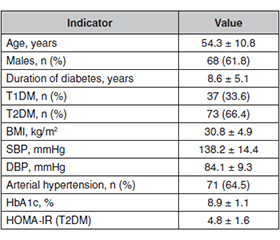
Актуальність. З огляду на сучасне розуміння цукрового діабету як мультифакторного системного захворювання, що супроводжується глибокими порушеннями клітинної сигналізації, метаболічної регуляції та міжклітинної комунікації, існує потреба в нових трансляційних підходах, здатних впливати на глікемічний контроль і біологічну інформаційну дезорганізацію в тканинах-мішенях. Мета: оцінити концепцію біологічного відновлення інформації (Biological Information Repair) як методу відновлення сигнальних процесів і метаболічного гомеостазу в осіб із цукровим діабетом 1-го та 2-го типів. Матеріали та методи. Одноцентрове проспективне відкрите інтервенційне дослідження тривалістю 12 місяців включало 110 пацієнтів віком 18–70 років (37 осіб із цукровим діабетом 1-го типу та 73 — із цукровим діабетом 2-го типу). Біологічне відновлення інформації передбачало індивідуальну модифікацію раціону кожного пацієнта, корекцію фармакотерапії та інших кардіометаболічних факторів ризику. Результати. Протягом 12 місяців рівень глікованого гемоглобіну знизився із початкового середнього значення 8,9 до 7,4 % (p < 0,001). Концентрація глюкози плазми крові натще зменшилася з 9,6 ± 2,1 ммоль/л до 7,4 ± 1,5 ммоль/л (p < 0,001). У пацієнтів зі збереженою ендогенною секрецією інсуліну індекс оцінки інсулінорезистентності за гомеостатичною моделлю (HOMA-IR) знизився з початкового середнього показника 4,8 ± 1,6 до 3,2 ± 1,1 (p < 0,001). Крім того, індекс маси тіла зменшився з початкового середнього значення 30,8 ± 4,9 кг/м2 до 28,9 ± 4,4 кг/м2 (p = 0,004). Рівні систолічного й діастолічного артеріального тиску також знизилися відповідно на 9 і 5 мм рт.ст. (p = 0,01 та p = 0,03). Уміст альбуміну в сечі вірогідно зменшився (p = 0,04), тоді як швидкість клубочкової фільтрації залишалася стабільною. Висновки. Найбільш виражені метаболічні й протизапальні ефекти спостерігалися в пацієнтів із цукровим діабетом 2-го типу. Практичне значення цього дослідження полягає в можливості застосування підходу біологічного відновлення інформації для ведення осіб із цукровим діабетом 1-го та 2-го типів з урахуванням індивідуальних особливостей кожного пацієнта.
Background. Given the current understanding of diabetes mellitus as a multifactorial systemic disease with profound disturbances in cellular signalling, metabolic regulation, and intercellular communication, novel translational approaches that can influence glycaemic control and biological informational disorganization in target tissues are needed. The purpose of this study was to evaluate the Biological Information Repair concept as a method of restoring signalling and metabolic homeostasis in patients with type 1 and type 2 diabetes mellitus. Materials and methods. A single-centre, prospective, open-label interventional study with duration of 12 months included 110 patients aged 18–70 years (37 with type 1 diabetes and 73 with type 2 diabetes). Biological Information Repair included nutritional modification of each patient’s diet, adjustment of their pharmacotherapy, and correction of other cardiometabolic risk factors. Results. Over 12 months, glycated haemoglobin levels dropped from an initial average of 8.9 to 7.4 % (p < 0.001). Fasting plasma glucose levels declined from 9.6 ± 2.1 to 7.4 ± 1.5 mmol/L (p < 0.001). In patients with preserved endogenous insulin secretion, the Homeostatic Model Assessment of Insulin Resistance reduced from an initial average of 4.8 ± 1.6 to 3.2 ± 1.1 (p < 0.001). Additionally, body mass index values decreased from an initial average of 30.8 ± 4.9 to 28.9 ± 4.4 kg/m2 (p = 0.004). Systolic and diastolic blood pressure values also dropped by 9 and 5 mmHg, respectively (p = 0.01 and p = 0.03). Furthermore, levels of albumin in the urine decreased significantly (p = 0.04), while glomerular filtration rate remained stable. Conclusions. The most pronounced metabolic and anti-inflammatory effects were observed in type 2 diabetes. The practical significance of this study lies in the possibility of employing the Biological Information Repair approach to manage type 1 and type 2 diabetes mellitus in a way that is individualized to each patient.
інсулінорезистентність; метаболічний гомеостаз; запалення; секреція інсуліну; варіабельність глікемії
insulin resistance; metabolic homeostasis; inflammatory; insulin secretion; glycaemic variability
Для ознакомления с полным содержанием статьи необходимо оформить подписку на журнал.
- Svyatova G, Berezina G, Danyarova L, et al. Genetic predisposition to gestational diabetes mellitus in the Kazakh population. Diabetes Metabol Synd Clin Res Rev. 2022 Dec;16(12):102675. doi: 10.1016/j.dsx.2022.102675.
- Jaworski P, Dowgiałło-Gornowicz N, Orłowski M, et al. Type 2 diabetes mellitus remission 10 years after metabolic and bariatric surgery: a multicenter retrospective study in Poland (BARI-10-POL). Videosurgery Miniinv Tech. 2026 Mar;21:52-57. doi: 10.20452/wiitm.2026.18020.
- Dobosz AM, Krogulec E, Stefanowski N, et al. Metformin promotes lipid droplet-mitochondria coupling and improves insulin secretion in pancreatic β-cells exposed to lipotoxicity. Biochim Biophys Acta Mol Cell Biol Lipids. 2025 Oct;1870(7):159664. doi: 10.1016/j.bbalip.2025.159664.
- Wróblewski A, Strycharz J, Oszajca K, et al. Dysregulation of inflammation, oxidative stress, and glucose metabolism-related genes and miRNAs in visceral adipose tissue of women with type 2 diabetes mellitus. Med Sci Monit. 2023 Jul;29:e939299. doi: 10.12659/MSM.939299.
- Cecerska-Heryć E, Engwert W, Michałów J, et al. Oxidative stress markers and inflammation in type 1 and 2 diabetes are affected by BMI, treatment type, and complications. Sci Rep. 2025 Jul;15(1):23605. doi: 10.1038/s41598-025-05818-z.
- Dyussupova AA, Svyatova GS, Berezina GM, et al. Gene–tic Associations of TCF7L2 (rs7903146) and PPARG (rs1801282) with Prediabetes in the Ethnic Kazakh Population. Diagnost. 2024 Dec;14(24):2769. doi: 10.3390/diagnostics14242769.
- Adamczak M, Kurnatowska I, Naumnik B, Stompór T, Tylicki L, Krajewska M. Pharmacological nephroprotection in chronic kidney disease patients with type 2 diabetes mellitus — clinical practice position statement of the Polish Society of Nephrology. Int J Mol Sci. 2024 Dec;25(23):12941. doi: 10.3390/ijms252312941.
- Araszkiewicz A, Borys S, Broncel M, et al. Standards of care in diabetes. The position of Diabetes Poland-2025. Curr Top Diabetes. 2025 Apr;5(1):1-158. doi: 10.5114/ctd/203685.
- Uruska A, Mietkiewska-Dolecka M, Grzelka-Wozniak A, et al. Clinical remission in newly diagnosed type 1 diabetes mellitus and HDL function on cholesterol efflux capacity: prospective InLipoDiab1 study. Endocr Connect. 2025 Jun;14(6):e240704. doi: 10.1530/EC-24-0704.
- Odyjewska E, Kupińska M, Jamiołkowska-Sztabkowska M, Bossowski A, Głowińska-Olszewska B. Residual beta-cell function in children with type 1 diabetes after a partial remission phase — a possible relation between C-peptide and betatrophin. Front Endocrinol. 2025 Jun;16:1602777. doi: 10.3389/fendo.2025.1602777.
- Zilgarayeva A, Smailov N, Pavlov S, et al. Optical sensor to improve the accuracy of non-invasive blood sugar monitoring. Indones J Elect Eng Comp Sci. 2024 Jun;34(3):1489-1498. doi: 10.11591/ijeecs.v34.i3.pp1489-1498.
- Janczura M, Dropinski J, Gielicz A, et al. Potential roles of psychological and oxidative stress in insulin resistance: a cohort-based study. Diabetol Metab Syndr. 2020 Jul;12:58. doi: 10.1186/s13098-020-00566-8.
- Kiełbowski K, Bratborska AW, Bakinowska E, Pawlik A. Sirtuins as therapeutic targets in diabetes. Expert Opin Ther Targets. 2025 Mar;29(3):117-135. doi: 10.1080/14728222.2025.2482563.
- Pluta A, Marzec A, Kobus E, Sulikowska B. Main aspects of preparing diabetic patients in Poland for self-care. Int J Environ Res Public Health. 2022 Sep;19(18):11365. doi: 10.3390/ijerph191811365.
- World Medical Association. World Medical Association Declaration of Helsinki: ethical principles for medical research involving human participants. JAMA. 2025 Jan;333(1):71-74. doi: 10.1001/jama.2024.21972.
- Varkey B. Principles of clinical ethics and their application to practice. Med Princ Pract. 2021 Jun;30(1):17-28. doi: 10.1159/000509119.
- ElSayed NA, Aleppo G, Aroda VR, et al. Classification and diagnosis of diabetes: standards of care in diabetes-2023. Diabetes Care. 2023 Jan;46:S19-S40. doi: 10.2337/dc23-S002.
- American Diabetes Association Professional Practice Committee for Diabetes. Pharmacologic approaches to glycemic treatment: standards of care in diabetes-2026. Diabetes Care. 2026 Dec;49:S183-S215. doi: 10.2337/dc26-S009.
- Sacks DB, Arnold M, Bakris GL, et al. Guidelines and recommendations for laboratory analysis in the diagnosis and management of diabetes mellitus. Diabetes Care. 2023 Oct;46(10):e151-e199. doi: 10.2337/dci23-0036.
- Sugiura M, Nakamura M, Ikoma Y, et al. The homeostasis model assessment-insulin resistance index is inversely associated with serum carotenoids in non-diabetic subjects. J Epidemiol. 2006 Mar;16(2):71-78. doi: 10.2188/jea.16.71.
- Nasirova R, Gummatova A. Comparative analysis of microcirculation and oxidative metabolism indicators in elderly people with diabetes mellitus with and without diabetic foot using laser Doppler flowmetry and laser fluorescence spectroscopy. Euras Health J. 2025 Jan;17(4):85-95. doi: 10.54890/1694-8882-2025-4-85.
- Nahornyi O, Ziablitsev S. Pathogenetic role of transforming growth factor beta (TGF-β) in the mechanisms of development of diabetic nephropathy (literature review). Med Sci Ukr. 2025 Mar;21(1):128-139. doi: 10.32345/2664-4738.1.2025.16.
- Nurkolis F, Harbuwono DS, Taslim NA, et al. New insight on dietary strategies to increase insulin sensitivity and reduce diabetes prevalence: an expert perspective and recommendation. Discover Food. 2025 May;5:136. doi: 10.1007/s44187-025-00422-6.
- Allamreddy S, Arora M, Ganugula R, Friend R, Basu R, Ravi Kumar MNV. Prospects for the convergence of polyphenols with pharmaceutical drugs in type 2 diabetes: challenges, risks, and stra–tegies. Pharmacol Rev. 2025 Jan;77(1):100003. doi: 10.1124/pharmrev.124.001074.
- Lee SH, Park SY, Choi CS. Insulin resistance: from mechanisms to therapeutic strategies. Diabetes Metab J. 2022 Jan;46(1):15-37. doi: 10.4093/dmj.2021.0280.
- Da Silva Rosa SC, Nayak N, Caymo AM, Gordon JW. Mecha–nisms of muscle insulin resistance and the cross-talk with liver and adipose tissue. Physiol Rep. 2020 Oct;8(19):e14607. doi: 10.14814/phy2.14607.
- Moldobaeva M, Omurzakova U. Effectiveness of empagliflozin in the treatment of patients with type 2 diabetes mellitus combined with heart failure depending on ATP level (literature review). Euras Health J. 2024 Mar;16(2):53-63. doi: 10.54890/1694-8882-2024-2-53.
- Maksymets TA, Sklyarova HЕ. The relationship between insulin resistance, adipokines, lipids and low-grade inflammation in patients with cardiovascular disease treated by statins. Med Sci Ukr. 2023 Sep;19(3):23-30. doi: 10.32345/2664-4738.3.2023.04.
- Roep BO, Thomaidou S, van Tienhoven R, Zaldumbide A. Type 1 diabetes mellitus as a disease of the β-cell (do not blame the immune system?). Nat Rev Endocrinol. 2021 Mar;17(3):150-161. doi: 10.1038/s41574-020-00443-4.
- Podobnik J, Prentice KJ. Metabolic interventions as adjunctive therapies to insulin in type 1 diabetes: current clinical landscape and perspectives. Diabetes Obes Metab. 2025 Mar;27(3):1032-1044. doi: 10.1111/dom.16154.
- Klymenko M. Progress and prospects in research on low-grade diffuse chronic inflammation: A literature review. Ukr J Med Bio Sport. 2025 Mar;10(1):16-29. doi: 10.63341/ujmbs/1.2025.16.
- Ojovan V. Biopsychosocial Rehabilitation of Children with Type 1 Diabetes Mellitus. Int J Child Health Nutr. 2026 Jun;15(3):171-185. doi: 10.6000/1929-4247.2026.15.03.5.
- Sibianu M, Slevin M. The pathogenic role of C-reactive protein in diabetes-linked unstable atherosclerosis. Int J Mol Sci. 2025 Jul;26(14):6855. doi: 10.3390/ijms26146855.
- Ranbhise JS, Ju S, Singh MK, et al. Chronic inflammation and glycemic control: exploring the bidirectional link between perio–dontitis and diabetes. Dent J. 2025 Feb;13(3):100. doi: 10.3390/dj13030100.
- Alzamil H. Elevated serum TNF-α is related to obesity in type 2 diabetes mellitus and is associated with glycemic control and insulin resistance. J Obes. 2020 Jan;2020(1):5076858. doi: 10.1155/2020/5076858.
- Liu J, Li K, Yi Z, Saqirile, Wang C, Yang R. Oxidative-inflammatory crosstalk and multi-target natural agents: decoding diabetic vascular complications. Curr Issues Mol Biol. 2025 Aug;47(8):614. doi: 10.3390/cimb47080614.
- Osman AAM, Seres-Bokor A, Ducza E. Diabetes mellitus therapy in the light of oxidative stress and cardiovascular complications. J Diabetes Complications. 2025 Feb;39(2):108941. doi: 10.1016/j.jdiacomp.2024.108941.
- Liu H, Feng J, Tang L. Early renal structural changes and potential biomarkers in diabetic nephropathy. Front Physiol. 2022 Nov;13:1020443. doi: 10.3389/fphys.2022.1020443.
- An N, Wu BT, Yang YW, Huang ZH, Feng JF. Re-understan–ding and focusing on normoalbuminuric diabetic kidney disease. Front Endocrinol. 2022 Dec;13:1077929. doi: 10.3389/fendo.2022.1077929.
- Migliorini A, Bader E, Lickert H. Islet cell plasticity and regeneration. Mol Metab. 2014 Jan;3(3):268-274. doi: 10.1016/j.molmet.2014.01.010.
- Zeng X, Ji QP, Jiang ZZ, Xu Y. The effect of different dietary restriction on weight management and metabolic parameters in people with type 2 diabetes mellitus: a network meta-analysis of randomized controlled trials. Diabetol Metab Syndr. 2024 Oct;16(1):254. doi: 10.1186/s13098-024-01492-9.
- Jorge H, Correia BR, Castelo-Branco M, Relvas AP. Recursive interplay of family and biological dynamics: adults with type 1 diabetes mellitus under the spotlight. Diabetology. 2025 Aug;6(8):81. doi: 10.3390/diabetology6080081.
- Huang Q, Fang Q, Hu Z. A P4 medicine perspective of gut microbiota and prediabetes: systems analysis and personalized intervention. J Transl Int Med. 2020 Sep;8(3):119-130. doi: 10.2478/jtim-2020-0020.