
Международный эндокринологический журнал Том 22, №7, 2026
Вернуться к номеру
Вплив дистресу гібридної війни на психічний і фізичний стан пацієнтів з метаболічним синдромом і посттравматичним стресовим розладом (огляд літератури і власні спостереження)
Авторы: Сегін В.Б., Сергієнко О.О., Сегін В.В., Гоцко М.Є., Сергієнко В.О.
ДНТ «Львівський національний медичний університет імені Данила Галицького», м. Львів, Україна
Рубрики: Эндокринология
Разделы: Справочник специалиста
Версия для печати
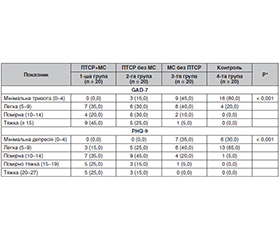
Актуальність. Воєнні дії, що тривають, спричинили різке зростання числа психоемоційних порушень, розвиток дистресу та складових метаболічного синдрому (МС), які спостерігаються при посттравматичному стресовому розладі (ПТСР). Хронодеструкція, тривога і депресія, а також розлади харчування є частиною патогенезу МС і ПТСР. Крім того, порушення якості сну негативно впливає на циркадний ритм метаболічних модифікаторів. Мета: визначити особливості впливу дистресу гібридної війни на психічний і фізичний стан пацієнтів з МС. Матеріали та методи. Здійснено одноцентрове крос-секційне дослідження, у якому після проведення скринінгу взяли участь 80 військовослужбовців — чоловіків віком 23–57 років. Учасники були розподілені на чотири рівнозначні групи по 20 осіб. 1-ша група — з ПТСР і МС, 2-га — з ПТСР без МС, 3-тя — з МС без діагностованого ПТСР; 4-та — без жодного із цих станів (контроль). Для всебічної оцінки психоемоційного стану використовували опитувальники: скорочену 7-пунктову версію адаптованого опитувальника для скринінгу ПТСР (Abbreviated PTSD Checklist, PCL-7); військовий варіант Міссісіпської шкали ПТСР (Mississippi Scale for Combat-Related PTSD, M-PTSD-C); опитувальник для первинного скринінгу генералізованого тривожного розладу (The Generalized Anxiety Disorder Assessment, GAD-7); опитувальник стану здоров’я пацієнта (Patient Health Questionnaire, PHQ-9) і Піттсбурзький індекс якості сну (Pittsburgh Sleep Quality Index, PSQI). Для перевірки нормальності розподілу кількісних змінних застосовували критерій Шапіро — Уїлка; для порівняння 4 незалежних груп — тест Краскела — Уолліса. При виявленні значущих міжгрупових відмінностей проводили множинні попарні порівняння за допомогою індексу Данна з поправкою Голма. Категоріальні змінні подані як абсолютна кількість і відсоток. Для їх порівняння використовували тест χ2 Пірсона; силу асоціації оцінювали за допомогою коефіцієнта V Крамера. Кореляції між психометричними показниками визначали за допомогою рангового коефіцієнта кореляції Спірмена (ρ). Результати. Військовослужбовці з ПТСР характеризуються більш вираженими, статистично значущими психоемоційними порушеннями порівняно з особами без цього розладу. Найбільш несприятливі психометричні профілі спостерігаються в пацієнтів з поєднанням ПТСР і МС, що проявляється найвищими показниками за шкалами PCL-7, M-PTSD-C, GAD-7, PHQ-9 і PSQI (P < 0,001). Встановлено, що існують тісні кореляції між посттравматичною симптоматикою, тривогою, депресією та якістю сну. Найсильніші кореляційні зв’язки виявлені між M-PTSD-C і PCL-7 (ρ = 0,822), а також між GAD-7 і PHQ-9 (ρ = 0,782), що підтверджує взаємопов’язаний характер психоемоційних розладів у військовослужбовців із ПТСР. Висновки. МС пов’язаний з додатковим погіршенням психоемоційного стану і якістю сну у військовослужбовців з ПТСР. Однак саме ПТСР є основним чинником формування тривожних розладів, депресії та проблем зі сном. Порушення якості сну є одним із ключових компонентів клінічної картини ПТСР. Отримані дані підкреслюють необхідність комплексного підходу до оцінки військовослужбовців з ПТСР з використанням валідованих психометричних інструментів, обов’язкового скринінгу для виявлення тривожних і депресивних розладів, оцінки якості сну та своєчасного виявлення компонентів МС.
Background. Ongoing hostilities have led to a sharp increase in the number of psycho-emotional disorders, the development of distress and the components of metabolic syndrome (MetS) observed in post-traumatic stress disorder (PTSD). Chronodestruction, anxiety and depression, as well as eating disorders, form part of the pathogenesis of MetS and PTSD. Furthermore, impaired sleep quality negatively affects the circadian rhythm of metabolic modulators. The purpose of the study: to determine the specific effects of distress caused by hybrid warfare on the mental and physical health of patients with MetS. Materials and methods. A single-centre cross-sectional study was conducted, in which 80 male military personnel aged 23–57 years took part following screening. The participants were divided into four equivalent groups of 20 individuals each: group 1 — PTSD and MetS; group 2 — PTSD without MetS; group 3 — MetS without a diagnosed PTSD; group 4 — either of these conditions (controls). To comprehensively assess psycho-emotional well-being, the following questionnaires were used: the 7-item Abbreviated PTSD Checklist (PCL-7); the Mississippi Scale for Combat-Related PTSD (M-PTSD-C); the Generalised Anxiety Disorder Assessment (GAD-7); the Patient Health Questionnaire (PHQ-9); and the Pittsburgh Sleep Quality Index (PSQI). The Shapiro-Wilk test was used to check for normality of distribution of quantitative variables; the Kruskal-Wallis test was applied to compare four independent groups. Where significant intergroup differences were identified, multiple pairwise comparisons were carried out using Dunn’s index with Holm’s correction. Categorical variables are presented as absolute numbers and percentages. Pearson’s χ2 test was used to compare them; the strength of association was assessed with Cramér’s V coefficient. Correlations between psychometric indicators were determined using Spearman’s rank correlation coefficient (ρ). Results. Military service members with PTSD are characterised by more pronounced, statistically significant psycho-emotional disturbances compared to individuals without this disorder. The most unfavourable psychometric profiles are observed in patients with a combination of PTSD and MetS, as evidenced by the highest scores on the PCL-7, M-PTSD-C, GAD-7, PHQ-9 and PSQI (P < 0.001). Close correlations were found between post-traumatic symptoms, anxiety, depression and sleep quality. The strongest correlations were noted between the M-PTSD-C and the PCL-7 (ρ = 0.822), as well as between the GAD-7 and the PHQ-9 (ρ = 0.782), confirming the interrelated nature of psycho-emotional disorders in military personnel with PTSD. Conclusions. MetS is associated with a further deterioration in the psycho-emotional state and sleep quality among military service members with PTSD. However, it is PTSD itself that is the primary factor in the development of anxiety disorders, depression and sleep problems. Impaired sleep quality is one of the key components in the clinical picture of PTSD. The findings highlight the need for a comprehensive approach to the examination of military personnel with PTSD, utilising validated psychometric instruments, mandatory screening to identify anxiety and depressive disorders, assessment of sleep quality, and timely identification of the components of MetS.
військовослужбовці; метаболічний синдром; посттравматичний стресовий розлад; ПТСР; дистрес; опитувальники; когнітивні розлади; якість сну; ожиріння; цукровий діабет
military personnel; metabolic syndrome; post-traumatic stress disorder; distress; questionnaires; cognitive impairment; sleep quality; obesity; diabetes mellitus
Для ознакомления с полным содержанием статьи необходимо оформить подписку на журнал.
- Wernli D, Böttcher L, Vanackere F, Kaspiarovich Y, Ma–sood M, Levrat N. Understanding and governing global systemic crises in the 21st century: A complexity perspective. Glob Policy. 2023;14:207-228. doi: 10.1111/1758-5899.13192.
- Serhiyenko VA, Sehin VB, Serhiyenko LM, Serhiyenko AA. Post-traumatic stress disorder, metabolic syndrome, and the autonomic nervous system. Endokrynologia (Ukraine). 2023 Dec;28(4):377-392. Ukrainian. doi: 10.31793/1680-1466.2023.28-4.377.
- Vaccarino V, Bremner JD. Stress and cardiovascular disease: an update. Nat Rev Cardiol. 2024;21(9):603-616. doi: 10.1038/s41569-024-01024-y.
- Hou C, Liu H, Zeng Y, et al. Disease clusters and their genetic determinants following a diagnosis of depression: analyses based on a novel three-dimensional disease network approach. Mol Psychiatry. 2025;30:5356-5366. doi: 10.1038/s41380-025-03120-y.
- Bartoli F, Crocamo C, Carrà G. Metabolic dysfunctions in people with post-traumatic stress disorder. J Psychopathol. 2020;26:85-91. doi: 10.36148/2284-0249-372.
- DeBenedictis K. Russian ‘Hybrid Warfare’ and the Annexation of Crimea: The Modern Application of Soviet Political Warfare. London: Bloomsbury Publishing, IB. Tauris; 2022. 280 p.
- Karmazina MS, Ablazov IV. The concept of “hybrid warfare”: an analysis of scientific discourse. Science and Defense (Ukraine). 2025;1:54-62. Ukrainian. doi: 10.33099/2618-1614-2025-28-1-54-62.
- Viedienieiev D, Semeniuk O. Essential features and functional components of modern unconventional (hybrid) conflict. Strategic Pa–norama (Ukraine). 2021;1–2:30-47. Ukrainian. doi: 10.53679/2616-9460.1-2.2021.02.
- Buriachenko O. Hybrid war as a new form of global confrontation. Scientific Works of Interregional Academy of Personnel Management. Political Sciences and Public Management (Ukraine). 2024;2(74):24-31. Ukrainian. doi: 10.32689/2523-4625-2024-2(74)-3.
- Pinchuk I, Yachnik Y, Goto R, Skokauskas N. Mental health services during the war in Ukraine: 2-years follow up study. Int J Ment Health Syst. 2025 Mar 28;19(1):11. doi: 10.1186/s13033-025-00667-9.
- Jaworski A, Szyszka M, Sosińska D, et al. Comparison of psychological distress, loneliness, and social network structure between Ukrainian war refugees and Polish citizens: a cross-sectional study in Wroclaw. Front Public Health. 2025;13:1621003. doi: 10.3389/fpubh.2025.1621003.
- Chaban OS, Khaustova OO. Medical and psychological consequences of war distress in Ukraine: what do we expect and what should be taken into account when providing medical aid? Ukr Med J (Ukraine). 2022;4(150)-VII/VIII:1-11. Ukrainian. doi: 10.32471/umj.1680-3051.150.232297.
- Benchuk V, Trofymovych V. Settlement of the Armed Conflict in the East of Ukraine Through the Prism of Mass Consciousness of Donetsk Residents in the Controlled Territory (2014–2021). Ukr Hist J (Ukraine). 2022;4:109-115. Ukrainian. doi: 10.15407/uhj2022.04.109.
- Serhiyenko A, Baitsar M, Sehin V, Serhiyenko L, Kuznets V, Serhiyenko V. Post-traumatic stress disorder, insomnia, heart rate variability and metabolic syndrome (narrative review). Proc Shevchenko Sci Soc Med Sci. 2024 Jun;73(1):1-10. doi: 10.25040/ntsh2024.01.07.
- Darraj A. The Link Between Sleeping and Type 2 Diabetes: A Systematic Review. Cureus. 2023;15(11):e48228. doi: 10.7759/cureus.48228.
- Serhiyenko VA, Sehin VB, Pankiv VI, Serhiyenko AA. Post-traumatic stress disorder, dyssomnias, and metabolic syndrome. Mìžnarodnij endokrinologìčnij žurnal (Ukraine). 2024 Mar;20(1):58-67. Ukrainian. doi: 10.22141/2224-0721.20.1.2024.1359.
- Hong S, Lee DB, Yoon DW, Yoo SL, Kim J. The Effect of Sleep Disruption on Cardiometabolic Health. Life (Basel). 2025;15(1):60. doi: 10.3390/life15010060.
- Vancampfort D, Firth J, Schuch F, et al. Physical activity and sedentary behavior in people with bipolar disorder: A systematic review and meta-analysis. J Affect Disord. 2016;201:145-152. doi: 10.1016/j.jad.2016.05.020.
- Serhiyenko A, Sehin V, Hotsko M, Oliinyk A, Serhiyenko A. Carnitine, insulin resistance, and depression (literature review). Problems of Endocrine Pathology (Ukraine). 2026;83(2):60-70. Ukrainian. doi: 10.21856/j-PEP.2026.2.07.
- Rosenbaum S, Vancampfort D, Steel Z, Newby J, Ward PB, Stubbs B. Physical activity in the treatment of Post-traumatic stress disorder: A systematic review and meta-analysis. Psychiatry Res. 2015;230(2):130-136. doi: 10.1016/j.psychres.2015.10.017.
- O’Donnell CJ, Schwartz Longacre L, Cohen BE, et al. Posttraumatic Stress Disorder and Cardiovascular Disease: State of the Science, Knowledge Gaps, and Research Opportunities. JAMA Cardiol. 2021;6(10):1207-1216. doi: 10.1001/jamacardio.2021.2530.
- American Psychiatric Association: Diagnostic and Statistical Manual of Mental Disorders. Fifth Edition, Text Revision (DSM-5-TR®). American Psychiatric Association Publishing; 2022. 1120 p.
- Crielaard L, Nicolaou M, Sawyer A, Quax R, Stronks K. Understanding the impact of exposure to adverse socioeconomic conditions on chronic stress from a complexity science perspective. BMC Med. 2021;19(1):242. doi: 10.1186/s12916-021-02106-1.
- Ala S, Ramos-Campos F, Relva IC. Symptoms of Post-Traumatic Stress and Mental Health in a Sample of University Students: The Mediating Role of Resilience and Psychological Well-Being. Eur J Investig Health Psychol Educ. 2024;14(8):2262-2281. doi: 10.3390/ejihpe14080151.
- Bany-Mohammed M, Asim S, Elalami M, Agrawal DK. Trauma, Stress, and Mental Health Outcomes. J Psychiatry Psychiatr Disord. 2025;9(5):276-288. doi: 10.26502/jppd.2572-519X0260.
- Gradus JL, Galea S. Moving From Traumatic Events to Traumatic Experiences in the Study of Traumatic Psychopathology. Am J Epidemiol. 2023;192(10):1609-1612. doi: 10.1093/aje/kwad126.
- António H, Gamito P, Bouchard S, et al. Traumatic Events, Psychopathology, and Post-Traumatic Stress Disorder in the General Community and First Responders: Presence of Symptoms and Associa–ted Factors. Eur J Investig Health Psychol Educ. 2025;15(12):241. doi: 10.3390/ejihpe15120241.
- Guan N, Guariglia A, Moore P, Xu F, Al-Janabi H. Financial stress and depression in adults: A systematic review. PLoS One. 2022;17(2):e0264041. doi: 10.1371/journal.pone.0264041.
- Schumann G, Andreassen OA, Banaschewski T, et al. Addressing Global Environmental Challenges to Mental Health Using Po–pulation Neuroscience: A Review. JAMA Psychiatry. 2023;80(10):1066-1074. doi: 10.1001/jamapsychiatry.2023.2996.
- Piao X, Xie J, Managi S. Continuous worsening of population emotional stress globally: universality and variations. BMC Public Health. 2024;24(1):3576. doi: 10.1186/s12889-024-20961-4.
- Gunasekra KA, Perera KKS. Defining occupational stress: A systematic literature review. FARU J. 2023;10(1):104-111. doi: 10.4038/faruj.v10i1.194.
- Luo H, Xing L, Fu T, Xiao S, Fan L. Occupational stress trajectories and metabolic dysfunction-associated steatotic liver disease among female nurses: a prospective Cohort Study. BMC Public Health. 2024;24(1):3188. doi: 10.1186/s12889-024-20742-z.
- Serhiyenko VA, Serhiyenko LM, Serhiyenko AA. Features of circadian rhythms of heart rate variability, arterial stiffness and outpatient monitoring of blood pressure in diabetes mellitus: data, mecha–nisms and consequences. In: Sinha RP, editor. Circadian Rhythms and Their Importance. New York: Nova Science Publishers; 2022. 279-341 pp. doi: 10.52305/GXME8274.
- Yazıcı-Kabadayı S. Relationships between mental toughness, eustress-distress, and mindfulness in adolescents: A network analysis and mediator model testing. Stress Health. 2024;40(5):e3480. doi: 10.1002/smi.3480.
- Enkvist H, Öhman A, Pitkänen M, Nordin M, Nordin S. Stress, mental ill-health and functional somatic syndromes in incident and chronic sleep disturbance in a general adult population. Health Psychol Behav Med. 2023 Mar 6;11(1):2184372. doi: 10.1080/21642850.2023.2184372.
- Lockwood KG, Peddie L, Crosswell AD, et al. Effects of Chronic Burden Across Multiple Domains and Experiences of Daily Stressors on Negative Affect. Ann Behav Med. 2022;56(10):1056-1067. doi: 10.1093/abm/kaac001.
- Grummitt LR, Keyes KM, Rajan S, Kelly EV, Barrett EL, Newton NC. Clusters of Adversity Types Among U.S. Youth: Associations With Mental Health. Am J Prev Med. 2022;63(3):331-340. doi: 10.1016/j.amepre.2022.03.016.
- Hamby S, Elm JHL, Howell KH, Merrick MT. Recognizing the cumulative burden of childhood adversities transforms science and practice for trauma and resilience. Am Psychol. 2021;76(2):230-242. doi: 10.1037/amp0000763.
- Mbiydzenyuy NE, Qulu LA. Stress, hypothalamic-pitui–tary-adrenal axis, hypothalamic-pituitary-gonadal axis, and aggression. Metab Brain Dis. 2024;39(8):1613-1636. doi: 10.1007/s11011-024-01393-w.
- Zhang J, Zhang W.-Z. Stress-Induced Metabolic Disorders: Mechanisms, Pathologies, and Prospects. Am J Biomed Sci & Res. 2025;26(6):AJBSR.MS.ID.003506. doi: 10.34297/AJBSR.2025.26.003506.
- Karaman С, Aydemir M, Karaman O. Wired for stress: Advances in electrochemical biosensors for monitoring of cortisol and cate–cholamines via wearable and point-of-care platforms. TrAC — Trends Anal Chem. 2026;196:118687. doi: 10.1016/j.trac.2026.118687.
- Serhiyenkо VA, Chemerys OM, Pankiv VI, Serhiyenko AA. Post-traumatic stress disorder, metabolic syndrome, diabetic distress, and vitamin B1/benfotiamine. International Neurological Journal (Ukraine). 2025;21(1):96-107. Ukrainian. doi: 10.22141/2224-0713.21.1.2025.1157.
- Lengton R, Schoenmakers M, Penninx BWJH, Boon MR, van Rossum EFC. Glucocorticoids and HPA axis regulation in the stress-obesity connection: A comprehensive overview of biological, phy–siological and behavioural dimensions. Clin Obes. 2025;15(2):e12725. doi: 10.1111/cob.12725.
- Nunez SG, Rabelo SP, Subotic N, Caruso JW, Knezevic NN. Chronic Stress and Autoimmunity: The Role of HPA Axis and Cortisol Dysregulation. Int J Mol Sci. 2025;26(20):9994. doi: 10.3390/ijms26209994.
- George MY, Abdel Mageed SS, Mansour DE, Fawzi SF. The cortisol axis and psychiatric disorders: an updated review. Pharmacol Rep. 2025 Dec;77(6):1573-1599. doi: 10.1007/s43440-025-00782-x.
- Serhiyenko AA, Sehin VV, Sulyma VV, Serhiyenko VA. Type 2 diabetes mellitus, neurocognitive disorders, and omega-3 polyunsaturated fatty acids (literature review). Problems of Endocrine Pathology (Ukraine). 2026;83(1):52-61. Ukrainian. doi: 10.21856/j-PEP.2026.1.06.
- Kozhyna H, Skrypnikov A, Druz O, Zelenska K, Chernenko I. Clinical and psychopathological features of post-stress disorders in persons with hostilities experience. СМБ (Ukraine). 2021;17(78):71-74. Ukrainian. doi: 10.26724/2079-8334-2021-4-78-71-74.
- Larsen NW, Stiles LE, Shaik R, et al. Characterization of autonomic symptom burden in long COVID: A global survey of 2,314 adults. Front Neurol. 2022;13:1012668. doi: 10.3389/FNEUR.2022.1012668/BIBTEX.
- Hira R, Karalasingham K, Baker JR, Raj SR. Autonomic manifestations of long-COVID syndrome. Curr Neurol Neurosci Rep. 2023;23(12):881-892. doi: 10.1007/S11910-023-01320-Z.
- Hendrickson RC, Cheah CS, Tai ML, et al. Impact of Prior History of Traumatic Stress on Autonomic and Multi-System Symptoms Following COVID-19 Infection. Chronic Stress (Thousand Oaks). 2025 Dec 24;9:24705470251407210. doi: 10.1177/24705470251407210.
- Serhiyenko VA, Sehin VB, Serhiyenko AA. Questionnaire “Composite assessment of autonomic symptoms 31” (COMPASS 31): validation and possibilities of application in the diagnostics of autonomic dysfunction in patients with type 2 diabetes mellitus. Endokrynologia (Ukraine). 2024;29(4):338-346. Ukrainian. doi: 10.31793/16801466.2024.29-4.338.
- Brewin CR, Atwoli L, Bisson JI, Galea S, Koenen K, Le–wis-Fernández R. Post-traumatic stress disorder: evolving conceptualization and evidence, and future research directions. World Psychiatry. 2025 Feb;24(1):52-80. doi: 10.1002/wps.21269.
- Adams SW, Allwood MA. Parallel processes of posttraumatic stress and cardiometabolic dysfunction: A systemic illness of traumatic stress. Health Psychol. 2024;43(5):365-375. doi: 10.1037/hea0001347.
- Serhiyenko V, Sehin V, Serhiyenko A. Vitamin B12, depression and type 2 diabetes (literature review). Problems of Endocrine Pathology (Ukraine). 2025;82(4):54-69. Ukrainian. doi: 10.21856/j-PEP.2025.4.07.
- Dell’Oste V, Fantasia S, Gravina D, et al. Metabolic and Inflammatory Response in Post-Traumatic Stress Disorder (PTSD): A Systematic Review on Peripheral Neuroimmune Biomarkers. Int J Environ Res Public Health. 2023;20(4):2937. doi: 10.3390/ijerph20042937.
- Bai W, Gui Z, Chen MY, Zhang Q, Lam MI, Si TL, et al. Global prevalence of poor sleep quality in military personnel and vete–rans: A systematic review and meta-analysis of epidemiological studies. Sleep Med Rev. 2023 Oct;71:101840. doi: 10.1016/j.smrv.2023.101840.
- Doan SN, Hoell DJ, Fuller-Rowell TE. Cortisol and C-reactive protein interact to predict depressive symptoms. Psychoneuroendocrinology. 2026;186:107780. doi: 10.1016/j.psyneuen.2026.107780.
- Michopoulos V, Powers A, Gillespie CF, Ressler KJ, Jovanovic T. Inflammation in Fear- and Anxiety-Based Disorders: PTSD, GAD, and Beyond. Neuropsychopharmacology. 2017;42(1):254-270. doi: 10.1038/npp.2016.146.
- Luckhoff HK, Asmal L, Smit R, Phahladira L, Emsley R, Del Re EC. Sex, gender, and outcome in first-episode psychosis: The role of premorbid functioning. Psychiatry Res. 2023;328:115460. doi: 10.1016/j.psychres.2023.115460.
- Roer GE, Bolstad I, Abebe DS, Aaseth J, Haugen M, Lien L. Metabolic Syndrome and Associated Risk Factors in Norwegian Trauma-Exposed Inpatients: A Cross-Sectional Comparison with Blood Donors. Diabetes Metab Syndr Obes. 2025 Aug 4;18:2667-2680. doi: 10.2147/DMSO.S536015.
- Edmondson D, von Känel R. Post-traumatic stress disorder and cardiovascular disease. Lancet Psychiatry. 2017;4(4):320-329. doi: 10.1016/S2215-0366(16)30377-7.
- Shahmiri Barzoki H, Ebrahimi M, et al. Studying the prevalence of PTSD in veterans, combatants and freed soldiers of Iran-Iraq War: A systematic and meta-analysis review. Psychol Health Med. 2023 Mar;28(3):812-8. doi: 10.1080/13548506.2021.1981408.
- Carmassi C, Barberi FM, Cordone A, Maglio A, Dell’Oste V, Dell’Osso L. Trauma, PTSD and post-traumatic stress spectrum: 15 years’ experience on a multidimensional approach to trauma related psychopathology. J Psychopathol. 2020;26:4-11. doi: 10.36148/2284-0249-376.
- Lihua M, Kaipeng Z, Xiyan M, Yaowen C, Tao Z. Systematic review and meta-analysis of stress management intervention studies in patients with metabolic syndrome combined with psychological symptoms. Medicine (Baltimore). 2023;102(42):e35558. doi: 10.1097/MD.0000000000035558.
- Ziegler D, Porta M, Papanas N, et al. The role of biofactors in diabetic microvascular complications. Curr Diabetes Rev. 2022 Apr 6;18(4):e250821195830. doi: 10.2174/1871527320666210825112240.
- Doan SN, Patel SK, Xie B, Nelson RA, Yee LD. Disrupting the mood and obesity cycle: the potential role of metformin. Obesities. 2023 Feb 27;3(1):59-75. doi: 10.3390/obesities301000.
- American Psychiatric Association. Diagnostic and statistical manual of mental disorders (DSM-5). 5th ed. Arlington: American Psychiatric Pub; 2013. 280 p. doi: 10.1176/appi.books.9780890425596.
- GBD 2019 Diseases and Injuries Collaborators. Global burden of 369 diseases and injuries in 204 countries and territories, 1990–2019: a systematic analysis for the Global Burden of Disease Study 2019. Lancet. 2020 Oct 17;396(10258):1204-1222. doi: 10.1016/S0140-6736(20)30925-9.
- Aaseth J, Roer GE, Lien L, Bjrklund G. Is there a relationship between PTSD and complicated obesity? A review of the literature. Biomed Pharmacother. 2019 Sep;117:108834. doi: 10.1016/j.biopha.2019.108834.
- Bartoli F, Crocamo C, Alamia A, et al. Posttraumatic stress disorder and risk of obesity: systematic review and meta-analysis. J Clin Psychiatry. 2015;76(10):e1253-e1261. doi: 10.4088/JCP.14r09199.
- Deleskog A, Ljung R, Forsell Y, Nevriana A, Almas A, Mller J. Severity of depression, anxious distress and the risk of type 2 diabetes — a population-based cohort study in Sweden. BMC Public Health. 2019 Aug 27;19(1):1174. doi: 10.1186/s12889-019-7322-z.
- Maguire DG, Ruddock MW, Milanak ME, Moore T, Cobice D, Armour C. Sleep, a Governor of Morbidity in PTSD: A Systematic Review of Biological Markers in PTSD-Related Sleep Disturbances. Nat Sci Sleep. 2020 Jul 31;12:545-562. doi: 10.2147/NSS.S260734.
- Richards A, Kanady JC, Neylan TC. Sleep disturbance in PTSD and other anxiety-related disorders: an updated review of clinical features, physiological characteristics, and psychological and neurobiological mechanisms. Neuropsychopharmacology. 2020;45(1):55-73. doi: 10.1038/s41386-019-0486-5.
- Nasir NFM, Draman N, Zulkifli MM, Muhamad R, Draman S. Sleep Quality among Patients with Type 2 Diabetes: A Cross-Sectional Study in the East Coast Region of Peninsular Malaysia. Int J Environ Res Public Health. 2022;19(9):5211. doi: 10.3390/ijerph19095211.
- Antza C, Kostopoulos G, Mostafa S, Nirantharakumar K, Tahrani A. The links between sleep duration, obesity and type 2 diabetes mellitus. J Endocrinol. 2021 Dec 13;252(2):125-141. doi: 10.1530/JOE-21-0155.
- Pinheiro MC, Costa HE, Mariana M, Cairrao E. Sleep Deprivation and Its Impact on Insulin Resistance. Endocrines. 2025;6(4):49. doi: 10.3390/endocrines6040049.
- So CJ, Miller KE, Gehrman PR. Sleep Disturbances Associated With Posttraumatic Stress Disorder. Psychiatr Ann. 2023 Nov 1;53(11):491-495. doi: 10.3928/00485713-20231012-01.
- Zhang Y, Ren R, Sanford LD, Yang L, Zhou J, Zhang J, et al. Sleep in posttraumatic stress disorder: A systematic review and meta-analysis of polysomnographic findings. Sleep Med Rev. 2019 Dec;48:101210. doi: 10.1016/j.smrv.2019.08.004.
- Ansbjerg MB, Sandahl H, Baandrup L, Jennum P, Carlsson J. Sleep impairments in refugees diagnosed with post-traumatic stress disorder: a polysomnographic and self-report study. Eur J Psychotraumatol. 2023;14(1):2185943. doi: 10.1080/20008066.2023.2185943.
- Lardant E, Vialatte F, Ramdani C, Chauveau F, Gauriau C, Storms L, Trousselard M, Léger D. Chronic insomnia: are patients also suffering from PTSD symptoms? Front Sleep. 2023 Sep 6;2:1207232. doi: 10.3389/frsle.2023.1207232.
- Ahmadi R, Rahimi-Jafari S, Olfati M, et al. Insomnia and post-traumatic stress disorder: A meta-analysis on interrelated associa–tion (n = 57,618) and prevalence (n = 573,665). Neurosci Biobehav Rev. 2022 Oct;141:104850. doi: 10.1016/j.neubiorev.2022.104850.
- Weber FC, Wetter TC. The Many Faces of Sleep Disorders in Post-Traumatic Stress Disorder: An Update on Clinical Features and Treatment. Neuropsychobiology. 2022;81(2):85-97. doi: 10.1159/000517329.
- Saguina E, Rollingc J. Sleep disturbances in posttraumatic stress disorder: Current knowledge and clinical management. L’Encéphale. 2026; 52(3):S64-S72. doi: 10.1016/j.encep.2026.02.004.
- Lin YC, Chiang JK, Lu CM, Kao YH. Association of Heart Rate Variability with Obstructive Sleep Apnea in Adults. Medicina (Kaunas). 2023;59(3):471. doi: 10.3390/medicina59030471.
- Tasali E, Pamidi S, Covassin N, Somers VK. Obstructive Sleep Apnea and Cardiometabolic Disease: Obesity, Hypertension, and Diabetes. Circ Res. 2025 Aug 15;137(5):764-787. doi: 10.1161/CIRCRESAHA.125.325676.
- Catalano F, De Vito F, Cassano V, Fiorentino TV, Sciacqua A, Hribal ML. Circadian Clock Desynchronization and Insulin Resistance. Int J Environ Res Public Health. 2022;20(1):29. doi: 10.3390/ijerph20010029.
- Tong Y, Li H, Duan M, He Q, Gao Z. Associations between sleep duration with depression and the mediating role of physical activity in patients with chronic respiratory diseases: evidence from three nationwide population-based studies. BMC Psychiatry. 2025 Dec 30;25(1):1198. doi: 10.1186/s12888-025-07592-8.
- Fasokun M, Akinyemi O, Ogunyankin F, et al. Associations between sleep duration and depression, mental health, physi–cal health, and general health in U.S. adults: A population-based study. PLoS One. 2026 Jan 14;21(1):e0321347. doi: 10.1371/journal.pone.0321347.
- Agorastos A, Olff M. Sleep, circadian system and trauma–tic stress. Eur J Psychotraumatol. 2021 Sep 28;12(1):1956746. doi: 10.1080/20008198.2021.1956746.
- Serhiyenkо V, Chemerys O, Pankiv V, Serhiyenko A. Type 2 diabetes mellitus, cerebral small vessel disease and depressive disorders. International Neurological Journal (Ukraine). 2025;21(3):226-237. Ukrainian. doi: 10.22141/2224-0713.21.3.2025.1178.
- Chasens ER, Imes CC, Kariuki JK, et al. Sleep and Metabolic Syndrome. Nurs Clin North Am. 2021 Jun;56(2):203-217. doi: 10.1016/j.cnur.2020.10.012.
- Bewket B, Pimenta AM. The association between sleep duration, insomnia and sleep patterns with metabolic syndrome: an integrative review. Front Clin Diabetes Healthc. 2026;7:1794920. doi: 10.3389/fcdhc.2026.1794920.
- Ludwig DS, Aronne LJ, Astrup A, et al. The carbohydrate-insulin model: a physiological perspective on the obesity pandemic. Am J Clin Nutr. 2021;114(6):1873-1885. doi: 10.1093/ajcn/nqab270.
- Che T, Yan C, Tian D, Zhang X, Liu X, Wu Z. The Association Between Sleep and Metabolic Syndrome: A Systematic Review and Meta-Analysis. Front Endocrinol (Lausanne). 2021 Nov 19;12:773646. doi: 10.3389/fendo.2021.773646.
- Kang KW, Kim MK, Tai-Seung Nam TS, et al. Association Between Sleep and the Metabolic Syndrome Differs Depending on Age. J Sleep Med. 2023;20(1):19-27. doi: 10.13078/jsm.230001.
- Lin CC, Yang CW, Li CI, Liu CS, Lin CH, Yang SY, Li TC. Causal relationship of sleep duration on risks for metabolic syndrome: a Mendelian randomization study. Diabetol Metab Syndr. 2025 Feb 25;17(1):70. doi: 10.1186/s13098-025-01643-6.
- Hooshmand E, Akbarzade I, Delbari D, Niroomand M, Ghavidel F, Saatchi M. Prevalence of Metabolic Syndrome Among Adults Aged 50 and Above and Associated Factors: A Cross-Sectional Study From Ardakan Cohort Study on Aging (ACSA). Health Sci Rep. 2025 Mar 4;8(3):e70508. doi: 10.1002/hsr2.70508.
- Mosavat M, Mirsanjari M, Arabiat D, Smyth A, Whitehead L. The Role of Sleep Curtailment on Leptin Levels in Obesity and Diabetes Mellitus. Obes Facts. 2021;14(2):214-221. doi: 10.1159/000514095.
- Valensi P. Autonomic nervous system activity changes in patients with hypertension and overweight: role and therapeutic implications. Cardiovasc Diabetol. 2021;20(1):170. doi: 10.1186/s12933-021-01356-w.
- Ma H, Kang J, Fan W, He H, Huang F. ROR: Nuclear Receptor for Melatonin or Not? Molecules. 2021;26(9):2693. doi: 10.3390/molecules26092693.
- Garbarino S, Lanteri P, Bragazzi NL, Magnavita N, Scoditti E. Role of sleep deprivation in immune-related disease risk and outcomes. Commun Biol. 2021;4(1):1304. doi: 10.1038/s42003-021-02825-4.
- Jones OX, Kelly KD, Khoo SK, Kelly RR, Sidles SJ, LaRue AC. The PTSD-Bone Axis: Evidence, Mechanisms, and Mana–gement. Curr Osteoporos Rep. 2026 Mar 16;24(1):12. doi: 10.1007/s11914-026-00957-2.
- Aguilar M, Alberti KGMM, Amiel SA, et al. Leitfaden zu typ-2-diabetes mellitus / Guide for type 2 diabetes mellitus (Review). Di abetes und Stoffwechsel. 2000 Mar 20;9(2):104-136.
- Serhiyenko VA, Serhiyenko AA. Diabetic cardiac autonomic neuropathy. In: Saldaña JR, editors. Diabetes Textbook: Clinical Principles, Patient Management and Public Health Issues. Basel: Springer, Cham. Springer Nature Switzerland AG. 2019, Section 53. P. 825-850. doi: 10.1007/978-3-030-11815-0_53.
- Mehdizadeh M, Fereshtehnejad SM, Goudarzi S, et al. Validity and Reliability of Short-Form McGill Pain Questionnaire-2 (SF-MPQ-2) in Iranian People with Parkinson’s Disease. Parkinsons Dis. 2020;2020:2793945. doi: 10.1155/2020/2793945.
- Taghizadeh G, Joghataei MT, Goudarzi S, Bakhsheshi M, Habibi SAH, Mehdizadeh M. King’s Parkinson’s disease pain scale cut-off points for detection of pain severity levels: A reliability and validity study. Neurosci Lett. 2021;745:135620. doi: 10.1016/j.neulet.2020.135620.
- Lang AJ, Wilkins K, Roy-Byrne PP, et al. Abbreviated PTSD Checklist (PCL) as a guide to clinical response. Gen Hosp Psychiatry. 2012;34(4):332-338. doi: 10.1016/j.genhosppsych.2012.02.003.
- Roberts NP, Kitchiner NJ, Lewis CE, Downes AJ, Bisson JI. Psychometric properties of the PTSD Checklist for DSM-5 in a sample of trauma exposed mental health service users. Eur J Psychotraumatol. 2021 Jan 26;12(1):1863578. doi: 10.1080/20008198.2020.1863578.
- Keane TM, Caddell JM, Taylor KL. Mississippi Scale for Combat-Related Posttraumatic Stress Disorder: three studies in reliability and validity. J Consult Clin Psychol. 1988;56(1):85-90. doi: 10.1037/0022-006x.56.1.85.
- Beresford T, Wahlberg L, Hipp D, Ronan PJ. Psychological Adaptive Mechanism Maturity Predicts Good Outcomes in Treatment for Refractory PTSD. Front Psychol. 2021;12:718451. doi: 10.3389/fpsyg.2021.718451.
- Spitzer RL, Kroenke K, Williams JB, Löwe B. A brief measure for assessing generalized anxiety disorder: the GAD-7. Arch Intern Med. 2006;166(10):1092-1097. doi: 10.1001/archinte.166.10.1092.
- Aleksina N, Gerasimenko O, Lavrynenko D, Savchenko O. Ukrainian adaptation of the Generalized Anxiety Disorder scale (GAD-7): diagnostic experience in the state of martial law. Insight: the psychological dimensions of society (Ukraine). 2024;11:77-103. Ukrainian. doi: 0.32999/2663-970X/2024-11-5.
- Kroenke K, Spitzer RL, Williams JB. The PHQ-9: validi–ty of a brief depression severity measure. J Gen Intern Med. 2001 Sep;16(9):606-13. doi: 10.1046/j.1525-1497.2001.016009606.x.
- Cheung RYM. Patient Health Questionnaire-9 (PHQ-9). In: Medvedev ON, Krägeloh CU, Siegert RJ, Singh NN, editors. Handbook of Assessment in Mindfulness Research. Basel: Springer, Cham: Springer Nature Link; 2025. 1837-1848 pp. doi: 10.1007/978-3-031-47219-0_63.
- Carpi M, Dias SF, Marques DR, Liguori C. Thirty-five years of the Pittsburgh sleep quality index: a critical appraisal and a path forward for its contemporary use. Sleep Med Rev. 2026 Jun 17:89:102326. doi: 10.1016/j.smrv.2026.102326.
- Carpi M. The Pittsburgh Sleep Quality Index: a brief review. Occup Med (Lond). 2025 Apr 4;75(1):14-15. doi: 10.1093/occmed/kqae121.
- Stanić M, Krasnik R, Mikov A, et al. Assessment of sleep quality among physiotherapists using the Pittsburgh Sleep Quality Index (PSQI): A pilot study. Work. 2026;83(1):219-226. doi: 10.1177/10519815251365106.
- Statistical Methods for Biomedical Research. Fang J, editor. Singapore: World Scientific Publishing; 2021. 700 p. doi: 10.1142/12060.
- Ahmed S, Padhee S. Application of statistics in biomedical research. JIMR. 2024;2(2):66-71. doi: 10.4103/jimr.jimr_1_24.
- Yardibi F, Chen C, Aladag CH, Kose O. Current Trends and Future Directions of Statistical Methods in Medical Research: A Scientometric Analysis. J Eval Clin Pract. 2025;31(6):e70257. doi: 10.1111/jep.70257.