Резюме
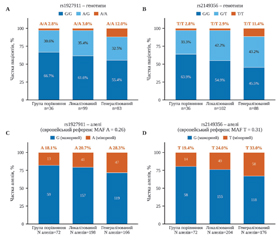
Актуальність. Пародонтит є багатофакторним запальним захворюванням, клінічний фенотип якого формується внаслідок взаємодії мікробного навантаження, імунної відповіді хазяїна, поведінкових і генетичних чинників. Toll-подібний рецептор 4 (TLR4) бере участь у розпізнаванні бактеріального ліпополісахариду, однак дані щодо зв’язку інтронних поліморфізмів гена TLR4 rs1927911 і rs2149356 із клінічними характеристиками пародонтиту залишаються обмеженими й суперечливими. Мета: оцінити розподіл генотипів і алелів поліморфізмів TLR4 rs1927911 і rs2149356 за наявністю пародонтиту, поширеністю ураження, стадією та ступенем; визначити модель успадкування і гаплотипну структуру можливого генетичного сигналу та перевірити його стійкість після контролю множинних порівнянь і врахування віку, статі й куріння. Матеріали та методи. До одноцентрового поперечного дослідження включено 196 пацієнтів з пародонтитом і 36 осіб без пародонтиту. Генотипування виконували методом полімеразної ланцюгової реакції в реальному часі. Аналізували частоти генотипів і алелів, відповідність рівновазі Гарді — Вайнберга, адитивну, домінантну, рецесивну та наддомінантну моделі успадкування. Застосовували логістичну регресію з редукцією зміщення за Фертом, коригування за віком, статтю і статусом куріння, контроль частоти хибних відкриттів методом Бенджаміні — Хохберга, а також аналіз нерівноваги за зчепленням, гаплотипів і диплотипів. Статистичний аналіз виконано в середовищі R statistical software v.4.3.3 (R Foundation for Statistical Computing, Австрія). Результати. Виявлено узгоджений описовий градієнт у напрямку генералізованого процесу: частота генотипу A/A rs1927911 зростала від 2,8 % у групі порівняння до 3,0 % при локалізованому і 12,0 % — при генералізованому пародонтиті, T/T rs2149356 — від 2,8 до 2,9 і 11,4 % відповідно; частоти мінорних алелів A і T зростали від 18,1 до 28,3 % і від 19,4 до 33,0 %. У нескоригованих рецесивних моделях генотипи A/A і T/T були номінально асоційовані з генералізацією: OR 3,94 (p = 0,038) і 3,80 (p = 0,042). Поліморфізми перебували у вираженій нерівновазі за зчепленням (D’ = 0,942; r2 = 0,769), а частота гаплотипу A-T зростала від 0,188 до 0,262. Після FDR-корекції та врахування коваріат статистичну стійкість асоціацій не було підтверджено. Висновки. Дослідження виявило узгоджений рецесивний і гаплотипний напрям можливої асоціації варіантів TLR4 з генералізацією пародонтиту, що є біологічно сумісним з варіабельністю вродженої імунної відповіді. У цій когорті сигнал не був підтверджений як статистично стійка незалежна асоціація, однак мінорні гомозиготи та A-T/A-T визначаються як пріоритетні об’єкти реплікації й функціонального аналізу; рутинне генотипування на даному етапі не було обґрунтоване.
Background. Periodontitis is a multifactorial inflammatory disease whose clinical phenotype is shaped by the interplay of microbial burden, host immune response, behavioral, and genetic factors. Toll-like receptor 4 (TLR4) is involved in the recognition of bacterial lipopolysaccharide; however, data regarding the association of the TLR4 intronic rs1927911 and rs2149356 polymorphisms with the clinical characteristics of periodontitis remain limited and controversial. Objective: to evaluate the genotype and allele distribution of the TLR4 rs1927911 and rs2149356 polymorphisms according to the presence of periodontitis, extent of involvement, stage, and grade; to determine the mode of inheritance and haplotype structure of a potential genetic signal and to test its robustness after controlling for multiple comparisons and adjusting for age, sex, and smoking status. Materials and methods. This single-center cross-sectional study included 196 patients with periodontitis and 36 individuals without it. Genotyping was performed using real-time polymerase chain reaction. Genotype and allele frequencies, Hardy-Weinberg equilibrium compliance, as well as additive, dominant, recessive, and overdominant inheritance models were analyzed. Firth’s bias-reduced logistic regression, adjustment for age, sex, and smoking status, false discovery rate control via the Benjamini-Hochberg procedure, as well as linkage disequilibrium, haplotype, and diplotype analyses were applied. Statistical analysis was performed using R statistical software v.4.3.3 (R Foundation for Statistical Computing, Austria). Results. A consistent descriptive gradient toward generalized disease was identified: the frequency of rs1927911 A/A genotype increased from 2.8 % in the control group to 3.0 % in localized and 12.0 % in generalized periodontitis, and that of the rs2149356 T/T genotype from 2.8 to 2.9 and 11.4 %, respectively; minor A and T allele frequencies increased from 18.1 to 28.3 % and from 19.4 to 33.0 %. In unadjusted recessive models, the A/A and T/T genotypes were nominally associated with generalization: odds ratio 3.94 (p = 0.038) and 3.80 (p = 0.042), respectively. The polymorphisms exhibited strong linkage disequilibrium (D’ = 0.942; r2 = 0.769), with the A-T haplotype frequency rising from 0.188 to 0.262. However, following false discovery rate correction and covariate adjustment, the statistical robustness of these associations was not confirmed. Conclusions. The study revealed a consistent recessive and haplotype-driven trend toward a potential association between TLR4 variants and periodontitis generalization, which is biologically consistent with the variability of the innate immune response. While this genetic signal was not confirmed as a statistically robust independent association in the studied cohort, it identifies minor homozygotes and the A-T/A-T diplotype as priority targets for future replication and functional validation; routine genotyping is currently not warranted.
Список литературы
1. Papapanou PN, Sanz M, Buduneli N, Dietrich T, Feres M, Fine DH, et al. Periodontitis: Consensus report of workgroup 2 of the 2017 World Workshop on the Classification of Periodontal and Peri-Implant Diseases and Conditions. J Periodontol. 2018 Jun;89 Suppl 1:S173-S182. doi: 10.1002/JPER.17-0721.
2. Tonetti MS, Greenwell H, Kornman KS. Staging and gra–ding of periodontitis: Framework and proposal of a new classification and case definition. J Periodontol. 2018 Jun;89 Suppl 1:S159-S172. doi: 10.1002/JPER.18-0006. Erratum in: J Periodontol. 2018 Dec;89(12):1475. doi: 10.1002/jper.10239.
3. Chapple ILC, Mealey BL, Van Dyke TE, Bartold PM, Dommisch H, Eickholz P, et al. Periodontal health and gingival diseases and conditions on an intact and a reduced periodontium: Consensus report of workgroup 1 of the 2017 World Workshop on the Classification of Periodontal and Peri-Implant Diseases and Conditions. J Periodontol. 2018 Jun;89 Suppl 1:S74-S84. doi: 10.1002/JPER.17-0719.
4. Kinane DF, Stathopoulou PG, Papapanou PN. Periodontal diseases. Nat Rev Dis Primers. 2017 Jun 22;3:17038. doi: 10.1038/nrdp.2017.38.
5. Hajishengallis G, Chavakis T. Local and systemic mechanisms linking periodontal disease and inflammatory comorbidities. Nat Rev Immunol. 2021 Jul;21(7):426-440. doi: 10.1038/s41577-020-00488-6.
6. Nibali L, Bayliss-Chapman J, Almofareh SA, Zhou Y, Divaris K, Vieira AR. What Is the Heritability of Periodontitis? A Systematic Review. J Dent Res. 2019 Jun;98(6):632-641. doi: 10.1177/0022034519842510.
7. Morelli T, Agler CS, Divaris K. Genomics of periodontal di–sease and tooth morbidity. Periodontol 2000. 2020 Feb;82(1):143-156. doi: 10.1111/prd.12320.
8. Gao C, Iles M, Larvin H, Bishop DT, Bunce D, Ide M, et al. Genome-wide association studies on periodontitis: A systematic review. PLoS One. 2024 Sep 6;19(9):e0306983. doi: 10.1371/journal.pone.0306983.
9. Kawai T, Akira S. The role of pattern-recognition receptors in innate immunity: update on Toll-like receptors. Nat Immunol. 2010 May;11(5):373-84. doi: 10.1038/ni.1863.
10. Bilyayeva O, Kryzhevsky V, Karol I, Ziablitzev S. The association of TLR4 gene polymorphisms with the severity of peritonitis in acute infammatory diseases of the abdominal cavity organs. Wiad Lek. 2024;78(1):35-41. doi: 10.36740/WLek202401105.
11. Park BS, Lee JO. Recognition of lipopolysaccharide pattern by TLR4 complexes. Exp Mol Med. 2013 Dec 6;45(12):e66. doi: 10.1038/emm.2013.97.
12. Song B, Zhang YL, Chen LJ, Zhou T, Huang WK, Zhou X, et al. The role of Toll-like receptors in periodontitis. Oral Dis. 2017 Mar;23(2):168-180. doi: 10.1111/odi.12468.
13. Hudz AS, Kudryl IV, Bushuieva OV, Rafaliuk SY, Ziablitsev SV. Possible role of the TGFB1 polymorphism rs1800470, trophoblastic growth factor 1 (TGF-1) and connective tissue growth factor (CTGF) in the progression of diabetic retinopathy in type 2 diabetes. Wiad Lek. 2025;(10):2088-2094. doi: 10.36740/WLek/210020.
14. Li W, Cao X, He L, Meng H, Yang B, Liao Y. TLR4 polymorphisms may increase susceptibility to periodontitis in Pg-positive individuals. PeerJ. 2019 Nov 21;7:e7828. doi: 10.7717/peerj.7828.
15. Farouk MM, Kheir El Din NH, Ezzat OM, Shaker OG. Toll-like receptor-4 single gene polymorphism and chronic periodontitis susceptibility in a sample of Egyptian population: a case-control study. Ain Shams Dent J. 2021;21(1):80-91. doi: 10.21608/ASDJ.2021.54124.1003.
16. Abou-Bakr A, Hassanein FEA, Nagi N, Ibrahim M, Mekhemar M. TLR4 rs2149356 Polymorphism in Periodontitis and End-Stage Renal Disease: An Exploratory Analysis in Egyptian Patients. Cells. 2025 Sep 11;14(18):1421. doi: 10.3390/cells14181421.
17. Jin SH, Guan XY, Liang WH, Bai GH, Liu JG. TLR4 polymorphism and periodontitis susceptibility: A meta-analysis. Medicine (Baltimore). 2016 Sep;95(36):e4845. doi: 10.1097/MD.0000000000004845.
18. Cavalla F, Biguetti CC, Letra A, Silva RM, Vieira AR, Strauss FJ, et al. TLR4 Asp299Gly SNP (rs4986790) Protects from Periodontal Inflammatory Destruction by Altering TLR4 Susceptibi–lity to LPS Stimulation. Biology (Basel). 2025 Jul 21;14(7):894. doi: 10.3390/biology14070894.
19. Alarcn-Snchez MA, Rodrguez-Montao R, Lomel-Martnez SM, Martnez-Bugarin CH, Mosaddad SA, Heboyan A. Are Salivary and Plasma Levels of Toll-Like Receptors 2 and 4 Elevated in Subjects With Chronic Periodontitis?: A Systematic Review and Meta-Analysis. Int J Inflam. 2025 May 6;2025:7405066. doi: 10.1155/ijin/7405066.
20. Qing YF, Zhou JG, Zhang QB, Wang DS, Li M, Yang QB, et al. Association of TLR4 Gene rs2149356 polymorphism with primary gouty arthritis in a case-control study. PLoS One. 2013 May 30;8(5):e64845. doi: 10.1371/journal.pone.0064845.
21. Rasheed H, McKinney C, Stamp LK, Dalbeth N, Topless RK, Day R, et al. The Toll-Like Receptor 4 (TLR4) Variant rs2149356 and Risk of Gout in European and Polynesian Sample Sets. PLoS One. 2016 Jan 25;11(1):e0147939. doi: 10.1371/journal.pone.0147939.
22. Phan L, Zhang H, Wang Q, Villamarin R, Hefferon T, Ramanathan A, et al. The evolution of dbSNP: 25 years of impact in genomic research. Nucleic Acids Res. 2025 Jan 6;53(D1):D925-D931. doi: 10.1093/nar/gkae977.
23. 1000 Genomes Project Consortium; Auton A, Brooks LD, Durbin RM, Garrison EP, Kang HM, Korbel JO, et al. A global refe–rence for human genetic variation. Nature. 2015 Oct 1;526(7571):68-74. doi: 10.1038/nature15393.
24. National Center for Biotechnology Information. ALFA: Allele Frequency Aggregator [Інтернет]. Bethesda (MD): National Library of Medicine; [процитовано: липень 2026]. https://www.ncbi.nlm.nih.gov/snp/docs/gsr/alfa/.
25. Benjamini Y, Drai D, Elmer G, Kafkafi N, Golani I. Controlling the false discovery rate in behavior genetics research. Behav Brain Res. 2001 Nov 1;125(1-2):279-84. doi: 10.1016/s0166-4328(01)00297-2.
26. Firth D. Bias reduction of maximum likelihood estimates. Biometrika. 1993;80(1):27-38. doi: 10.1093/biomet/80.1.27.
27. Heinze G, Schemper M. A solution to the problem of separation in logistic regression. Stat Med. 2002 Aug 30;21(16):2409-19. doi: 10.1002/sim.1047.
28. Akaike H. A new look at the statistical model identification. IEEE Trans Automat Contr. 1974;19(6):716-723. doi: 10.1109/TAC.1974.1100705.
29. Lewontin RC. The Interaction of Selection and Linkage. I. General Considerations; Heterotic Models. Genetics. 1964 Jan;49(1):49-67. doi: 10.1093/genetics/49.1.49.
30. Excoffier L, Slatkin M. Maximum-likelihood estimation of molecular haplotype frequencies in a diploid population. Mol Biol Evol. 1995 Sep;12(5):921-7. doi: 10.1093/oxfordjournals.molbev.a040269.
31. Little J, Higgins JP, Ioannidis JP, Moher D, Gagnon F, von Elm E, et al. STrengthening the Reporting of Genetic Association Studies (STREGA) — an extension of the STROBE statement. Genet Epidemiol. 2009 Nov;33(7):581-98. doi: 10.1002/gepi.20410.
32. Schuster NA, Twisk JWR, ter Riet G, Heymans MW, Rijnhart JJM. Noncollapsibility and its role in quantifying confounding bias in logistic regression. BMC Med Res Methodol. 2021;21:136. doi: 10.1186/s12874-021-01316-8.
33. Greenland S, Mansournia MA, Altman DG. Sparse data bias: a problem hiding in plain sight. BMJ. 2016 Apr 27;352:i1981. doi: 10.1136/bmj.i1981.
34. Vaithilingam RD, Safii SH, Baharuddin NA, Ng CC, Cheong SC, Bartold PM, et al. Moving into a new era of periodontal genetic studies: relevance of large case-control samples using severe phenotypes for genome-wide association studies. J Periodontal Res. 2014 Dec;49(6):683-95. doi: 10.1111/jre.12167.
35. Schaefer AS, Bochenek G, Manke T, Nothnagel M, Graetz C, Thien A, et al. Validation of reported genetic risk factors for periodontitis in a large-scale replication study. J Clin Periodontol. 2013 Jun;40(6):563-72. doi: 10.1111/jcpe.12092.
36. Ioannidis JP. Why most discovered true associations are inflated. Epidemiology. 2008 Sep;19(5):640-8. doi: 10.1097/EDE.0b013e31818131e7. Erratum in: Epidemiology. 2009 Jul;20(4):629.
37. Slatkin M. Linkage disequilibrium — understanding the evolutionary past and mapping the medical future. Nat Rev Genet. 2008 Jun;9(6):477-85. doi: 10.1038/nrg2361.
38. Schaid DJ. Evaluating associations of haplotypes with traits. Genet Epidemiol. 2004 Dec;27(4):348-64. doi: 10.1002/gepi.20037.
39. Dommisch H, Hoedke D, Lu EM, Schfer A, Richter G, Kang J, et al. Genetic Biomarkers for Periodontal Diseases: A Systematic Review. J Clin Periodontol. 2025 Aug;52 Suppl 29(Suppl 29):182-210. doi: 10.1111/jcpe.14149.
40. Modafferi C, Grippaudo C, Corvaglia A, Cristi V, Amato M, Rigotti P, et al. Genetic Testing in Periodontitis: A Narrative Review on Current Applications, Limitations, and Future Perspectives. Genes (Basel). 2025 Nov 1;16(11):1308. doi: 10.3390/genes16111308.
41. Teles F, Chandrasekaran G, Martin L, Shrestha P, Moss K, Patel M, et al. Genome-wide association study of periodontitis severity and progression. J Periodontol. 2026 Feb;97(2):247-258. doi: 10.1002/jper.70017.
42. Price AL, Patterson NJ, Plenge RM, Weinblatt ME, Sha–dick NA, Reich D. Principal components analysis corrects for stratification in genome-wide association studies. Nat Genet. 2006 Aug;38(8):904-9. doi: 10.1038/ng1847.
43. Cardon LR, Palmer LJ. Population stratification and spurious allelic association. Lancet. 2003 Feb 15;361(9357):598-604. doi: 10.1016/S0140-6736(03)12520-2.
44. Balding DJ. A tutorial on statistical methods for population association studies. Nat Rev Genet. 2006 Oct;7(10):781-91. doi: 10.1038/nrg1916.
45. NCI-NHGRI Working Group on Replication in Association Studies; Chanock SJ, Manolio T, Boehnke M, Boerwinkle E, Hunter DJ, Thomas G, et al. Replicating genotype-phenotype associations. Nature. 2007 Jun 7;447(7145):655-60. doi: 10.1038/447655a.
46. Ioannidis JP, Ntzani EE, Trikalinos TA, Contopoulos-Ioannidis DG. Replication validity of genetic association studies. Nat Genet. 2001 Nov;29(3):306-9. doi: 10.1038/ng749.
47. Kraft P, Zeggini E, Ioannidis JPA. Replication in genome-wide association studies. Stat Sci. 2009;24(4):561-573. doi: 10.1214/09-STS290.